by

A war against meaning

Dr Refaat Alareer, Gazan storyteller, killed in an airstrike on his sister’s apartment 3 days after the British RAF began passing targeting data to the Israeli airforce

January 7th 2025 – originally published in Counterpunch

I haven’t written much about Gaza since the war started, for two main reasons. One, because everything is already so clear. Britain, America, Israel and their allies have decided to try to eliminate a resistant population in a strategically crucial region, and the rest of the world is either participating, acquiescing or wringing its hands. Everyone can see what is happening; what can I add of any value that is not already entirely obvious? And secondly, because attempts to impose sense on such a senseless situation feel crass. The situation is so intensely disturbing, even the simple act of putting it into words seems already to trivialise it. As the Chicago-based Palestinian journalist Ali Abinimah of Electronic Intifada put it early on in this latest phase of the war, “People come to us for analysis. I don’t know how to analyse this. I don’t know what to say to people.” Because the annihilation of Gaza is also a war against meaning.

Our ability to make and tell stories is what makes us human. That’s also how we deal with suffering and pain and loss. But stories have an arc; there is a return from the abyss. Terrible, tragic things happen, even things which we might never heal from, but people change and adapt and weave the terrible into the story of their life. People die, but their influence lives on, their memory is celebrated and valued by those who knew and loved them. People suffer but they learn something and grow from their experiences, somehow, however awful they are. ‘Your gift will come from your wound,’ as the storytellers say.

But the sheer relentless nature of the holocaust in Gaza means there is no story arc. There is no return from the abyss. The abyss just grows and keeps growing. People are killed but before they can be grieved or celebrated or woven into a story, everyone who knew them is slowly (or quickly) killed as well, whilst anyone left is focused on survival. There is no time to make sense of anything, and no sense to be had anyway. There is no ‘personal growth’ to be made from this horror.

Ahmed Alnaouq, founder of the Palestinian group, We Are Not Numbers, lost his father, five remaining siblings and all fourteen of their children to an Israeli airstrike on his father’s home two weeks into the war. A year later, he was commissioned by the New Arab to write an article about it. He later told the Electronic Intifada about the process of writing this article: “Ten years ago, Israel killed my brother, my older brother, and that was the first time I lost a family member. But writing a story about my brother back then, it was much easier than writing this story about my family.  And I think it’s because when you lose only one brother, when you only lose one family member, you know that your sadness, your agony, your pain is focused, is concentrated, you know what you are lamenting for, you know what you are crying for. You know what is very deeply painful to you – it is a brother. Ten years ago, when Israel killed my brother, I couldn’t forget about my brother: I imagined, I remembered all the stories that we had together, all the memories, all the pictures: and for me that was a relief, because I knew who I was sad for. But when you lose twenty-one members of your family ..  you could not know who you cry for. I didn’t know to think about my father or my brother or my other brother or my sisters or my nieces and nephews, the fourteen kids who I raised some of them. I was very distracted for the past year. And because I was very distracted I couldn’t think of one specific person, I couldn’t dare to think of one of them for the past year, I would always avoid talking about them, I would avoid going to whatsapp messages that I shared with one of them. It was very difficult and I purposely tried to avoid remembering them because if I remember them I will be one hundred times more depressed than I am.”

And this is part of the intention. Resistance movements are built on stories: of repression and suffering and heroism. Refaat Alareer understood this very well (see his beautiful Ted Talk, ‘Stories Make Us’, here). He was perhaps the single most important figure in terms of bringing Gazan voices to the English-speaking world, and had educated and inspired a whole generation of English-language journalists and authors in the strip. In one of several books of Gazan writing he edited, he wrote that “Sometimes a homeland becomes a tale. We love the story because it is about our homeland and we love our homeland even more because of the story.” Israel wants to eradicate not only the Palestinians’ resistance and nation but also their ability to make sense of their situation. Hence the relentless killing of Gaza’s storytellers. Over 200 journalists and media workers have been killed by Israel in the past fifteen months, many in openly targeted attacks. Just last week, a clearly marked press van was hit by an Israeli missile, burning alive all five of its occupants. Refaat Alareer himself was hunted down and killed along with several members of his family in a targeted strike on his sister’s apartment on December 6th 2023 (perhaps not coincidentally, just three days after the British RAF began flying surveillance flights over Gaza for the IDF). It was the third attempt on his life: his own apartment and University had both been hit earlier in the war.. Famously, his last poem, written to his daughter Shaima, began ‘If I must die, you must live, to tell my story.’ But she too was killed, along with her husband and their baby son, in an airstrike on their home a few months later.

Think about the alcoholism rife in aboriginal communities in Australia and North America. This reflects not simply degraded material conditions and opportunities, but the transformation of a worldview rich with deep meaning into one rendered senseless through colonial erasure.

And they want to do that to the rest of us as well; they don’t want anyone to be able to imbue the story and concept of ‘Palestine’ with any meaning. And it is not easy to see a way to resist this – attempts to render meaning to the struggle, in the midst of a senseless holocaust, come across too often as crass denials of reality, using Palestinian suffering as a raw material to fuel our own pontifications.  Even as I write this now, it feels like that.

The tragedy is, Israelis are committed to this path because of their own need for a sense of meaning. The Nazi Holocaust had this same effect on many Jews, destroying their ability to make meaning of their individual and collective lives. But Israel was presented as their happy ending, one that made sense of the Holocaust and finally gave it meaning. It provided a final act that transformed that senseless event into a story. It was always a fiction of course; Amos Oz talks in his memoir about his mother’s suicide as a result of her inability to find meaning in her life after the horror of the Holocaust; for her, the mere concept of the state of Israel could not – despite (or perhaps because of) actually living there – help her overcome this.

To admit the failure of the project now would put Israelis right back face-to-face with the senselessness of the Holocaust. The final act was a myth. There never was any happy ending.

There is a way out of course, and it’s one Jews are increasingly taking – to embrace the fact that the struggle for justice is universal, and meaning comes from committing to that struggle, whatever the costs, with no exceptions. This means a decisive rejection of Zionism. But that is where meaning is to be found, even in the Holocausts and the Nakbas – for Palestinians, for Jews and for all of us.
by

Did Putin make a deal over Syria?

December 20, 2024originally published in Counterpunch

The lightning collapse of the Assad government in Syria in recent weeks made it clear that pretty much no one, inside Syria or out, considered this to be a state worth fighting for. It also seemed pretty clear that Turkey (with the probable backing of Israel and the US) had taken the opportunity to use the forces it had been training in Idlib for some years to make a serious power play. The west have long sought to turn Syria into a ‘failed state’ on the Iraq-Libya model, and the new situation has allowed Israel to destroy, almost overnight, the vast bulk of the country’s military installations, and expand its occupation in the South. This is what they have all been working for for thirteen years. What is less clear is the extent to which Russia was in on this move.

The mainstream interpretation is essentially that the latest turn of events is a major blow to Russia. Syria was Russia’s only solid Arab ally, home to its only warm-water naval base (Tartus) as well as a huge airbase (Hmeimim) crucial for its operations in Africa in particular. The ‘loss’ of Syria was therefore a crippling blow to Moscow; a consequence, supposedly, of the Russian army being bogged down in Ukraine and thus unable to commit the necessary military resources to put down the insurrection in Syria.

Combined with the fact that Iran and Hezbollah were also both recovering from Israeli attacks, this created a window of opportunity for the insurgents and their backers to make their move. And it was a window that might have been very brief: Hezbollah could regroup quickly and, if Trump were to honour his promise to immediately impose a peace deal on Ukraine on coming to office, large numbers of Russian forces could be again free to operate in Syria, perhaps within a couple of months.

This is obviously part of the picture. Russia’s options were clearly limited. Any deal it cut would have been made from a position of weakness, at least relative to its position in, say, 2018. But that doesn’t mean no deal was made at all. It is incredibly unlikely, in my view, that Putin would not have been consulted in advance.

Firstly, the risk of large swathes of Turkey’s carefully groomed insurgents being simply wiped out by Russian airstrikes was serious, and both Erdogan and HTS would have sought to avoid this eventuality if at all possible. Even if Putin lacked the capacity to ultimately defeat the uprising, they would certainly have attempted to convince him not to try rather than simply cross their fingers and hope that he didn’t.

Secondly, although it is easy to say in hindsight, this takeover was clearly on the cards for some time. All the fighters from former opposition-held territories retaken by government forces during the war had been pushed into Idlib. There they were joined, in March 2020, by over 20,000 Turkish troops, including special forces, armoured units and light infantry including the 5th Commando Brigade which specialises in paramilitary operations and mountain warfare. They were not there for a picnic; for four years they have been, in plain sight, training and consolidating the insurgent forces to relaunch their insurrection. Russia was obviously aware of this and would have planned for it.

Furthermore, although Russia might have found it difficult to commit large numbers of its own troops to Syria, it could certainly have subsidised the salaries of Syrian army soldiers, which could well have gone some way to mitigating the mundane bread-and-butter defections and passivity within the Syrian army. It chose not to do so, presumably for a reason.

This does not mean, of course, that the whole thing was a Kremlin plot all along, as some are now trying to suggest. One theory claims that Putin, by allowing the Syrian government to fall, has cunningly set a trap for the west, who will now be bogged down trying to stabilise Syria for years to come, just as the Soviets were bogged down in 1980s Afghanistan. But this suggestion makes no sense – the transformation of Syria into a ‘failed state’ has always been the west’s aim, which is why they have backed the most sectarian forces to accomplish it. They achieved this in Libya without getting ‘bogged down;’ they hoped to repeat their success in Syria, and they have now done so. This theory seems to be a desperate clutching of straws by people who simply cannot interpret any event as anything other than a genius plan by the Grand Master.

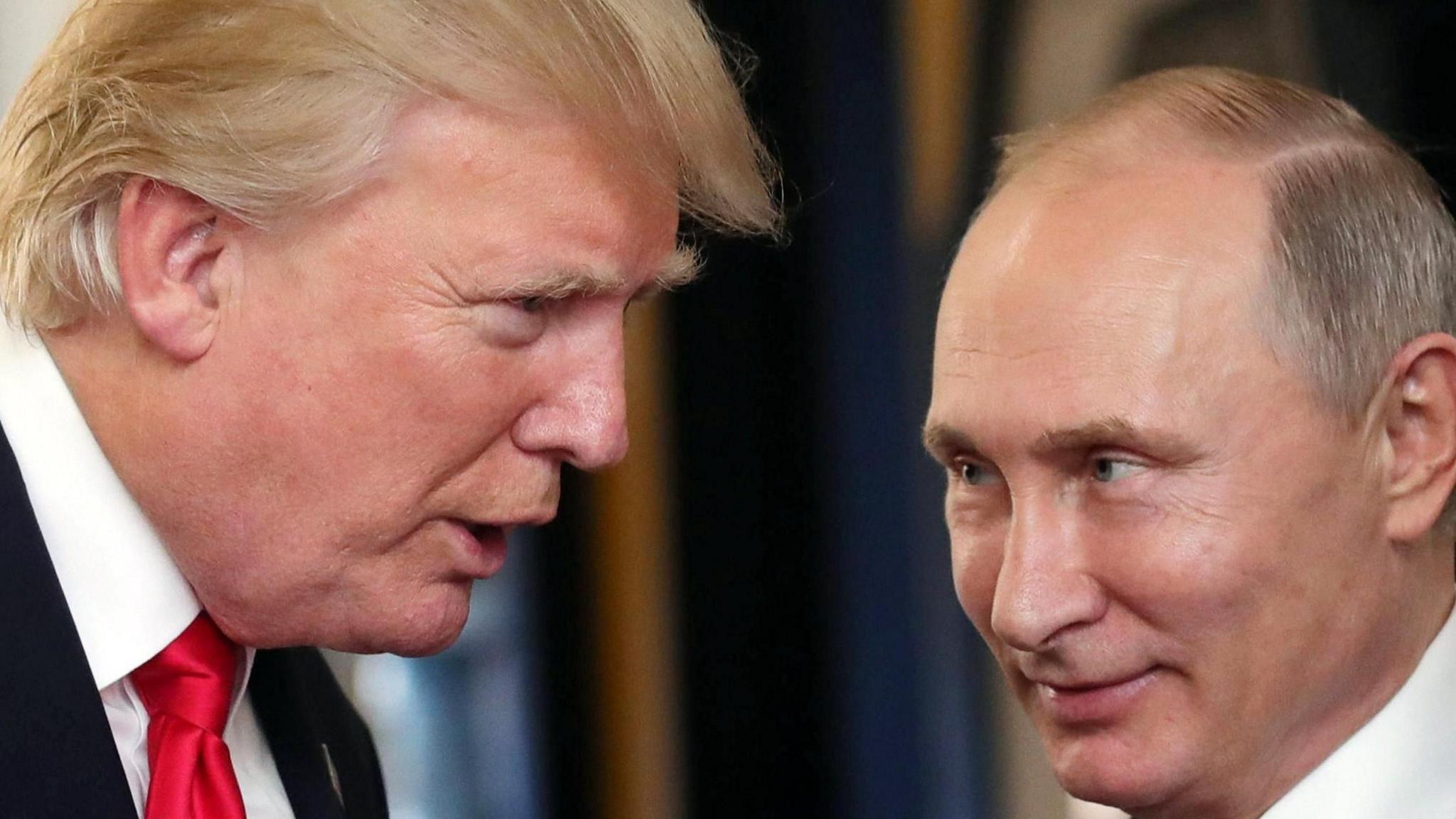
The truth, I suspect, is rather more nuanced. Here is a  working hypothesis: the basic parameters of the HTS takeover of Syria were worked out and agreed in advance by Erdogan, Netanyahu, Putin and Trump. I suspect Trump offered Putin a straight swap – Syria for eastern Ukraine; with the caveat that Russia could keep its Syrian bases. This was acceptable to Putin for several reasons.

Firstly, obviously, eastern Ukraine is his priority. Secondly, his only real concern in Syria was those bases, anyway. He may well have come round to the west’s ‘Divide and Ruin’ strategy – essentially, that it is easier and cheaper to secure your specific assets (bases, mines, oil wells etc) in a failed state using local militias, private security and/or your own armed forces than it is to secure an entire state to do so for you. Thirdly, Assad had, by all accounts, not been fully playing ball with Russia, and had been unwilling to turn Syria into the pure vassal state that Putin was demanding, making himself less valuable and more expendable in so doing. Fourth, Russia’s ultimate goal to take over patronage from the US of its Middle East client states can only be done by demonstrating Russia’s usefulness to Turkey, Israel and Saudi Arabia. In facilitating the fruition of those states’ thirteen-year regime-change operation in Syria, he has certainly done that, paving the way for (and perhaps already part of) future collaborations and deepening alliances. Fifth, just because Iran is an ‘ally’ of Russia, does not mean Russia wants it to be strong and autonomous. Quite the opposite. Like any imperial power, what Russia seeks are not allies, but dependencies. This latest move has gone a long way to transforming Iran from a Russian ally to a Russian dependency.

Cutting off Iran from the resistance in Lebanon and Gaza is no bad thing from Russia’s point of view: partly because Iran’s patronage of those groups acts as a source of power and autonomy for Iran, giving it some kind of ‘deterrence’ independent of the Russian defensive umbrella. If the resistance is cut off and neutered, Iran’s only source of deterrence (other than its own, admittedly formidable but nonetheless heavily Russian-reliant, defences) is Russia. And popular, autonomous, working-class resistance militias (such as Hamas, Hezbollah and the Houthis) are a nuisance for any imperial power anyway, a constant potential spanner-in-the-works to any colonial carve-up agreed by the Big Men.

And finally, of course, as discussed above, Putin’s options were limited; he could certainly have slowed the rebel advance but it is unclear whether he could have defeated it, and even the attempt to do so would have entailed some, potentially quite significant, diversion of manpower from the war on Ukraine. With limited options available, a deal that allowed him to keep eastern Ukraine and his Syrian bases would have likely seemed like the best available.

Claims that the latest events are a huge blow to Russia are therefore overstated. In strategic terms, if the bases are maintained, nothing has really been lost, other than a tedious responsibility to maintain an unpopular and disobedient client. And, in the longer-term, regional picture, much may have been gained, as suggested above.

The other argument often made is that this is a blow to Russian ‘prestige,’ that its ‘stock’ as a power willing and able to defend its allies will have been reduced significantly. A report from the Institute for the Study of War published shortly before the fall of Damascus, for example, claims that “Assad’s collapse would damage the global perception of Russia as an effective partner and protector, potentially threatening Russia’s partnerships with African autocrats and its resulting economic, military, and political influence in Africa.”

That’s possible, of course. But Putin’s ditching of Assad might in fact send a different message to Putin’s new African friends: “Don’t think you can just do whatever you want and still expect to be protected. Remember you are expendable. We can throw you to the dogs at any moment. And without our support, you won’t last five minutes. Never forget you are not an ally, but a client.” African leaders contemplating any resistance to the full integration of their armies under Russian tutelage may well be chastened by this message, and in a way entirely beneficial to Russian interests.

And whilst it is true that EU leaders are now demanding that HTS kick out the Russians, the truth is that it is not really the EU’s opinion that matters, but Trump’s. Let’s see what he says on the matter; and more importantly, what he does.