Dr Refaat Alareer, Gazan storyteller, killed in an airstrike on his sister’s apartment 3 days after the British RAF began passing targeting data to the Israeli airforce
January7th 2025 – originally published in Counterpunch
I haven’t written much about Gaza since the war started, for two main reasons. One, because everything is already so clear. Britain, America, Israel and their allies have decided to try to eliminate a resistant population in a strategically crucial region, and the rest of the world is either participating, acquiescing or wringing its hands. Everyone can see what is happening; what can I add of any value that is not already entirely obvious? And secondly, because attempts to impose sense on such a senseless situation feel crass. The situation is so intensely disturbing, even the simple act of putting it into words seems already to trivialise it. As the Chicago-based Palestinian journalist Ali Abinimah of Electronic Intifada put it early on in this latest phase of the war, “People come to us for analysis. I don’t know how to analyse this. I don’t know what to say to people.” Because the annihilation of Gaza is also a war against meaning.
Our ability to make and tell stories is what makes us human. That’s also how we deal with suffering and pain and loss. But stories have an arc; there is a return from the abyss. Terrible, tragic things happen, even things which we might never heal from, but people change and adapt and weave the terrible into the story of their life. People die, but their influence lives on, their memory is celebrated and valued by those who knew and loved them. People suffer but they learn something and grow from their experiences, somehow, however awful they are. ‘Your gift will come from your wound,’ as the storytellers say.
But the sheer relentless nature of the holocaust in Gaza means there is no story arc. There is no return from the abyss. The abyss just grows and keeps growing. People are killed but before they can be grieved or celebrated or woven into a story, everyone who knew them is slowly (or quickly) killed as well, whilst anyone left is focused on survival. There is no time to make sense of anything, and no sense to be had anyway. There is no ‘personal growth’ to be made from this horror.
Ahmed Alnaouq, founder of the Palestinian group, We Are Not Numbers, lost his father, five remaining siblings and all fourteen of their children to an Israeli airstrike on his father’s home two weeks into the war. A year later, he was commissioned by the New Arab to write an article about it. He later told the Electronic Intifada about the process of writing this article: “Ten years ago, Israel killed my brother, my older brother, and that was the first time I lost a family member. But writing a story about my brother back then, it was much easier than writing this story about my family. And I think it’s because when you lose only one brother, when you only lose one family member, you know that your sadness, your agony, your pain is focused, is concentrated, you know what you are lamenting for, you know what you are crying for. You know what is very deeply painful to you – it is a brother. Ten years ago, when Israel killed my brother, I couldn’t forget about my brother: I imagined, I remembered all the stories that we had together, all the memories, all the pictures: and for me that was a relief, because I knew who I was sad for. But when you lose twenty-one members of your family .. you could not know who you cry for. I didn’t know to think about my father or my brother or my other brother or my sisters or my nieces and nephews, the fourteen kids who I raised some of them. I was very distracted for the past year. And because I was very distracted I couldn’t think of one specific person, I couldn’t dare to think of one of them for the past year, I would always avoid talking about them, I would avoid going to whatsapp messages that I shared with one of them. It was very difficult and I purposely tried to avoid remembering them because if I remember them I will be one hundred times more depressed than I am.”
And this is part of the intention. Resistance movements are built on stories: of repression and suffering and heroism. Refaat Alareer understood this very well (see his beautiful Ted Talk, ‘Stories Make Us’, here). He was perhaps the single most important figure in terms of bringing Gazan voices to the English-speaking world, and had educated and inspired a whole generation of English-language journalists and authors in the strip. In one of several books of Gazan writing he edited, he wrote that “Sometimes a homeland becomes a tale. We love the story because it is about our homeland and we love our homeland even more because of the story.” Israel wants to eradicate not only the Palestinians’ resistance and nation but also their ability to make sense of their situation. Hence the relentless killing of Gaza’s storytellers. Over 200 journalists and media workers have been killed by Israel in the past fifteen months, many in openly targeted attacks. Just last week, a clearly marked press van was hit by an Israeli missile, burning alive all five of its occupants. Refaat Alareer himself was hunted down and killed along with several members of his family in a targeted strike on his sister’s apartment on December 6th 2023 (perhaps not coincidentally, just three days after the British RAF began flying surveillance flights over Gaza for the IDF). It was the third attempt on his life: his own apartment and University had both been hit earlier in the war.. Famously, his last poem, written to his daughter Shaima, began ‘If I must die, you must live, to tell my story.’ But she too was killed, along with her husband and their baby son, in an airstrike on their home a few months later.
Think about the alcoholism rife in aboriginal communities in Australia and North America. This reflects not simply degraded material conditions and opportunities, but the transformation of a worldview rich with deep meaning into one rendered senseless through colonial erasure.
And they want to do that to the rest of us as well; they don’t want anyone to be able to imbue the story and concept of ‘Palestine’ with any meaning. And it is not easy to see a way to resist this – attempts to render meaning to the struggle, in the midst of a senseless holocaust, come across too often as crass denials of reality, using Palestinian suffering as a raw material to fuel our own pontifications. Even as I write this now, it feels like that.
The tragedy is, Israelis are committed to this path because of their own need for a sense of meaning. The Nazi Holocaust had this same effect on many Jews, destroying their ability to make meaning of their individual and collective lives. But Israel was presented as their happy ending, one that made sense of the Holocaust and finally gave it meaning. It provided a final act that transformed that senseless event into a story. It was always a fiction of course; Amos Oz talks in his memoir about his mother’s suicide as a result of her inability to find meaning in her life after the horror of the Holocaust; for her, the mere concept of the state of Israel could not – despite (or perhaps because of) actually living there – help her overcome this.
To admit the failure of the project now would put Israelis right back face-to-face with the senselessness of the Holocaust. The final act was a myth. There never was any happy ending.
There is a way out of course, and it’s one Jews are increasingly taking – to embrace the fact that the struggle for justice is universal, and meaning comes from committing to that struggle, whatever the costs, with no exceptions. This means a decisive rejection of Zionism. But that is where meaning is to be found, even in the Holocausts and the Nakbas – for Palestinians, for Jews and for all of us.
December 20, 2024 – originally published in Counterpunch
The lightning collapse of the Assad government in Syria in recent weeks made it clear that pretty much no one, inside Syria or out, considered this to be a state worth fighting for. It also seemed pretty clear that Turkey (with the probable backing of Israel and the US) had taken the opportunity to use the forces it had been training in Idlib for some years to make a serious power play. The west have long sought to turn Syria into a ‘failed state’ on the Iraq-Libya model, and the new situation has allowed Israel to destroy, almost overnight, the vast bulk of the country’s military installations, and expand its occupation in the South. This is what they have all been working for for thirteen years. What is less clear is the extent to which Russia was in on this move.
The mainstream interpretation is essentially that the latest turn of events is a major blow to Russia. Syria was Russia’s only solid Arab ally, home to its only warm-water naval base (Tartus) as well as a huge airbase (Hmeimim) crucial for its operations in Africa in particular. The ‘loss’ of Syria was therefore a crippling blow to Moscow; a consequence, supposedly, of the Russian army being bogged down in Ukraine and thus unable to commit the necessary military resources to put down the insurrection in Syria.
Combined with the fact that Iran and Hezbollah were also both recovering from Israeli attacks, this created a window of opportunity for the insurgents and their backers to make their move. And it was a window that might have been very brief: Hezbollah could regroup quickly and, if Trump were to honour his promise to immediately impose a peace deal on Ukraine on coming to office, large numbers of Russian forces could be again free to operate in Syria, perhaps within a couple of months.
This is obviously part of the picture. Russia’s options were clearly limited. Any deal it cut would have been made from a position of weakness, at least relative to its position in, say, 2018. But that doesn’t mean no deal was made at all. It is incredibly unlikely, in my view, that Putin would not have been consulted in advance.
Firstly, the risk of large swathes of Turkey’s carefully groomed insurgents being simply wiped out by Russian airstrikes was serious, and both Erdogan and HTS would have sought to avoid this eventuality if at all possible. Even if Putin lacked the capacity to ultimately defeat the uprising, they would certainly have attempted to convince him not to try rather than simply cross their fingers and hope that he didn’t.
Secondly, although it is easy to say in hindsight, this takeover was clearly on the cards for some time. All the fighters from former opposition-held territories retaken by government forces during the war had been pushed into Idlib. There they were joined, in March 2020, by over 20,000 Turkish troops, including special forces, armoured units and light infantry including the 5th Commando Brigade which specialises in paramilitary operations and mountain warfare. They were not there for a picnic; for four years they have been, in plain sight, training and consolidating the insurgent forces to relaunch their insurrection. Russia was obviously aware of this and would have planned for it.
Furthermore, although Russia might have found it difficult to commit large numbers of its own troops to Syria, it could certainly have subsidised the salaries of Syrian army soldiers, which could well have gone some way to mitigating the mundane bread-and-butter defections and passivity within the Syrian army. It chose not to do so, presumably for a reason.
This does not mean, of course, that the whole thing was a Kremlin plot all along, as some are now trying to suggest. One theory claims that Putin, by allowing the Syrian government to fall, has cunningly set a trap for the west, who will now be bogged down trying to stabilise Syria for years to come, just as the Soviets were bogged down in 1980s Afghanistan. But this suggestion makes no sense – the transformation of Syria into a ‘failed state’ has always been the west’s aim, which is why they have backed the most sectarian forces to accomplish it. They achieved this in Libya without getting ‘bogged down;’ they hoped to repeat their success in Syria, and they have now done so. This theory seems to be a desperate clutching of straws by people who simply cannot interpret any event as anything other than a genius plan by the Grand Master.
The truth, I suspect, is rather more nuanced. Here is a working hypothesis: the basic parameters of the HTS takeover of Syria were worked out and agreed in advance by Erdogan, Netanyahu, Putin and Trump. I suspect Trump offered Putin a straight swap – Syria for eastern Ukraine; with the caveat that Russia could keep its Syrian bases. This was acceptable to Putin for several reasons.
Firstly, obviously, eastern Ukraine is his priority. Secondly, his only real concern in Syria was those bases, anyway. He may well have come round to the west’s ‘Divide and Ruin’ strategy – essentially, that it is easier and cheaper to secure your specific assets (bases, mines, oil wells etc) in a failed state using local militias, private security and/or your own armed forces than it is to secure an entire state to do so for you. Thirdly, Assad had, by all accounts, not been fully playing ball with Russia, and had been unwilling to turn Syria into the pure vassal state that Putin was demanding, making himself less valuable and more expendable in so doing. Fourth, Russia’s ultimate goal to take over patronage from the US of its Middle East client states can only be done by demonstrating Russia’s usefulness to Turkey, Israel and Saudi Arabia. In facilitating the fruition of those states’ thirteen-year regime-change operation in Syria, he has certainly done that, paving the way for (and perhaps already part of) future collaborations and deepening alliances. Fifth, just because Iran is an ‘ally’ of Russia, does not mean Russia wants it to be strong and autonomous. Quite the opposite. Like any imperial power, what Russia seeks are not allies, but dependencies. This latest move has gone a long way to transforming Iran from a Russian ally to a Russian dependency.
Cutting off Iran from the resistance in Lebanon and Gaza is no bad thing from Russia’s point of view: partly because Iran’s patronage of those groups acts as a source of power and autonomy for Iran, giving it some kind of ‘deterrence’ independent of the Russian defensive umbrella. If the resistance is cut off and neutered, Iran’s only source of deterrence (other than its own, admittedly formidable but nonetheless heavily Russian-reliant, defences) is Russia. And popular, autonomous, working-class resistance militias (such as Hamas, Hezbollah and the Houthis) are a nuisance for any imperial power anyway, a constant potential spanner-in-the-works to any colonial carve-up agreed by the Big Men.
And finally, of course, as discussed above, Putin’s options were limited; he could certainly have slowed the rebel advance but it is unclear whether he could have defeated it, and even the attempt to do so would have entailed some, potentially quite significant, diversion of manpower from the war on Ukraine. With limited options available, a deal that allowed him to keep eastern Ukraine and his Syrian bases would have likely seemed like the best available.
Claims that the latest events are a huge blow to Russia are therefore overstated. In strategic terms, if the bases are maintained, nothing has really been lost, other than a tedious responsibility to maintain an unpopular and disobedient client. And, in the longer-term, regional picture, much may have been gained, as suggested above.
The other argument often made is that this is a blow to Russian ‘prestige,’ that its ‘stock’ as a power willing and able to defend its allies will have been reduced significantly. A report from the Institute for the Study of War published shortly before the fall of Damascus, for example, claims that “Assad’s collapse would damage the global perception of Russia as an effective partner and protector, potentially threatening Russia’s partnerships with African autocrats and its resulting economic, military, and political influence in Africa.”
That’s possible, of course. But Putin’s ditching of Assad might in fact send a different message to Putin’s new African friends: “Don’t think you can just do whatever you want and still expect to be protected. Remember you are expendable. We can throw you to the dogs at any moment. And without our support, you won’t last five minutes. Never forget you are not an ally, but a client.” African leaders contemplating any resistance to the full integration of their armies under Russian tutelage may well be chastened by this message, and in a way entirely beneficial to Russian interests.
And whilst it is true that EU leaders are now demanding that HTS kick out the Russians, the truth is that it is not really the EU’s opinion that matters, but Trump’s. Let’s see what he says on the matter; and more importantly, what he does.
80% of the total electorate did not vote for Labour.
Labour’s vote share (34%) was far below the 40% they achieved under Corbyn in 2017.
Labour got 600,000 fewer votes than in 2019, but this resulted in a 1.6% higher vote SHARE due to the dramatic drop in turnout. This increase in vote share since 2019 was entirely due to their 17% increase in Scotland. Labour’s vote share flatlined in England and dropped 4% in Wales.
Labour’s vote share as a proportion of TOTAL electorate (ie as a proportion of everyone ELIGIBLE to vote, even if they didn’t actually do so) is the lowest it has been in the last three elections:
2017 = 26.5%
2019 = 21.6%
2024 = 20.2%
The combined Tory-Labour vote share (58%) is likely the lowest ever.
In all 171 seats lost by the Tories, the combined Tory-Reform UK vote share was higher than Labour’s vote share
Five independents were elected, the most since 1950
George Galloway’s Worker’s Party failed to win a single seat (although they secured over 210,000 votes, more than the DUP (who got five seats) and roughly equal to Sinn Fein (who got seven seats)).
Turnout (60%) was the second lowest in modern history.
And four thoughts:
There is no future for the Conservative Party without Nigel Farage
If the Tories want to win again they need to get those Reform votes back. Johnson showed this could be done without Farage. But those were in very special times, with Corbyn and Brexit. Those times are not coming back. Now Reform UK are winning seats, the dam has broken. Reform UK now have the power to offer a deal to the Tories to form a coalition and eventually, one way or another, the Tories will have to take it. This means the Tory party will have moved permanently to an overtly far-right migrant-baiting party. Their only other option is to take Farage out tbh.
The far right have a strategy and play a long game which the radical left seem incapable of
It was always clear that Reform UK was going to split the Tory vote and deliver a big win to Labour. Various Tory papers warned of this and that’s exactly what happened. But Reform’s leaders don’t care about that. Their long game is precisely to facilitate this outcome (Tories losing to Labour) in order to use that as leverage to take over the Tories (as outlined in point 1 above!). They are loyal to their politics (of migrant-baiting white nationalism) rather than to the Tory party as an organisation.
The Corbynite left, however, are loyal, not to their proclaimed politics of liberation and empowerment, but rather to the Labour party, in whatever guise. Corbyn stayed loyal to Labour throughout the years of genocidal warmongerer Tony Blair, and had to be dragged out of Labour kicking and screaming even after the party had done a hatchet job on him personally. He could have initiated a new grassroots party after the 2019 election (or indeed long before) but the accusations of ‘splitting the vote’ and ‘letting the Tories in’ would never allow him to do that. The result is a total capitulation to the warmongering-austerity-privatisation Labour right and a landslide victory for the politics Corbyn claims to oppose.
British citizens (of all political and demographic backgrounds) generally do not care about genocide
With the exception of Corbyn’s Islington North, all the seats won by pro-Palestine independents were in constituencies where more than 10% of the voters are Muslim. In those constituencies, Labour’s vote share dropped by an average of 11%. In other words, with a very tiny handful of exceptions, it is only Muslims who care enough about genocide to actually vote against it en masse. This once again demonstrates the overwhelming commitment to colonial politics of white voters across the political spectrum. In times of crisis, this commitment to colonial politics means commitment to overt genocide and fascism.
I should add here that even the majority of Muslims with British citizenship privilege do not care about genocide enough to vote against it – 60% of British Muslims voted Labour (down from 80% in 2019)
The electorate increasingly don’t care about which tweedledee-tweedledum party is in power
That 42% of voters voted for third parties (or independents) in a two-horse race is, in a way, quite incredible. Combined with the fact that 40% of the electorate didn’t bother to vote at all, that means a huge majority of the electorate (two-thirds in fact) are not willing to take part in the charade of voting for the so-called ‘lesser of two evils.’ The system is in a deepening crisis of legitimacy, where two-thirds of the electorate are refusing to use their democratic right to choose between a Labour and a Conservative government. However, due to the basic colonial structure of the British economy, and the colonial culture of British politics, it will be, as we have seen, the far right who pick up the pieces of this fallout far more than the radical left.
(There is arguably a contradiction between my points 3 and 4 above – which is that, two-thirds of the electorate DIDN’T vote for either of the two explicitly pro-genocide parties. However, neither were they, in the main, willing to vote for explicitly ANTI-genocide parties or candidates. The fate of the Worker’s Party, under the leadership of the most well-known and articulate anti-war politician of modern times, is particularly revealing).
Looking through the fog of propaganda, it is becoming clear that the Iranian move on Israel was an astounding success.
The fact that most of the 300+ missiles/ drones were shot down is neither here nor there. My understanding (see first part of this video) is that the bulk of these were cheap and in many cases old (near obsolete and close to being decommissioned) weapons, which were effectively fired as decoys, to allow the, I think 7 hypersonic missiles to get through, which all of them did, hitting an airbase in the Negev which is used to launch the F-35s which are bombing Gaza (and which bombed the Israeli consulate in Damascus), and a military intelligence base.
The Iranian expenditure was therefore minimal, perhaps $50-60millon, compared to an estimated $1.3billion spent by the genocidal entity and its backers on shooting them down.
I have not yet seen any pictures of the damage caused at these target sites, but have no reason to believe the Israeli claims that it was ‘minimal,’ especially given the footage that is available of the huge explosions caused by impact.
Anyone claiming the attack was a military failure must believe that Iran genuinely intended and believed that all (or most) of these cheap obsolete slow-travelling missiles were not going to be shot down. This is completely unfeasible. More likely is that the aim all along was to hit the two military targets in Israel with a small number of hypersonic missiles, and this aim was achieved; the operation can therefore be seen as a battlefield success.
In addition to that, it allowed the Iranians to test these new missiles, and establish that the much-vaunted ‘Iron Dome’ defence system – as well as the combined firepower of the USA, the UK and France – were unable to stop them.
In the words of Professor Mohammad Mirandi, that attack has now created a new ‘military equation’ in the region. The years of ‘strategic patience,’ where Iran has barely responded to the incessant Israeli attacks on its forces in Syria, for example, are now over. Iran is now saying that it will respond, forcefully, with direct attacks on Israel, should its forces in the region be attacked in the future. And it has been proved that these missiles can penetrate all the combined Israeli-FUKUS defences.
In stark contrast to the days following October 7th, the last major attack penetrating Israel’s defences, where the west were virtually begging Israel to wipe out Gaza with their mantras about “self-defence” and the need to “eliminate Hamas”, today all the talk is of “restraint” and “avoiding escalation.” It is one thing to conduct endless massacres against a starving population, but quite another to engage a militarily-advanced regional power in a potentially all-out war. Israel’s options are thus very limited.
Where are the Palestinians in all this? There may or may not be some practical impediments to the genocide by the damage caused to the airbase, that is hard to discern. Likewise for the Iron Dome system – have its resources been depleted enough to allow more Palestinian rockets to get through than would normally be the case? I don’t know, but I know such rockets have been falling in Israel in recent days (when usually they would be shot down). But more than that, obviously this is a huge morale boost for the Palestinian resistance and indeed the whole Palestinian population to see their enemy humbled. By highlighting Israeli weakness and impotence – and the cowardice of its allies – the psychological barrier to believing that an end to Zionist rule is possible has been delivered a deadly blow.
One other thought – where are the Russians in all this?
I consider this question based on two assumptions, or lets call them working hypotheses (and please correct me if you think they are wrong!) – 1. That Russia seeks not to bring down the twin pillars of counter-revolution in the region (Zionism and the House of Saud), but rather take over these tools of colonial control from the US and become their new patrons. 2. The Iranian attack on Israel would not have happened without Russian approval.
With this in mind, how does the Iranian attack fit into the long-term Russian goal of eliminating the US presence in the region?
Let’s look at what is likely happening now. Netanyahu is desperately trying to find a way to ‘respond’ – to ‘reestablish deterrence’ by launching a retaliatory attack on Iran that will NOT provoke the repeated, more intense, missile barrage that Iran has promised should this happen.
Who can help him achieve that? Who has influence enough over Iran to be able to restrain their response to any retaliation? Certainly not the US.
If I was Putin, this is what I would be telling Netanyahu: ‘Look at your ‘allies.’ They are pathetic. They can’t defend you. And now they are telling you you are not even allowed to defend yourself.
We understand Israel. We are also under attack, from Islamist terrorists, and from upstart neighbouring states, just like you. We are also misunderstood and demonised by the west. The west just wants to tie your hands with namby-pamby liberal human rights guff. None of them have experienced war, and none of them knows how to win one.
Work with us. If you want to retaliate we can find a way. We can ensure the Iranian response is limited. Can the US do this for you? They can’t help you at all. Only we can protect you from Iran’
And in this way, the Russians can slowly start to eclipse the US in the region – but much more powerfully, as patron of BOTH Israel AND Iran. And thereby create a ‘peace’ between them both – and which they both want – which the US cannot do. in fact, the US has limited power over either – its unconditional support for Israel means it has given up its leverage there, whilst its ongoing economic war with Iran means it has no leverage there either.
Finally, what was the Israeli intent in bombing the Iranian consulate in Damascus two weeks ago?
I think there are some comparisons to be drawn here with the Turkish shooting down of a Russian fighter jet on the Syrian border in 2015.
My analysis of this at the time was that it was primarily a test of the West’s willingness to confront Russia. Turkey understood that it was being used by the west as a proxy against Russia in Syria, to weaken Russia by supporting Russia’s enemies there. But it wanted to know that, if push came to shove, would the US have Turkey’s back? If things spiralled, and Turkey actually came face-to-face with Russia in war, would the US stand with them? Or would they leave them to deal with it by themselves?
The answer was – no, the US were happy to use Turkey against Russia, but was not willing to back them militarily against Russia if it came to a direct confrontation.
This led Turkey to very quickly reach a rapprochement with Russia.
Israel, in its attack on the Iranian consulate was perhaps doing the same thing. By provoking a direct confrontation with Iran, it wanted to test its ‘allies’ willingness to actually back them in such a fight. The US has been pouring scorn on Iran for decades – but would it actually be willing to take them on in a direct confrontation with Israel? The answer, again, seems to be – don’t bank on it. Hence, again, Israel may well be drawing the conclusion that it would be better to reach accommodation with them, and their Russian backers, than to rely on the US ‘having their back’ should things escalate.
The outcome Russia and Israel now likely seek would be such an accommodation – basically, Iran’s own version of the Abraham Accords, with the Russians as guarantors. I would hope Iran is not also seeking this outcome, but I wouldn’t bet on it. This would, of course, be the absolute worst outcome for the Palestinians. But history has many examples of these big confrontations being, not steps on the road to victory, but the opening salvos of a coming collaboration. In hindsight, after all, was the Yom Kippur war not merely the prelude to Camp David?
I am at the barber’s, and a copy of Paris-Match is offered to me. On the cover, a young Negro in a French uniform is saluting, with his eyes uplifted, probably fixed on a fold of the tricolour. All this is the meaning of the picture. But whether naively or not, I see very well what it signifies to me: that France is a great Empire, that all her sons, without any colour discrimination, faithfully serve under the flag, and that there is no better answer to the detractors of an alleged colonialism than the zeal shown by this Negro in serving his so-called oppressors
Roland Barthes, 1957
Thus opened Barthes’ commentary on how signs are worked into myths in the contemporary world. Of course, if Paris-Match had wanted to use a real example of a “Negro in a French uniform,” the obvious choice would have been Touissant L’Ourvertoure, that most loyal servant of the French Republic and leader of French Haiti during the most tumultuous years of the Revolution. But we all know how that loyalty was repaid by the French – Toussaint was tricked, kidnapped and left to starve to death in a Parisian dungeon. Better to invent an example.
Rishi Sunak is no Touissant. L’Ouvertoure made it his life’s mission to overthrow slavery and never allow it’s restoration; Sunak’s is to ensure that the global system of neocolonial wealth extraction – encompassing a greater degree of enslavement than at the height of the Maafa – continues unabated. This requires an undying attentiveness and loyalty, above all, to counter-revolution.
Core to that strategy, since the days of Disraeli, has been to allow a growing proportion of the domestic working class a share of the fruits of imperialism, thus creating in them a direct interest in the maintenance of the system. Hand in hand with these material benefits has been the psychological kick of being constantly flattered about being part of a master race or superior civilisation. This was what WEB DuBois termed the “wages of whiteness,” although in Britain it was always membership of the British empire and its civilising mission that was primary more than mere whiteness alone. Boris Johnson’s particular style of ‘populism’ understood these twin pillars of counter-revolution – the material and the psychological – very well. On the material level, he favoured a certain leftish economic rhetoric, embodied by the commitment to ‘levelling up’ (to be achieved by a promised, albeit never materialised, massive state infrastructure investment in the deindustrialised North) and signalling an end to a decade of austerity. This involved removing (briefly) the public sector pay freeze, making more nurses and more hospitals a major plank of his election campaign, and using £70 billion of public funds to pay wages during lockdown.
Running alongside this ‘big state’ economic platform, however, was a crude nationalism punctuated with explicit dogwhistles to the far right. Johnson’s three-pronged approach combined braindead feelgood claims of British greatness with the frequent mocking of persecuted minority groups, all conducted against a backdrop of ceaseless media-grabbing attacks on migrants and foreign entities in general (the EU chief amongst them). In other words: mock the minorities, fuck the migrants, up the Brits. This was, or at least claimed to be, a welfare state of sorts, but only for the in-group, the volk (as defined by birthright or perhaps, where unavoidable, economic necessity). Let’s not get hysterical and call it fascism. But it was clearly in the fascist tradition.
To fend off such claims, Johnson recruited a steady stream of Black and Brown faces to front the persecution. Priti Patel would head up the war on migrants, Sajid Javid the hostile environment in the NHS, Kemi Badenoch the culture war against those who would dare criticise the empire, and Suella Braverman the rooting out of judicial opposition. Ever since NATO recruited Barack Obama to launch its war on Africa in 2011, Blackfacing racism has become the standard practice of imperialism. But it has a long pedigree: a century and a half before this, Sunak’s moral forbears were making themselves available as the native face of British oppression in India.
But where does Sunak himself fit into this? He was Chancellor, much more obviously involved in the ‘left plank’ of the populist agenda than the right; come the Conservative leadership contest, he had a lot of ground to make up. Already racially suspect for the white-and-proud Conservative membership, he had to prove himself twice over – one, that his loyalties were to his nation of residence and citizenship, not his familial homeland, and two, that he was willing to bash the (racially) undeserving poor as well as splash the cash. He did his best on the campaign trail: railing against ‘woke nonsense’ and the Equality Act, threatening to criminalise criticism of Britain, and promising to prioritise a crack down on the desperate families drowning in the English Channel should he be elected. But it didn’t work; the white conspiracist gerontocracy that is the UK Tory party rejected him in favour of the more reliably unhinged Liz Truss by a comfortable margin. But now, barely two months later, she is out and he is in – and the ‘left plank’ of Johnsonian populism is being readied for the bonfire. The markets – that is, the billionaire investor class that Sunak is very nearly a member of himself – have dictated that it is time to balance the books, and new Chancellor Jeremy Hunt has promised a new round of crippling austerity as a blood sacrifice. The material wages of whiteness – and of imperial citizenship – are set to become very threadbare indeed.
The problem is, it is pretty much universally acknowledged that it was precisely this populist combination – of leftish economics and rightwing culture wars – which delivered the so-called ‘red wall’ – and thus the election – to the Tories in 2019. These former Labour seats, even more than the rest of England, are nationalist and anti-migration but also supportive of public services. With no good news on the latter, Sunak’s government will be increasingly seeking to double down on the nationalist side of the offer to maintain their electorability.
This explains the prominent positions given to leading culture warriors in Sunak’s cabinet. Sunak was willing to take the flak for awarding the Home Office portfolio to Suella Braverman less than a week after she had been forced to resign from the same position for repeatedly breaking the ministerial code – because he knew he needed someone like her to shore up his migrant-bashing credentials. Days later, it emerged that she had broken the law to overrule official advice on migrant accommodation, creating a dangerous level of overcrowding in the Manston refugee holding centre. These types of scandals are not, however, as the bourgeois liberal press believe, electorally damaging. Quite the opposite – they replicate the winning Johnson formula of demonstrating contempt for namby pamby laws that get in the way of delivering on the promise to properly persecute migrants. Johnson’s mistake was merely to believe that the public sympathy he won for breaking laws meant to protect migrants would be extended to cover breaking laws meant to protect white grannies. He learnt the hard way that his mandate, like so much in Britain, was a racialised contract, not a blanket one.
Likewise, the lies. In the Trump-Johnson era, ‘telling the truth’ no longer means making factually accurate statements, but rather saying things that are gratuitously offensive to vulnerable minorities, regardless of their veracity. In this sense, Braverman is ‘telling the truth’ when she says Britain is facing an “invasion” by “unprecedented” numbers of asylum-seekers arriving in the country. Whilst factually inaccurate, of course – clearly there is no military offensive underway by the desperate and half-drowned washing up on Dover’s beaches, and actual numbers of asylum applications are 40% lower than they were in 2002 – Braverman is nevertheless perpetuating a popular scapegoating of those arriving, and that is what counts. One might wonder whether it would take a violent fascist attack to make the Bravermans of the world question their role in legitimising the demonising tropes of the far right. But such an attack had already occurred just the day before she made her comments, when a fascist threw three petrol bombs into a migrant processing centre in Kent. Whilst even her own immigration minister distanced himself from her comments, Sunak stood proudly by her. With the wave of crushing attacks on working class living standards now brewing, it is only the psychological wages of whiteness – the pride that comes from spitting on the wretched of the earth – that he can now fall back on.
Nothing illustrates this more clearly than the Conservatives’ grim determination to ensure the spectacle of desperate channel crossings continues. They could, of course, end the situation overnight, by the simple act of setting up an asylum processing centre in France, removing at a stroke the sole purpose of the dangerous crossings. This is what refugee charities have long been pushing for, and was indeed offered by Macron this time last year, only to be rejected out of hand by Johnson. Instead the government is committed to ensuring that the only possible way to apply for asylum in the UK is to risk life and limb on the high seas or in the back of a lorry.
Keeping immigration alive as an issue is a fundamental electoral strategy for the Conservatives, as immigration is one of the few policy areas in which they are traditionally more trusted than Labour. And it is not necessarily easy to do so, given that the UK is only 18th in Europe in terms of asylum applications per capita. Maintaining a constant spectacle of death and crisis on the South coast is one way in which immigration can be kept at the top of the agenda, giving the Conservatives an opportunity to simultaneously demonstrate their ‘toughness’ and keep attention away from things such as crumbling wages, unaffordable housing and the collapsing NHS. In this, they can rely on the collaboration of the mainstream media, who dutifully neglect to mention that the crisis is a deliberately manufactured spectacle caused solely by the refusal to process asylum claims in Calais. In a detailed and sober piece on the BBC news website, for example, entitled, “Why do migrants leave France and try to cross the English channel?,” it is not even mentioned. Clearly, the ruling class commitment to keeping the refugee in the role of the nation’s whipping boy seems set to continue. Whether this can compensate for the ever sharper deterioration in national living conditions forever remains to be seen.
This article was originally published in Counterpunch in November 2022.
Betty and Andrew Windsor with the King of Bahrain at the 2019 Windsor Horse Show
Originally published in Counterpunch magazine, 2021
The first article in this series looked at the ‘domestic’ role of the British monarchy, suggesting that they served as a ‘counter-revolutionary backstop’, a feudal remnant kept artificially alive in order to prop up bourgeois rule through the bypassing of parliament and the establishment of rule by decree in the event of serious popular unrest and revolt. In a nation as deeply saturated with colonial wealth and outlook as Britain, however, this is more of an ‘insurance policy’ than an active and ongoing role. In the realm of foreign policy, however – where the revolutionary overthrow of Britain’s colonial proxies is a real and ever-present danger – their role is much more active and visible. Nowhere is this clearer than in the Arab world.
Following the taxonomy deployed by the legendary Ghanaian revolutionary, Kwame Nkrumah, the Arab states can be divided into two main camps: those which are under the effective control of the former colonial powers and their allies (which he termed ‘neocolonial’ states), and those which are not. In the former camp are states such as Saudi Arabia, Bahrain, Qatar, Kuwait, and the UAE, all of them creations of the British empire and to this day still controlled by the ruling families handpicked by Britain at the height of empire. The consolidation and reinforcement of the relationships between Britain and these families, and the shoring up of their power, is a core part of the role of the British royal family, and much of their time is taken up with hosting and visiting these families. This is especially important at times when their rule is under threat, providing an expression of solidarity at the highest level, an assurance that the British state will stand shoulder-to-shoulder with whatever repression is deemed necessary to hold onto power.
Whilst this symbolic royal solidarity is offered to leaders of Britain’s neocolonial proxy states the world over, it is the relationships with the ruling families of the Arab world specifically that are considered to be paramount. To understand why this is so, it is essential to appreciate the fundamental importance of Arabia both to the neocolonial system – the channelling of wealth generated in the global South to the western states – in general, and to British economic and political power in particular.
The Gulf region’s importance to the neocolonial world system derives primarily from its strategic location and its energy resources. Even before the discovery of oil, the region was particularly coveted by the British state due to its proximity to India. Napoleon’s invasion of Egypt in 1798 sent British officials scurrying for control of the Arabian peninsula in order to close the Gulf to the French navy; to this end, the first Anglo-Arabian treaty was signed that year, with the Sultan of Muscat. Others followed soon after, such that the British were virtual hegemons in the region by the middle of the nineteenth century. The thrust of these treaties was always the same – British security guarantees for the ruling families in exchange for British control of their foreign policy, with securing the trade and military route to India the fundamental objective. Urgency was added to this aim in 1911, when Winston Churchill decreed that the navy would switch from coal to oil, meaning that not only British economic strength, but British naval power too, was now dependent on imports from the East (which, since the opening of the Suez canal in 1882, could now make their journey to Europe purely by way of cargo ship through the Red Sea).
This geostrategic imperative for British control of the Gulf region remains operational today. Three of the world’s eight ‘transit chokepoints’ – narrow waterways through which a large proportion of global trade passes daily – surround the Arabian peninsula – the Suez canal to the Northwest, the Strait of Hormuz to the east, between Arabia and Iran, and the Bab el-Mandab Strait to the west, linking Yemen, Eritrea and Djibouti. Control of these chokepoints is considered crucial, therefore, not so much to British energy security (as the Gulf region supplies less than 4% of Britain’s oil and only 13% of its gas), but to Anglo-America’s ability to control the flow of energy to other countries – in other words, to the leverage provided by such control. The ability to cut off energy supply to whoever it chooses is a key element of western global power. As Bush advisor Zalmay Khalilzad put it back in 1995, “the US position in the Gulf…helps the United States to prevent the rise of another global rival. And should one arise, Washington’s position in the Gulf would be a great advantage.” With East Asia, in particular, increasingly dependent on energy imports from the Middle East, it is easy to see how control of these chokepoints could be used as another weapon in the West’s escalating economic war against China.
Yet the strategic location of the Arab world is only part of the story. The other key element is oil, and in particular, the link between oil, currency and global power. In his book The City, Tony Norfield identifies the international status of a country’s currency as one of four factors essential to global power, with the status of sterling thus crucial to Britain’s continued imperial role. And the value of sterling fundamentally depends on Gulf oil wealth.
This was already true in the immediate postwar era when “maintaining the strength of the pound sterling was an absolute strategic priority for British policymakers… and Britain’s interests in Gulf oil were crucial to London’s success in this regard.” (David Wearing, paraphrasing Steven Galpern.) Back then, taxes paid by British-owned oil companies like BP and Shell in Iran and Kuwait helped finance the government’s domestic spending, whilst the foreign currency they earnt allowed Britain to finance imports without building up a trade deficit, as well as building up reserves which could be used to defend the pound when necessary. They also, of course, allowed Britain to import oil without using up precious foreign reserves; all of which helped keep sterling’s value from collapse.
Following the oil crisis of 1973, when oil producing states turned to western banks to house their newly acquired petrodollars, however, a new role began to emerge for Gulf wealth. Says Wearing, “As well as direct investment in the British economy and investment opportunities for British industry in the Gulf, Whitehall sought a wider influx of surplus oil revenues into the financial system, whereby recycled petrodollars would play a similar stabilising function to the recently expired Bretton Woods system of managed exchange rates.” By the end of the decade, those banks were the repositories for $154billion of petrodollars. This new source of capital allowed for a fundamental transformation in the structure of the British economy, and a new type of imperialism – neoliberalism. Whereas the imperialism of Lenin’s day had been predicated on the export of capital by imperial states based on a manufacturing economy, this new type came to rely on the import of capital, in turn facilitating the ‘offshoring’ of production to the global South.
In an excellent article on the blog paradigmchange.net, neoliberalism is described as an economic model that is predicated on a shift “from production to finance” and “based on consumption not accompanied by an adequate level of production…The resulting shortfall in income needed to sustain consumption is then replaced with debt, and the trade deficits are paid for by attracting capital into the City.” Imperialism has always been parasitic, but neoliberalism, based on the influx of consumer goods without any corresponding production of exports, is openly and brazenly so – and Arab wealth is essential to the financing of this parasitism. Whilst the capital imports which finance the debt on which neoliberal consumerism is based comes from all over the world, a significant amount comes from the Gulf. In 2012, UK Foreign Office minister Lord Howell claimed that the (Qatari owned) Shard was “the tip…of a very large iceberg” with “ a significant proportion” of GCC capital inflows “channeled into financial assets.” Kuwait and Saudi Arabia each have around £100billion invested through the City of London, with another £30billion from Qatar. It recently emerged that Gulf wealth is considered so important for Britain’s financial health that the UK government had established a secret Whitehall unit – Project Falcon – to attract investment from the UAE alone. Tony Blair was a lobbyist for the group. Says David Wearing, “on the status of the pound sterling, it is clear that Gulf capital inflows make an important indirect contribution by helping to maintain the strength of the pound, and thus its attractiveness as an international currency. This is because, on the balance of payments, the GCC region plays a very significant role indeed… on these key measures, the Gulf region is not merely important to the UK compared to other leading economies (such as the BRICS) but important even compared to major economies in the global North.” Put simply, Gulf capital shores up the pound enough to offset the potentially destabilising impact of ever growing mountains of household debt. Keeping Gulf wealth flowing into the counting houses of the City of London, then, is an essential prop for Britain’s ailing imperial economy. It is also a key mechanism by which the wealth and labour of the global South continues to be extorted by the West, both through the horrifically exploited and abused South Asian migrant workforce on which all the Gulf economies depend, and through the money paid for Gulf oil from the world’s – and particularly Asia’s – heavily import-dependent energy infrastructure. In other words, the US and Britain’s ability to consume more than they produce is dependent on the threefold process of, firstly, the super-exploitation of Asian migrant labour in the Gulf economies; secondly, the channelling of global South wealth into the Gulf states through oil sales in western denominated currencies; and thirdly, the investment of the income thus gathered into US and British banks.
Ensuring this wealth continues to flow depends on two things: firstly, ensuring that the ruling families of the Gulf states continue to direct their Sovereign Wealth Funds to invest in the US and Britain, and, secondly, and more fundamentally, ensuring that those families are not overthrown. These two tasks are linked, for, alongside the economic incentives for Gulf investment in London (the Treasury and Bank of England’s commitment to guaranteeing ever rising asset prices through QE and house price manipulation) are the political incentives: bolstering the political and military alliance with the UK to ensure regime survival. And when the economic incentives are waning, as they seem to be daily, it becomes ever more imperative for the UK to ensure that those political incentives – securing the family dictatorships – are made very clear. This is where the Windsors come in.
One of the problems of the neocolonial era is that those charged with securing British interests abroad – the rulers of comprador global South states – must become masters at decoding the contradictory diktats of the western powers. One day, these gentlemen will proclaim themselves champions of liberal freedoms, willing to slaughter millions of people and burn trillions of dollars at its altar; the next, they will declare themselves as standing shoulder-to-shoulder against terrorism with the most illiberal states the mind can concievably imagine. How is an Arab ruler to know, the next time he feels the need to crush an emerging dissident movement, whether to expect a shower of hellfire missiles for his troubles, or a hearty slap on the back?
This is when a red carpet at Windsor Palace can be very reassuring, and it is no coincidence that the most frenetic hosting of high level state visits seems to occur at precisely those moments when Gulf autocracies are facing the most resistance from their own people. Over the past ten years, for example, when the Arab monarchies have confronted perhaps the biggest popular threat to their rule since the height of Arab nationalism in the 1950s and 60s (when British-created monarchs were overthrown in Egypt, Iraq, Iran, and Libya), they have met with leading members of the British royal family over two hundred times, with Charles alone undertaking ninety-five such visits. Bahrain, home to the most important British and US naval bases in the region, is a case in point.
The al-Khalifas, the ruling clan in Bahrain for the past 200 years, originally hailed from Iraq, but were expelled by the Ottomans due to the disruption to trade caused by their frequent banditry. They briefly seized control of Bahrain in 1783 as Persian control began to crumble, but their falling out with the Wahhabi sect, on whom their power had relied, ended their rule twenty years later. It was only the treaty they signed with the British in 1820 – in which Britain guaranteed the family’s reign in return for their obedience to imperial designs – which restored them to power, and has kept them there – latterly with the addition of US support – until this day. Only gaining formal independence from Britain in 1971, the director-general of its state security directorate was a Brit – Ian Henderson, a former colonial official in Kenya – right up until 1998. Like the other Gulf states, their military and security apparatuses remain utterly dependent on US and British support.
Yet the al-Khalifas’ position has been permanently unstable, due to both their obvious role as a facilitator of subordination to foreign domination and their persecution of the majority Shia population. A major workers’ revolt was crushed by the British in 1965, whilst the newly-elected national assembly was closed down by the Emir after just two years in operation in 1975 due to its demands for women’s votes, the nationalisation of oil resources, and the expulsion of foreign bases. “Since then”, says the author of a recent academic piece on the country, “the rule of the Khalifa family has become increasingly authoritarian.” This growing anti-democratic trend has coincided with an increase in the visible support of the British royal family. In 1979, there was particular anxiety in Britain that the revolutionary wave sweeping Iran would extend to the Gulf Arab states. Thus, within weeks of the Shah’s departure, the Queen was duly dispatched on her first official tour of the region in a clear expression of British solidarity with the Gulf rulers against their people. Bahrain was a particular concern, but the schedule of cosy engagements with the Emir, including horse racing, a banquet at the palace, and a return dinner on the royal Yacht Britannia, would have done much to reassure the Emir that British support for his “increasingly authoritarian” regime was unwavering. In 1984, a “glittering banquet” was organised by the Lord Mayor of the City of London in honour of the Emir of Bahrain, attended by the Duke and Duchess of Kent on the Queen’s behalf; whilst Prince Charles and his wife visited Bahrain two years later to attend a banquet in the Emir’s royal palace in Manama. Here they presented the Emir with the Order of St Michael and St George, the highest honour that can be bestowed for services to British imperialism, neatly symbolised by its insignia of a white child standing on the head of a prostrate Black man.
But it was in 2011, when mass protests against the Khalifa dictatorship threatened to overwhelm the regime, that British royal support really went into overdrive. The mass movement that had been bubbling away since the mid-eighties broke out onto the streets in an unprecedented show of strength, involving at its height an estimated one third of the population, demanding the most basic political freedoms. The Khalifas brutally crushed the demonstrations, their weakness demonstrated by their dependence on Saudi armed forces to do so. The British government’s response was not only to step up the arms exports needed to shore up the regime, and to invite the country’s interior minister to the British foreign office to gather “lessons learnt from our experience in Northern Ireland,” but also to use the royal family to consolidate the Anglo-Bahraini alliance. In May 2012, King Hamad was a guest of honour at the Queen’s jubilee dinner at Windsor castle, and institutional links between the two families have been cemented by the Windsor and Khalifas’ joint sponsorship of the Windsor Horse Show. This event has become an occasion for an annual hobnobbing between the two heads of state, sharing the royal box and jointly hosting the awards ceremony. Commented the human rights group Reprieve during the 2017 event, shortly after the Khalifas began executing dissidents following a six-month hiatus, “Make no mistake, visits like [the Windsor Horse Show] gift the Bahraini government a royal cloak of acceptability, while the Kingdom mercilessly executes political prisoners and uses torture to extract ‘confessions.” It is a gift which is intentional, and clearly appreciated by the Khalifas; indeed, Hamad skipped a meeting with US President Obama in order to attend the show in 2015. In 2016, Hamad was given the most prestigious seat possible at the Queen’s ninetieth birthday dinner, right by her side. Yet even with the full might of British and US imperialism behind them, the Khalifas have still not been able to stop the Bahrainis’ courageous struggle.
Bahrain is not an exception; the wheeling out of the royals to bolster British-sponsored regimes threatened by popular movements has a long history. In 1952, as the ousting of the British-imposed King Farouk by Colonel Nasser in Egypt ignited republican sentiment across the region, King Faisal of Iraq was invited to Balmoral, the Queen’s private estate in Scotland, in a demonstration that Britain would stand shoulder to shoulder against these anti-monarchical currents wherever they emerged. It wasn’t enough to shore up Faisal’s rule, however; he too was ousted six years later. 1987 saw the outbreak of the Palestinian intifada, the biggest uprising in the West Bank and Gaza since they were first occupied thirty years earlier, lasting until 1993. The Israelis responded with massive violence, including a policy of breaking the bones of child protesters; the royals showed their support for the repression with an official state visit for the Israeli President Chaim Herzog that same year. In 2007, when the Saudi criminal justice system was under unprecedented international scrutiny following the sentencing of two gang rape victims to imprisonment and 90 lashes the previous year, British approval for the regime was signalled by the King Abdullah’s invitation to a state banquet with the queen. “Contacts between our two families have been regular and close,” noted Elizabeth Windsor in her speech welcoming the king, adding that “Many British people have benefited from Saudi hospitality over the years as traders, experts and advisors,” a reference to the British military officers, arms traders, oil men and bureaucrats with whom the Saudi state is riddled. As the Arab Spring began to get under way in late 2010 – and with it, Britain’s twofold policy of using the protests as cover to launch wars against the region’s republican socialist states (Libya and Syria) whilst drowning in blood the peninsula’s anti-monarchical movements, all the region’s Arab collaborators were treated to the royal red carpet treatment: the Al Thanis of Qatar at Windsor castle in October 2010; the Queen in Abu Dhabi the following month; the Emir of Kuwait at Windsor castle in November 2012 and of the Emirates the following year, to name just the visits made by the Queen herself. The relationship with the al-Sauds was and is especially important given the Saudis leading role in facilitating Britain’s genocidal war against the Yemeni revolution.
What I am not saying here, it should be made clear, is that the British royals are somehow sullying themselves by association with these Arab ‘dictators.’ This is all-too-often the implicit line of the British colonial left when, for example, it protests such visits as those outlined above. If anything, the criticism is the other way round – that the real crime of the al-Khalifas, the al-Thanis and the Al-Sauds is their willingness to prostitute themselves and their countrymen to the diktat of the genocidal British state, to do the dirty work of empire. As for the British royal family, they are no different from their counterparts in the Gulf: an artificial creation of the imperialist bourgeoisie, made up of reactionary feudal remnants on life support whose role is the suppression of democratic freedoms wherever the masses threaten property relations. And yet, as the Yemenis, Bahrainis and Palestinians are proving daily, and as the Iraqis, Egyptians, Libyans and Iranians have long since shown, their days are numbered, all of them, and these childish institutional fantasies will soon reveal themselves as but castles in the sand. Godspeed the day.
Russia has been baited into a repeat of the Afghan Trap: first time as tragedy, second time as sickening farce.
The term ‘bait and bleed’ was defined by International Relations theorist John Mearsheimer in 2001 as a military strategy that “involves causing two rivals to engage in a protracted war, so that they bleed each other white, while the baiter remains on the sideline, its military strength intact.”
The current National Defence Strategy (NDS) of the USA explicitly endorses such a strategy, and it makes no bones about who it is aimed at. The NDS, authored by then Secretary of Defence James Mattis in 2018, describes itself as “a clear road map for the Department of Defense to meet the challenges posed by a re-emergence of long-term strategic competition with China and Russia,” adding that “interstate strategic competition, not terrorism, is now the primary concern in US national security.” On p.5 of the summary document, under the heading “strategic approach,” the NDS vows that “with our allies and partners, we will challenge competitors by maneuvering them into unfavorable positions, frustrating their efforts, precluding their options while expanding our own, and forcing them to confront conflict under adverse conditions.” There it is, in black and white: it is official US policy to bait Russia into conflict.
The US certainly has form in this regard. Until 1998, the mainstream view of US support for the anti-communist insurgency in Afghanistan throughout the 1980s was that it had been a response to the Russian invasion of December 1979. But in an interview in 1998, Zbigniew Brzezinski, National Security Advisor to US President Jimmy Carter, admitted that the truth was the exact opposite. In fact “it was July 3, 1979 that President Carter signed the first directive for secret aid to the opponents of the pro-Soviet regime in Kabul. And that very day, I wrote a note to the president in which I explained to him that in my opinion this aid was going to induce a Soviet military intervention…The day that the Soviets officially crossed the border, I wrote to President Carter, essentially: ‘We now have the opportunity of giving to the USSR its Vietnam war.’ Indeed, for almost 10 years, Moscow had to carry on a war that was unsustainable for the regime, a conflict that brought about the demoralization and finally the breakup of the Soviet empire.” Asked whether he regretted the move, which plunged Afghanistan into a conflict which is now into its fifth decade, he replied “Regret what? That secret operation was an excellent idea. It had the effect of drawing the Russians into the Afghan trap and you want me to regret it?” Plunging the Afghan people into a half century of devastating war was of no consequence for the likes of Brzezinski. His successors clearly have the same attitude towards Ukraine.
In a widely viewed 2015 lecture on Ukraine, Mearsheimer noted that “If you really want to wreck Russia, what you really want to do is encourage Russia to conquer Ukraine.” The US and the UK – the latter in particular – appear to have been taking this advice very seriously.
NATO’s expansion into the former Soviet ‘sphere of influence,’ beginning with Bill Clinton in 1997, has always been recklessly provocative, as widely noted even way back then. A widely circulated letter by fifty leading academics, diplomats and retired military officers called the move a “policy error of historic proportions” which will “unsettle European stability” and “ultimately diminish the sense of security of those countries which are not included.” Even George Kennan, whose ‘long telegram’ in 1946 is viewed as a founding document of the post-WW2 strategy of Soviet containment, warned that NATO expansion eastwards would result in “a new Cold War, probably ending in a hot one.” Each round of NATO enlargement deepened Russia’s suspicions, but it was the Bucharest agreement of 2008 that really ratcheted up the tension. The US and UK had been pushing for Ukraine and Georgia to join NATO as soon as possible, but France and Germany resisted the move, viewing it as gratuitously provocative. Russia had, after all, been invaded three times via its western border during the previous century, the most recent, well within living memory, costing it an unfathomable 27 million lives. The prospect of Ukraine joining NATO – that is, becoming a giant military base for Britain, Germany and the US, the very countries that had built up and unleashed the fascist war machine in the 1930s – was understandably considered a red line, given Ukraine’s 2000km land border with Russia, penetrating deep into its territory. The compromise, if you can call it that, was an agreement that Ukraine (along with Georgia) would not join NATO immediately but definitely would do so in the future. Georgia’s government took this as a green light to make moves against Russian interests there, and got a shock when NATO support was not, after all, forthcoming against Putin’s predictable response. Following that episode, wrote Richard Sakwa, “British foreign secretary David Miliband visited Kiev and pledged Britain’s support, dooming the country to become the next epicentre of the artificially constructed struggle for mastery in Europe.”
Russia’s concerns were allayed for a time during the period 2010-14, during the presidency of Yanokovych, whose mandate was to keep Ukraine neutral – militarily allied to neither Russia nor the west, but with good diplomatic and trade relations with both. Unfortunately this policy was thrown into reverse following the 2014 coup, egged on (and immediately recognised) by the US and UK, and carried out with neo-Nazi paramilitaries as the vanguard force. Following an unsuccessful attempt to impose the writ of the coup regime on the Russian-speaking east of the country, those paramilitaries were, under US prodding, integrated into a new ‘National Guard’ which has been the spearhead of the war effort ever since, at the cost of 14,000 lives. Following the coup, noted Professor Sakwa, and “as if to rub salt into the wounds, NATO staged the Rapid Trident military exercise on Ukrainian territory on 15-16 September” of that year, a war gaming exercise involving fifteen countries “designed to enhance interoperability with allied and partner nations.” Since then, plans for NATO incorporation have proceeded apace. A British government document listing British support for the Ukrainian military outlines these plans in detail. In 2016, NATO outlined its Comprehensive Assistance Package of 16 “capacity building programmes and several trust funds” for military modernisation, whilst “NATO allies also participate in a wide range of military exercises with Ukrainian armed forces through the Military Committee with Ukraine Work Plan.”
But it was in June 2020 that this process was really ramped up, when Ukraine was offered “Enhanced Opportunity Partner status” with NATO. Notes the British document, “this status provides Ukraine with preferential access to NATO’s exercises, training and exchange of information and situational awareness, in order to increase interoperability. In September 2020 Ukraine hosted Exercise Joint Endeavour, with British, US and Canadian troops.” This was “the first exercise conducted under Ukraine’s new enhanced status,” but far from the last, with another ten planned, involving tens of thousands of NATO troops, for 2022 alone.
If Russia was going to enforce its red line, time was fast running out. From spring 2021, it began a counter-provocation of its own, building up a huge armed presence on the Ukrainian border, in what was widely interpreted as a show of strength to scare Ukraine into backing down from this suicidal course. Mearsheimer’s warning in 2015 that “the West is leading Ukraine down the primrose path and Ukraine is going to get wrecked” looked ever more ominous.
This cycle of provocation and counter-provocation continued throughout the year. In June 2021, Britain sent HMS Defender, part of its Carrier Strike Group’s Indo-Pacific mission, into the Black Sea “in a show of solidarity with Ukraine and regional NATO allies.” This sabre-rattling agitprop was presumably intended to fool Ukraine into thinking this equipment might actually be used in the event of a showdown with Russia, and that they should therefore press on with NATO membership safe in the knowledge that Britain would bring its full force to bear should it trigger a reaction. It was an intentionally misleading and irresponsible message; but, for years now, and as Mearsheimer had noted, “What we’re doing is encouraging the Ukrainians to play tough with the Russians.”
Even the EU, which, notes the British document, has traditionally left “military reform” as an issue for “NATO and bilateral cooperation,” joined in the Russia-baiting. In December 2021 it announced a new militarist turn, with “a package of measures to help strengthen the capacity of the Ukrainian armed forces,” worth €31million. US, UK and the EU were united, it seemed, in sending a clear message to the Russians: ‘we’re gonna build up a massive military force on your doorstep, you losers, and there’s nothing you can do about it’. Such wilful humiliation can only be aimed at one thing: triggering a response.
But the militarisation of Ukraine was only one part of the ‘bait and bleed’ strategy. Alongside the goading to invade came, in November 2021, a more or less open invitation to do so. In a sharp reversal of the message sent by the HMS Defender visit in June – that Britain would ‘have Ukraine’s back’ in the event of war – came the opposite signal – that NATO would not defend their plucky new partner should Russia choose to invade. Reported Bloomberg on the 30th November 2021, “President Vladimir Putin warned the West not to cross the Kremlin’s security “red line” as the U.S. and the U.K. said any Russian incursion into Ukraine would trigger serious diplomatic and economic responses.” Serious diplomatic and economic responses means, of course, zero military consequences. Moscow was being told openly that, should they choose to settle the issue by force, the only response from the west would be “diplomatic and economic,” that is to say – not military. At a stroke, US and UK statements had undermined NATO chief Jans Stolzenberg’s attempts to leave a military option on the table. Whilst NATO had no Article Five obligation to militarily defend Ukraine, Stolzenberg had been attempting to deter a Russian invasion by leaving its potential response ambiguous; when asked by reporters whether he ruled out a military intervention by NATO in the event of Russian incursions, his reply was “We have different options,” referring to “the fact that we have increased our presence here, in the region, both in the Black Sea region and in the Baltic region, in the air, on land and at sea.” That ambiguity was ended by the USUK guarantee that they would not militarily oppose a Russian invasion. Russia was being simultaneously goaded into conducting an invasion and openly invited to do so. The trap was set.
From the moment that invitation was issued, the character of the Russian troop buildup began to change. What started off in spring as a show of strength, designed to coerce Ukraine into respecting its security needs, began to look like something very different. Noted Gustav Gressel at the time, “Compared to the situation in March and April 2021, when it last moved troops close to the Ukrainian border, Russia seems to be making much less effort to ensure the current assembly is visible. This may hint towards a significantly more serious intention than simply a wish to appear threatening.”
Nevertheless, noted strategic analyst and former Ukrainian Defence Minister Andriy Zagorodnyuk, “The fact that they’re getting ready [for an invasion] does not mean that they will start it.” Rather, he suggested, the objective might still have been to apply pressure for a negotiated settlement that meets Russia’s security needs. Indeed, concurrent with its buildup, Russia continued to push hard on the diplomatic front. Putin began by reminding the world that, as far as the expansion of western military infrastructure into Ukraine goes, “This creation of such threats for us is the red line,” before on 17th December, laying his demands for de-escalating tensions with NATO: the ruling out of NATO membership for Ukraine, NATO forces to return to their 1997 positions, no new NATO members and an end to NATO drills in countries bordering Russia. These were simply dismissed and derided by the US. Putin’s basic error was to attempt to use as leverage the threat of the very thing US planners were attempting to goad him to do in the first place – invading Ukraine.
From that point on, it was a simple matter of calling his bluff. USUK ‘intelligence’ and media playing up of the co-called ‘planned invasion’ only added to the pressure on Putin to follow through, ensuring the world’s attention would be entirely focused on the humiliation of any ‘climbdown.’
Right up to the last minute, despite the west’s ‘warnings’, many were convinced that such a climbdown was on the cards, myself included. The danger it held, of course, was that USUK and the Ukrainian National Guard would take full advantage of this moment of Russian ‘weakness’ to launch a major military escalation in the Donbass, attempting to finally impose the military solution they had been denied for the past eight years, before moving to finalise Ukraine’s integration into NATO in short order. Literally hours before Putin’s announcement of a ‘special military operation’ on February 21st, I posted the following message on a political discussion forum, in a response to a question about whether Russia would invade: “Putin is not gonna do it. He blinked and now NATO and their fascist mercenaries are taking full advantage. This is the beginning of the end for Putin and the start of a devastating war to retake the Donbass.” in hindsight, however, that was simply not an option Putin was willing to accept. He would risk everything – and everybody – rather than accept humiliation and defeat. As Patrick Cockburn put it, “For Putin, having gone as far as he had, the choice was starkly posed between escalation and capitulation. It was at this point that method turned into madness, and the murderous, strategically disastrous Russian land invasion of Ukraine began.” And madness it was – as Richard Sakwa had pointed out in 2016, Putin “was well aware that the US had lured the Soviet Union into the Afghan quagmire, precipitating its collapse” and was “well aware of the dangers of being sucked into a war over Ukraine, which would be unwinnable and disastrous.” The US and UK had achieved what once had seemed impossible – goading Russia into a battlefield on which they could be crucified. They had been baited. Now they would be bled.
The UK, in particular, had been preparing for this war for years. Even whilst Obama had banned lethal military aid to Ukraine (a ban overturned by Trump in 2018), Britain was running a military training programme for Ukraine called “Operation Orbital.” Beginning in 2015 with 75 UK military trainers focussed on “medical, logistics, general infantry skills and intelligence capacity building,” since then it has “been expanded and extended several times.” By 2018, it also involved “training for defensive operations in an urban environment, operational planning, engineering [and] countering attacks from snipers, armoured vehicles and mortars,” and had been expanded to cover “all branches of Ukraine’s armed forces,” including the Ukrainian navy. In October 2020, the UK and Ukraine agreed to proceed with a new Naval Capabilities Enhancement Programme, which would involve, amongst other things, “Ukraine’s purchase of two refurbished Royal Navy Sandown-class minehunters…the sale and integration of missiles on new and in-service Ukrainian Navy patrol and airborne platforms, including a training and engineering support package, assistance in building new naval bases in the Black Sea and Azov Sea, the development and joint production of eight fast missile warships, and participation in the Ukrainian project to deliver a modern frigate capability.” In November 2021, the UK released £1.7billion of financing for the project, and had, according to a Downing Street press release, trained a total of 22,000 Ukrainian military personnel by January 2022. The Naval initiative already seems to be paying dividends, with evidence emerging that a Russian warship was destroyed by the Ukrainian navy in early March.
The trick for the US and UK now is to make sure the war lasts as long as possible, to maximise Russian casualties and trigger economic collapse. In other words, having goaded the Russians into starting the war, the aim is now to goad the Ukrainians to keep it going, resisting the temptation to come to terms with the Russians and make peace. This part of the operation was termed by Mearsheimer ‘bloodletting,’ in which “the aim is to make sure that any war between one’s rivals turns into a long and costly conflict that saps their strength.” Senator, later President, Harry Truman had this strategy in mind, Mearsheimer noted, in his infamous reaction to the Nazi invasion of the Soviet Union in June 1941: “If we see that Germany is winning we ought to help Russia, and if Russia is winning we ought to help Germany, and that way let them kill as many as possible.”
Countering a perceived wobble from Ukrainian President Zelensky, who seemed to imply he would, now he finally understood the Russians were serious, consider returning Ukraine to a non-aligned position, the British government made clear there was to be no such compromise. On the first day of the invasion, February 24th, Foreign Office minister Lord Ahmed told parliament that “we remain committed to the 2008 Bucharest Summit Declaration in which all NATO allies agreed that Ukraine will become a member of the alliance.” A negotiated settlement is, it seems, unacceptable to the UK, who are willing to fight Russia, as the saying goes, down to the last Ukrainian; their vision was spelt out by Foreign Secretary Liz Truss, who told Sky News that the conflict could last ‘years’ and the UK needs to be ‘prepared for a very long haul’. Western media, meanwhile, have clearly been instructed to play up the supposed successes of the “Ukrainian resistance” and the chance, therefore, of a total military victory against Russia, to stave off the chances of serious negotiations.
The Ukraine trap is being modelled on the Afghan trap right down to the weapons being sent. Stinger surface-to-air missiles played a crucial role in the CIA-MI6 backed anti-Soviet insurgency in the 1980s; the Times reported on 9th March that Ukraine has now received 17,000 anti-tank and 2000 Stinger anti-aircraft missiles, most from Germany, Belgium and Britain, with huge US and British cargo planes full of them being sent every 90 minutes, day and night, from an undisclosed airfield. The US Department of Defence has, since September 2021, provided Ukraine with “Stinger missiles, Javelin missiles, anti-tank rocket systems, grenade launchers, more than 2,000 tons of ammunition, including mortar and artillery rounds, small arms, machine guns,” according to the assistant secretary of Defence, Mara Karlin, with a total of $1billion in military equipment provided over the past year and $2billion over the previous seven. “Taken together, thevariety, volume and potency of firepower being rushed into the war zone illustrate the extent to which the United States [and the UK] sought to prepare the Ukrainian military to wage a hybrid war against Russia,” suggests the Washington Post article. An additional $13.6 billion of supplies was approved by Congress, on March 9th, with Britain announcing it will send state-of-the-art laser-guided “Starstreak” anti-missile systems to Ukraine on the same day.
On top of the weapons deliveries, Buzzfeed has reported that a small group of NATO special operations forces have been sent into Ukraine:
“The group, composed of six US citizens, three Brits, and a German, are NATO-trained and experienced in close combat and counterterrorism. Two former American infantry officers are also making plans to come to Ukraine to provide “leadership” for the group.” They are hoped to be the first of many volunteers who will arrive in the country to fight the Russians, in a replay of the ‘international jihad’ that was fought in Afghanistan in the 1980s. Indeed, NATO member Turkey is already thought to be sending Syrian militants, with combat experience against Russia, to the frontlines in Syria, whilst “groups like the Georgian National Legion,” through whose ranks which “more than 300 Western foreigners have passed” since its formation in 2014, many “from NATO countries and with prior military experience… help pave the way for people to sign official contracts with the Ukrainian military.” The Ukraine war thus already appears to be becoming a magnet for both far right and ‘radical Islamist’ fighters to join the war against Russia, providing the double benefit for US and Britain of bleeding Russia and removing potentially destabilising elements from their territory.
Should the Zelensky government collapse, and be replaced by a pro-Russian administration – presumably propped up by the Russian military – the plan is for a long insurgency, again modelled on 1980s Afghanistan. UK Armed Forces Minister James Heappey told Forces News that the MoD had been asked by Boris Johnson to “look at and plan for” British assistance to any future resistance movement if Ukraine was captured, whilst according to the Washington Post, “Ukraine’s allies are planning how to help establish and support a government-in-exile, which could direct guerrilla operations against Russian occupiers, according to several U.S. and European officials… As early as last December, some U.S. officials saw signs that the Ukrainian military was preparing for an eventual resistance, even as Zelensky downplayed the threat of invasion. During an official visit, a Ukrainian special operations commander told Rep. Michael Waltz (R-Fla.), Rep. Seth Moulton (D-Mass.) and other lawmakers that they were shifting training and planning to focus on maintaining an armed opposition, relying on insurgent-like tactics.” But key to this outcome is scuppering any moves towards a peaceful settlement: “The number one thing you have to have is people on the ground who want to fight,” said Jack Devine, a retired senior CIA officer who ran the agency’s successful covert campaign to arm Afghan fighters who drove out the Soviet military in the 1980s…. If Russian and Ukrainian negotiators who have been meeting near the border in Belarus reach some settlement, that will likely diminish the momentum for an insurgency and support for it, Devine predicted.”
Again, Washington has form here. The Bosnian war could have been prevented altogether, saving tens
of thousands of lives, had the Carrington–Cutileiro peace plan ever been implemented. The plan had been signed by the leaders of all three sides in the conflict, but fell apart after Bosnian leader Izetbegovic withdrew his signature immediately after a meeting with US ambassador Warren Zimmerman. It is thought Zimmerman had pushed him to fight for a better deal with the promise of lavish US military support. We are likely to see much of this in the months and years to come; watch in particular for announcements of increased military or economic escalations around the time of peace talks taking place. Already, the announcement of $13.6billion additional US aid and UK delivery of the “Starstreak” anti-aircraft system on the very day of the first talks between the Ukrainian and Russian foreign ministers was unlikely to be a coincidence.
The benefits of this prolonged war to the USUK bourgeois establishment are clear. But this is not only about the ‘bleeding’ of a strategic competitor, whose hampering of regime change in Syria and alliances with Iran and China had made it an increasing thorn in the side of western hegemony. It is aimed not only at Russia, but at Europe, at China, and at Ukraine itself.
The driving of a wedge between Russia and Europe, in order to weaken both, and heighten European dependence on the US, has long been a goal of US foreign policy. Yet Germany and France, in particular, have, for obvious reasons, been unwilling to play ball. That is why, throughout the Russian troop buildup, those countries consistently advocated talks and compromise in direct contrast to the belligerent sabre-rattling of their Atlantic partners. Germany has always had to be dragged kicking and screaming into the economic war against Russia, for the simple reason that that war constitutes an act of serious self-harm for Germany, which, unlike the US, is deeply dependent on Russian energy and markets. It took the downing of the MH17 aircraft to arm-twist them into joining the first round of USUK-led sanctions following the 2014 coup, and it took the Russian invasion of Ukraine for Germany to finally accede to US demands to cancel the NordStream 2 gas pipeline from Russia to Germany, which had been completed and ready to begin operations since September 2021. As Immanuel Wallerstein wrote back in 2014, “What haunts the Nulands of this world [a reference to the then US ambassador to Ukraine, Victoria Nuland] is not a putative “absorption” of Ukraine by Russia – an eventuality with which she could live. What haunts her and those who share her views is a geopolitical alliance of Germany/France and Russia.” The Ukraine trap has certainly put paid to that prospect – and the collateral damage to Europe from the economic war on Russia is only a benefit to US hegemony. NATO’s raison d’etre in Europe, as described by its first Secretary General Lord Ismay, was “to keep the Russians out, the Americans in, and the Germans down,” and the war in Ukraine is already well on the way to achieving all three.
Then, of course, there is China. China has condemned the sanctions on Russia as economic warfare against the population, but as the bloodshed mounts, so too will the pressure on China to join in with them, or risk being treated in the same way itself; this war is increasingly being portrayed as a Manichean struggle of good versus evil in which bystanders are not allowed. Of course, the US economy is far more entangled with that of China than it is with that of Russia, making an all out boycott a trickier prospect – but there is little to stop the US simply freezing Chinese dollar assets in the same way as they have done with Russian. The Russian central bank’s $630billion in foreign reserves were frozen almost immediately after the invasion, eliminating at a stroke Russia’s painstakingly built up insurance policy to protect the ruble. Its value has fallen continuously since then and is now worth barely half of what it was a month ago. What is to stop the US doing the same to China, eliminating a quarter of its foreign debt, and greatly pumping up the value of the dollar, into the bargain? This will be the real worry for Beijing right now, and there is every reason to believe that this is the direction in which we are headed. The Ukraine trap has been designed ultimately to ensnare China as well; we may very well be witnessing the start of the ‘final showdown’ aimed at extending US dominance for another fifty years by ending the Russia-China challenge once and for all.
As for Ukraine itself, its ruined economy and infrastructure will leave it utterly dependent on foreign support for reconstruction. If this does turn out to be Russia, the costs to the Russian economy will be crippling, and ongoing with an insurgency to deal with; if the West, Ukrainian policy will be completely under their control, with reparations likely to be forced out of Russia to pay for reconstruction anyway. Either way, the Russian economy and Ukrainian sovereignty are both finished.
Finally, quite apart from all the geopolitical machinations, are the straightforward capitalist economic interests. In times of economic crisis and stagnation, war becomes an ever more tempting prospect for capitalist powers, providing opportunities to capture state markets (eg for weapons), rather than having to rely on stagnating private consumer markets, organise political boycotts of rival producers in areas where you cannot compete economically, and gain from inflated commodity prices affected by the war (eg oil and gas, of which the USA is a net exporter). Michael Hudson has analysed how the three key economic sectors in the USA – that is, the military-industrial complex; the oil, gas and mining industry and the banking and real estate, which between them control the purse strings of virtually every member of Congress – have all had their strategic goals served very well by this war.
If anything, then, the Ukraine trap looks set to be even more beneficial for the US than the Afghan trap – and even more devastating, not only to Ukraine and Russia, but to China and even the EU as well.
But, as Marx told us long ago, when history repeats itself it does so “first time as tragedy, second time as farce.” In Afghanistan, Soviet forces were fighting to defend a genuine popular socialist revolution, which had liberated women and ended feudal oppression, against a vicious sectarian obscurantism that was utterly dependent on MI6, CIA, Pakistani and Saudi largesse. The popularity of Najibullah’s communist government was revealed by the fact that it hung on against this combined terror operation for a further three years after being abandoned by the Soviet withdrawal in 1989.
This time around, there is no such emancipatory project to defend, quite the opposite. Putin’s war is a grotesque caricature of the Soviet intervention, little more in fact than a mirror image of the western warmongering he claims to oppose, replete with obviously fraudulent claims put forward to justify the unjustifiable. His ‘denazification’ programme amounts to the replacement of ‘pro-Ukrainian’ fascists with ‘pro-Russian’ fascists, his vision of Ukraine essentially another Syria – a patchwork of dysfunctional ethno-nationalist statelets, each to be used and abused by their own regional power patron, the whole mess overseen by Grand Master [sic] Putin.
The tragedy of Putin’s Russia has been its crippling desperation to be accepted by ‘the west’. Like Israel, Russia is offended that its right to dehumanise and exterminate – the very essence of whiteness – seems to be constantly called into question, as if their very identity as white nations is being denied. Why are you allowed to shit on international law, to invade sovereign states, to starve and beseige, to use thermobarbaric weapons, to bomb hospitals, and we are not? What is this Russophobia, this anti-Semitism? Am I not a white man and a white brother?
Little noticed amongst all the Syria coverage, peace has been breaking out across Ukraine. After a faltering start, the so-called ‘Minsk II’ agreement – signed in February by the so-called ‘Normandy Four’ – now seems to be making serious headway.
A new ceasefire, which began on September 1, has been largely adhered to by all sides, paving the way for the withdrawal of weaponry from the frontline which was a key demand of the Minsk agreements.
On the political front, there have also been breakthroughs. One of the key sticking points was resolved two weeks ago when representatives of the self-declared People’s Republics in Lugansk and Donbass agreed to postpone elections to ensure they are held in line with Ukrainian law and international electoral standards. Meanwhile, in August the Ukrainian parliament – after a heated and tumultuous session – approved a law on decentralization that grants significant autonomy to the Eastern regions; another key demand of the Minsk agreements.
That the so-called ‘Normandy Four’ (Russia, Germany, France and Ukraine) are keen for the peace to hold no surprises. For, ultimately, the US-UK destabilization strategy in Ukraine aims at weakening all of them.
It is worth recalling the key US and UK role in fomenting the war in the East of Ukraine. Whilst both powers openly supported the fascist-led coup in February 2014 – British EU commissioner Catherine Ashton, for example, giving immediate recognition and finance to the new coup government – they have also been instrumental in stoking the war in the East of the country. When resistance to the coup began in the Donbass region in April, CIA Director John Brennan was immediately flown to Kiev. By the time he left, the Ukrainian coup government’s bloody crackdown on the Eastern regions was well under way; it was pretty obvious he had been sent to push for precisely this response.
However, the crackdown did not go as hoped. Ukrainian tanks were met by angry crowds demanding the soldiers refuse to fire on their compatriots and give up their weapons. Many did precisely this, expressing sympathy for the resistance and fraternizing with the crowds; within days, a full scale mutiny appeared to be underway, with 21 armored vehicles turned over to the resistance. The futility of a military solution became increasingly clear, and even the coup-installed Prime Minister Yatsenyuk began making noises about federalism and the need to respect the rights of ethnic Russians for the first time since coming to power. The door appeared to be opening for negotiations and some kind of peaceful compromise.
It was at this point that no less a figure than US Vice President Joe Biden was sent over – and, once again, the offensive was renewed the day he left. But this time the reliance was less on the regular army, and more on the ‘National Guard’, a new paramilitary formation created the month before by Andriy Parubiy. Parubiy, from the extreme Russophobic ‘Fatherland’ party, had been the ‘head of security’ of the Maidan protests (and therefore directly implicated in the sniper shootings of February 20) before being made National Security Chief of the new government following the coup. The National Guard was a crude means of putting ultra-nationalist militias on the government payroll – and following visits by Biden and Brennan these militias became the spearhead of the US policy of war on Ukraine’s ethnic Russian population.
Within weeks, new militia such as the Azov, Donbas and Dnipro battalions were created, incorporated into the National Guard and thrown into battle. Azov’s founder, Biletsky, explained that: “The historic mission of our nation in this critical moment is to lead the white races of the world in a final crusade for their survival: a crusade against the Semite-led Untermenschen.” The US has subsequently poured hundreds of millions into the training and equipping of such militias.
The result of this fascistic war has been to weaken Russia, Europe and Ukraine itself. On the one hand, it has been a willful provocation of Russia, whose very modest attempts to defend the eastern regions (allowing Russian volunteers to join the resistance, for example) have been characterized as aggression and used by the US as means of maneuvering Europe into supporting self-destructive sanctions against Russia. At the same time, Ukraine – which had higher per-capita industrial output than Germany during Soviet times – has become an economic basket case, facing massive inflation and economic contraction. Just last week, Ukrainian Finance Minister Natalie Jaresko requested a doubling of the $40 billion IMF rescue package just to stay afloat.
All of this suits the US very well. On the one hand, it is fully in line with veteran cold warrior (and Obama advisor) Zbigniew Brzezinski’s strategy to maintain US supremacy by keeping Europe and Russia divided. On the other, the sinking of the Ukrainian economy leaves the country utterly dependent on foreign loans and at the mercy of its Western creditors in the IMF, making the return of a genuinely non-aligned foreign policy along the lines of those followed by Yanukovich ever more unlikely. That is why the US has been at the forefront of pushing for this war.
It is also why not only Putin, but Hollande, Merkel and even Poroshenko are so keen for the war to end. So long as the ceasefire holds, European sanctions on Russia are due to expire at the end of the year. And as EU President Jean-Claude Juncker – well aware of the damage sanctions are doing to the European economy – said last week, “We must make efforts towards a practical relationship with Russia … we can’t go on like this… We can’t let our relationship with Russia be dictated by Washington.” Likewise, even Poroshenko – despite all his tub-thumping at the UN – knows that simple geographical reality dictates he needs to have a constructive relationship with Russia, and that continuation of the war will make economic recovery impossible.
For the US, however, the surest route to maintaining economic war against Russia, keeping Europe and Russia divided, and keeping Ukraine dependent, is for the war in the Ukraine to continue. This is why the US policy of directly supplying and training the fascist militias is so worrying. For these militias will be the wild card in the months to come. They have already shown their willingness to violently challenge Ukrainian government authority, and have made no bones about their willingness to subvert any peace agreement that is not to their liking.
Three people were killed, for example, during ultra-nationalist demonstrations against the decentralization law, and in July Right Sector militias were involved in a firefight with Ukrainian police, leaving four dead. Following that incident, the Right Sector’s press spokesman commented that: “In the event of a new revolution, Ukrainian president Poroshenko and his associates will not be able to flee the country as the former president did. They can expect nothing but execution in some dark cellar, conducted by young Ukrainian military men or members of the National Guard.” A fascinating article by Nicolai Petro argued that, in the event of a full scale showdown between the paramilitaries and the official government forces, it is far from clear that the government would win.
The fascist militias, then, are the wild card who may threaten the peace that Russia, Europe and even the Ukrainian government are seemingly so committed. Could it be that the US has been developing its relationship with these forces for this very reason? The fact that the immediate US response to the success of the recent ceasefire has been to promise an additional $300 million worth of training and equipment to military “and other security forces” in Ukraine is a worrying step indeed.
Originally published in Counterpunch magazine, 2021
The death of Elizabeth Windsor’s husband Philip Mountbatten earlier this year prompted an establishment-led frenzy of monarchism across Britain, with wall-to-wall sycophantic TV and radio coverage and Covid public information boards replaced with Philip’s portrait. The standard view of the British monarchy is that they are no more than symbolic figureheads lacking any real power; mere ornaments adorning the British political system. But the truth is that Philip and his family were and are crucial pillars in the maintenance of the class power of the British imperialist bourgeoisie, both domestically and globally.
To begin with, the Sovereign still has a significant place in the British political system. The government is still known as ‘her majesty’s government,’ there to govern on her behalf. It is she who appoints the prime minister, not just in the UK, but in Australia, New Zealand, Canada and twelve other countries. And it is only by convention that she appoints the leader of the winning party following an election – as Gough Whitlam discovered in 1975 when the monarch’s representative in Australia dismissed him from office, despite his party having won the previous year’s elections, and appointed in his place the leader of the losing party, deeming the winners too radical. In the UK, she has weekly meetings with the prime minister to discuss government business, and her approval is required before any legislation passed by parliament can become law. Whilst it is true that this approval – known as Royal Assent – has been granted to all Acts of Parliament since 1707, what is more commonly withheld is the lesser known ‘Queen’s Consent.’ For bills affecting the Queen’s private interests, as well as those impinging on the royal prerogative powers (executive powers which can be used without consulting parliament), the Queen’s permission must be granted before it can be put to parliament. Such ‘Queen’s Consent’ (or ‘Prince’s Consent’ in the case of bills affecting the Prince of Wales’ private interests) was sought 146 times between 1970 and 2013 according to former government minister Norman Baker. Any bill that might affect the income from the monarch and her son’s private estates, for example (the Duchy of Cornwall and the Duchy of Lancaster, comprising some of the most lucrative real estate in the London, the Strand, as well as Balmoral and Sandringham) is subject to veto by the Crown. And here, unlike for Royal Assent, the Queen is neither obliged by convention to give her consent, nor to act in accordance with advice from her ministers – she is free to use her discretion. All laws affecting income or land tax, for example, or employment rights, require Queen’s Consent, as did the 2006 Animal Welfare Act, because it granted inspectors the right to go onto private estates to investigate claims of animal abuse. To prevent the bill being vetoed by the Crown, the Labour government agreed that the Windsors’ private estates would be exempt from the legislation – literally putting them above the law. Queen’s Consent even had to be sought for the 2008 Child Maintenance Act as it affected payments to the Queen’s private staff. And the Queen is uniquely exempt from a 1973 Act of Parliament requiring shareholders to identify themselves, allowing her to anonymously hold shares in companies of dubious repute. This exemption may well have been a condition for giving consent to the bill in the first place – we cannot know for sure, because no record is kept of when and how Queen’s Consent is used, and the negotiations go on behind closed doors before the first draft of the bill is ever published.
‘Queen’s Consent’ is not only a tool for the personal enrichment of the Windsors, however. Bills which affect the Royal Prerogative powers (powers exercised on behalf of the monarch by government ministers) also require Queen’s Consent, and in this case, unlike in the case of bills where her personal interests are involved, the Queen will simply give or withhold consent according to advice from her ministers. This allows the government to use the Queen to prevent certain private members’ bills, for example, from even being discussed in parliament. Norman Baker’s excellent book on royal powers, “And What Do You Do?”, from which much of the material for this article was garnered, notes that the Military Action Against Iraq (Parliamentary Approval) Bill in 1999 was blocked after the Queen withheld her consent, as was the 1964 Titles (Abolition) Bill and the 1969 Rhodesia Independence Bill, amongst others.
But this use of Queen’s Consent is just one way in which the residual powers of the monarch are used by the government to avoid public or parliamentary debate and scrutiny. The Royal Prerogative powers, exercised by government ministers on behalf of the monarch, mainly pertain to foreign relations, and can be exercised without the consultation of parliament. This allows the prime minister to deploy troops and agree treaties without even informing, let alone consulting, parliament. The use of the Royal Prerogative occurs through the Privy Council, a group of current and former members of the government, senior members of the opposition, and senior members of the royal family, including the Queen. Members are sworn to secrecy, and the body has the power to secretly create legislation, known as ‘Orders of Council’. In the first half of 2000, over 250 such Orders were issued, around ten per week – including, says Baker (who was made a Privy Councillor by virtue of his position a junior minister in the Conservative-Liberal Coalition government) “an Order relating to the Saint Helena Act 1833, an amendment to a naval pension scheme, an Order relating to sanctions on Yemen – the sort of thing thing that the Commons ought to have had the chance to debate – and an amendment to the misuse of drugs act 1971, which I knew nothing about despite having been the drugs minister for a year until shortly before.” And these were just those passed in one meeting. Baker broke his oath to reveal this information, but such revelations are highly unusual, and the passage of such laws willo rarely reach the public domain.
Yet the most important aspect of monarchical power in British politics is not the Windsors’ role in day-to-day government so much as their function as a kind of ‘counter-revolutionary backstop’. Globally, this is an ongoing and active role, as will be explored in part two of this series. In the domestic arena, however, it is more as a potential, a ‘force of last resort,’ should popular unrest ever get seriously out of hand.
Of fundamental importance here is the oath of loyalty sworn by members of the armed forces. This oath commits them to the defence, not of the constitution or the elected parliament, but of the monarch and her successors, and to do so “against all enemies,” including, therefore, domestic enemies – such as, for example, any future parliament that attempted to abolish them. It also commits them to “obey all orders of her majesty, her heirs and successors.” Were, for example, a genuinely radical parliament to be elected in Britain, the armed forces would be a priori committed to support an armed overthrow of such a parliament should the monarch command them to do so. Baker suggests that we “suppose Hitler had invaded England, and suppose Edward the Eighth, with his Nazi sympathies, were restored to the throne as a sort of puppet, a scenario that certainly existed in Hitler’s mind. If the restored Edward the Eighth had called on the armed forces to lay down their weapons and accept a sort of Vichy Britain with him at the head, they may well have done so, whatever the elected government may have thought. I know members of the armed forces who take their oath to the Queen very seriously, and for them this allegiance trumps any democratic considerations. The fact that members of the royal family occupy senior positions right across the military only reinforces this.”
Nor is it only the armed forces who are made to swear such an oath – it is also a condition of entry into the British police force, judiciary, and parliament, as well as (since 2003) British citizenship itself, for those applying for it. This means that when (and it is indeed a matter of when, not if) the proverbial shit hits the fan in the UK, should the ruling class feel the need to impose military rule and rule by diktat, this oath ensures the army, the police and the entire criminal justice system, will be committed in advance to support such a measure, so long as the Windsors are on board. As Baker has noted, “the Queen herself on her accession took an oath to govern the country and uphold the rights of bishops. Parliamentarians take an oath to the Queen. Nobody takes an oath to uphold democracy.”
The key to understanding the role of the monarchy in a bourgeois society like Britain is to go back to its origins, which lie, not deep in antiquity, but in the tumultuous events of the seventeenth century. There has not been seamless continuity or evolution when it comes to royal power, but rather three distinct major monarchical epochs, separated by violent upheavals. First was the feudal monarchy that existed prior to 1485, in which the monarchy was the head of an aristocratic-ruled state. Second was the monarchy that was established under Henry the Seventh in 1485, at the head of an alliance between the aristocracy and the rising bourgeoisie, an era that was decisively ended with the execution of Charles I and the creation of the English republic in 1649. Our current monarchy, under bourgeois domination, took shape between 1660 and 1689, and though it was ushered in with the so-called ‘Restoration’ of Stuart power, when the deposed Charles’ son, Charles II, was invited to take the throne, it was in reality an entirely new institution (as Charles’ brother James II learnt to his cost when he attempted to challenge the new dispensation and was swiftly replaced). The question is – why did this third epoch of monarchism even come about? When the bourgeoisie had so decisively defeated the aristocratic power that the monarchy represents, why did they then re-create the institution? And the answer is – the fear of popular revolution.
Cromwell had mobilised the masses in his war against Charles I, but their demands – as exploited, land hungry, peasants, and even as small traders and artisans – went far beyond his as a merchant landowner. What Cromwell sought was not the abolition of exploitation, but the extension of the absolute right to exploit, from the aristocracy to the bourgeoisie, via an end to the aristocratic monopolies on foreign trade and land ownership. Radical trends within the republican movement, however – including, crucially, within Cromwell’s army itself, such as the Levellers – sought genuine social equality – equal access to land, political participation, and a toppling of the very hierarchical pyramid that Cromwell had been fighting for the right to ascend. Cromwell had their leaders executed but the fear of a resurgence remained – and in the late 1650s, when rising prices were leading to growing unrest and agitation, the bourgeoisie reasoned that, though their power seemed secure for now, the time may yet come when they would need to call on the defeated aristocracy to help suppress a renewed popular uprising. And this is what the current British monarchy is: the artificial keeping alive of feudal remnants (along with their symbolic counterpart in the human psyche) as a potential counter-revolutionary ally of an insecure bourgeoisie.
That this is so can be seen clearly in the waxing and waning of royal privilege over the years. Here, a clear pattern emerges whereby, in periods where the bourgeoisie feel more secure, and less in need of their feudal allies, royal privileges are limited or revoked; whilst in periods of real or potential unrest, they are extended. If the army are loyal to the monarch, the ruling class need to be sure that the monarch is willing to do its bidding. And that costs money.
In the years following the so-called ‘Glorious Revolution,’ however – when, in 1688, Parliament called on the Dutch King William of Orange to depose King James II and take the crown for himself, on the strict understanding that his position would be subordinate to Parliament – bourgeois rule seemed impregnable. The 1690s saw the formation of the Bank of England, the tearing up of the Royal trading monopolies – heralding a commercial frenzy, especially in the trafficking of kidnapped Africans – and the dispossession of Ireland. With the English merchant class triumphant, they had little need to make concessions to a monarchy that, after all, they themselves had placed into position, and was effectively their mouthpiece. Thus, in 1697, did the Crown agree to surrender even the income it gained from the Duchy of Cornwall.
This era of untrammelled security did not last long, however. The failure of William and Mary, as well as her sister Anne, to produce any surviving offspring, had led Parliament to pass the Act of Settlement in 1701, decreeing that the Crown would pass to the (Protestant) Hanoverians. Their claim to the throne by virtue of royal bloodline was shaky to say the least – but the newly empowered merchant class were determined to prevent a Catholic restoration, with all the resultant continental political realignments and reversals that would entail. This seemingly arbitrary passing around of the Crown for political convenience was a step too far for many, however, and the Jacobite movement – which called for the continuation of the Stuart monarchy, in line with established hereditary principles – was born. Thus it was in 1721, two years after the third major Jacobite rising, at a time when the schemes of the government were under serious threat from inter-ruling class rivalry, that the mechanism of ‘King’s Consent’ – whereby the monarch gets veto power on any bill affecting his private interests – was introduced.
Once the threat dissipated, however, the monarch’s fortunes were reversed. In 1745, the Jacobite movement was decisively defeated, and the bourgeois ascendancy seemed, once again, triumphant – and in no need of feudal backup. Thus, in 1760, did the entirety of the Crown estates (with the supposed exception of the Duchies of Cornwall and Lancaster) pass into the hands of the state, finally stripping the king of his position as ‘landowner-in-chief,’ the basic tenet of monarchical power since 1066. It was not without some benefit for the monarch, as, along with the estates, he also gave up responsibility for funding the growing costs of the state, which would now be taken on by the government directly. The king also negotiated a hefty annual subsidy from the state coffers, set initially at £800,000 per year and still in operation today, known as the ‘civil list.’ Yet the ban on the monarch’s ownership of private property that accompanied the deal was, by any standards, a reduction in power. It was not to last.
The earth shattering events of the 1790s – in France and Haiti primarily, but with planet-wide reverberations that continue to this day – struck terror once again into the hearts of the English ruling class, and over the decades that followed, various forms of emergency rule and suspension of liberties became the norm. Lacking the legitimising cloak of liberal niceties, the legitimising cloak of regal bullshit took on a new importance for government. The monarch’s value to the imperilled bureaucracy grew, and the ban on his ownership of private property was lifted. And not only that – an argument was made that the Duchies of Lancaster and Cornwall were already private estates of the monarch, exempt from the 1760 agreement that surrendered the rest of the Crown estates. The reasoning? They had not been explicitly mentioned in that agreement, and were therefore not covered by them. The compelling legal argument that this was so precisely because, since 1697, the Duchies were already understood to be public assets (their income streams having been handed over at that date) was trampled underfoot by the cavalry charge of the counter-revolutionary war and its need for maximum unity against the Jacobins. Two hundred years later, the income streams from this desperate act of political expediency remain exceptionally lucrative: the holdings of the Duchy of Lancaster alone amount to over half a billion pounds, with annual profits reaching £20 million in 2018, and the Duchy of Cornwall not far behind, including a particular bonanza in 2012 from the auctioning of tungsten and iridium mining rights on Duchy land.
The pattern continued throughout the nineteenth century. As tumult grew in Ireland, Jamaica and both rural and urban Britain between 1829 and 1831 – resulting in major concessions on all three islands – the Duchy of Lancaster was, in 1830, again exempted from a bill formalising the government takeover of royal income streams. As Baker noted, “with the great reform bill on the stocks, the government did not want to alienate the king unnecessarily.” The same year, the two Duchies also secured an exemption – alone in the country – from the abolition of the feudal practice of landowners taking over the estates of anyone who dies on their land without relatives. This would prove particularly lucrative for George VI, who got a bonanza from all those killed on Duchy land during World War Two, and continues to bring in additional income for the Windsors to this day.
The Great Reform Act was eventually passed in 1832, successfully breaking the middle class-working class alliance that had shaken the country in previous years. The wealthier middle classes had been enfranchised by the Act, and now happily supported the repression of their erstwhile proletarian comrades. Bourgeois rule was secure, and again the need to buy royal favour declined. In 1842, income tax was introduced for the first time, and the monarch was not exempt. From now on, taxes would be paid not only on royal income – including on the civil list subsidy, and on Duchy profits – but on royal land and property also. This was confirmed in the Crown Private Estates Act of 1862 (during another period when the British ruling class were feeling secure, when the country’s industrial monopoly had birthed a labour aristocracy following the defeat of the Chartists). The Act was unambiguous: “The private estates of her majesty,her heirs or successors, shall be subject to all such rates, duties, assessments, and other impositions, parliamentary and parochial, as the same would have been subject to if the same had been the property of any subject of the realm.”
Yet even during this period, royal privileges ebbed and flowed in line with the degree of feared unrest. In 1848, proletarian revolution broke out across the continent, and the Chartists planned a march on London. Although the demonstration was ultimately outnumbered by pro-government volunteers, the state took no chances, and shored up its favour with the King through the establishment of ‘Prince’s consent’, extending the existing veto rights over legislation affecting the King’s private interests to his eldest son. No legal justification for this anti-democratic provision was even attempted; threat of revolt demanded royal concessions, the practice was established, and that was that. Again, it is a practice that continues until today.
In the period 1865-7, near-simultaneous risings again broke out again across Jamaica, England and Ireland. Then, In 1873, the great economic boom which had begun in the 1850s ground decisively to a halt, just when Britain had lost its industrial monopoly to Germany and the USA. The depression lasted until 1896, and a new wave of militant trade unionism amongst the lowest paid broke out. Foreseeing a time when the monarch’s collaboration in the suspension of civil government might be required, the government during this period ramped up the civil list payments, on the flimsiest of pretexts. Writes Baker, “As a result of Albert’s pleadings of poverty they [Victoria and Albert] were given more than they needed to enable Victoria to carry our her constitutional duties, but then hung onto the cash which had been obtained under false pretences and invested it in property.” In 1889, a parliamentary select committee noted that Victoria had siphoned off almost £1 million from her civil list ‘expenses,’ which had been used to purchase the private estates of Balmoral, Sandringham and Osborne (in the Isle of Wight). Philip Hall, in his book Royal Fortune, estimates that a total of £67million has been saved by the monarch from civil list payments over the last five reigns, making the MPs’ expenses scandal look like a parking violation. But the point is, this subsidy has been willingly granted by an insecure ruling class as an insurance policy against (so-called) democracy.
In the years before the First World War, this insecurity went into overdrive – and so too did the ‘insurance payments’ to the royals. Revolutionary trade unionism was spreading like wildfire across Britain, with major strikes taking place in key industries such as minings, docking, building and transport, many of them successful. The ruling class were terrified: Conservative cabinet minister Leo Amery recorded in his diary at the time that he went to purchase a revolver to arm himself against the revolutionary threat, but found they had all sold out. The value – and so the price – of royal backup thus increased again; already by 1903, Edward VII had wrangled his way out of paying income tax on his civil list payments (despite the existence of very clear laws on the matter), and in 1910 prime minister Lloyd George agreed to exempt the monarch from paying income tax at all. In 1913, this tax exemption was extended to the Duchy of Cornwall. Says Baker, “Despite the fact that the inland revenue had gone into the matter of the Duchy’s status quite exhaustively and concluded there was no case for its exemption from taxes, the government’s law officers, in a very short ruling, and one without any explanatory arguments, disagreed, and that was that.” In 1911, another unprecedented – and legally indefensible – ruling exempted royal wills from public scrutiny. To this day, royal wills are the only wills that can be kept private, enabling the extent of royal wealth to remain forever secret. This means that the amount of wealth stolen from civil list payments can be kept hidden, as can the extent of ‘gifts’ – which must, by law, be turned over to the state when given in connection with public duties – amassed by the monarch and her family. Says Baker, “if it became publicly known how much had been bequeathed, the public might begin to question afresh the level of taxpayers’ support the royal family benefits from, or indeed begin asking how it was possible to accumulate such wealth in their lifetimes without seemingly having any external means to do so.” The 1911 ruling thus effectively sanctioned the siphoning off of civil list payments for private gain, giving legal cover to what had already become standard practice. Thus, by the time of Elizabeth Windsor’s sister Margaret’s death in 2002, she was believed to have amassed a fortune of £20 million. “Where did Princess Margaret get £20 million from?,” asks Norman Baker, “Even the generous largesses provided by taxpayers through the civil list cannot explain that.” Elizabeth’s mother, meanwhile, is believed to have left a fortune of £70 million, well beyond what she is believed to have inherited herself. And yet her spending far exceeded the £634,000 per year she received from the civil list, her private staff wage bill alone coming to £1.5 million per year. Comments Baker, “What is certain is that the sealing of royal wills does not allow the proper checks to be made to ensure that what properly belongs to the state has not slipped across into private property [of the Windsors].”
Popular unrest did not cease in the years after the war, and there was genuine fear of Bolshevism spreading throughout Europe following the epic events in Russia. 1919 saw a police strike in Liverpool, the growth of the militant ‘tripartite’ alliance between the dockers, railwaymen and miners’ unions, and the establishment of a workers’ Soviet in Glasgow, prompting Lloyd George to send in the tanks. The price of royal backup appreciated further. In 1921, just as the ‘Geddes Axe’ fell, decimating public services, the Prince of Wales was granted further tax concessions, enabling him to stash away £1million by the time he became King Edward VIII in 1936. In the 1930s, too, as the Great Depression took hold, King George V stopped paying tax on Duchy of Lancaster profits, with his entire tax levy dropped in 1937. Writes Baker, “Overall in the interwar period, royal taxes dropped while those for everyone else rose. This dichotomy became even more pronounced during World War Two.”
The end of the Second World War saw Soviet prestige at an all time high, a powerful workers’ movement (with military experience) across Europe, and anti-colonial insurgencies across the globe, a situation that largely pertained until well into the 1960s. In 1952, when Elizabeth Windsor took the throne, the civil list payments were extended from the monarch and her spouse to their entire extended family, today covering over 40 people. At the same time, the monarch was no longer required to pay tax on her investments. Up until George VI, monarchs had always paid such taxes, although George began the dubious practice of reclaiming it. In 2001, it was calculated that the Treasury had lost out an estimated £1 billion revenue in lost payments on the £200million stock market investment made by the Queen in 1952 alone. Also in 1952, it was agreed that the wages of workers employed on the upkeep of the palaces should be transferred from the monarch to the Ministry of Works, as well as further tax exemptions such as taxes on agricultural profits, a major windfall for the Duchies.
The era of neoliberalism, however, saw a reversal of workers’ power, and, especially after the defeat of the miners in 1985 and the dissolution of the USSR in 1991, bourgeois supremacy once again seemed guaranteed. The need for a royal coup seemed far off, and the period saw a corresponding limitation of handouts to the monarchy. In 1992, following a major fire at Windsor castle, the royals were left to fork out their own cash for the repairs, and a year later, Charles and Elizabeth actually started to pay income tax, including on their investment income. The Memorandum of Understanding that initiated this spelt out that this was a purely voluntary arrangement that the could rescind whenever they chose, but nevertheless, the fact it was agreed at all suggested that the royals had become aware that their financial privileges were now at risk. In 2000, the civil list payments were frozen for a period of ten years, with some expenditure previously paid for by government departments now to come out of those payments. This amounted to a real-terms cut, the closest the list had ever come to an actual cut.
The ‘neoliberal (domestic) peace’ did not last. The buildup to the war on Iraq would ultimately lead to the biggest ever demonstrations in British history, and the biggest backbench rebellion for 150 years. Luckily for the Blair government, the colonial left leadership of the Stop the War movement prevented this anger from being channelled into effective resistance, but such resistance had been a real possibility. Had even a fraction of the crowds that amassed in 2003 stayed for ongoing protest outside parliament, or heeded the anarchists’ calls for direct action at airbases, the situation could have quickly got out of hand. Thus in 2002, the era of containment of royal finances came to an end, and the convention banning the public from viewing royal wills was secretly – and without legal precedent or justification – made into law. Also during this period, some very dubious accounting practices – such as including the wages of 28 members of Charles’ personal staff, along with the jewellery, clothes, horses and bodyguards of his mistress Camilla, as tax deductible – were discretely ‘overlooked’ by the inland revenue. The result was that, by 2012, Charles was paying less than half a million pounds tax on £18 million of Duchy profits; the 1993 Memorandum of Understanding had now been virtually revoked in all but name.
The 2007-8 financial crisis was the biggest financial crash since the Wall Street Crash of 1929, and triggered a global slump from which the world has still not recovered. The danger of mass unrest suddenly became very real. To add to the fears, the election of 2010 was indecisive, threatening political stability just as economic and social stability was already on a knife-edge. The coalition government that emerged took the opportunity to restore owning-class fortunes through a massive attack on public spending through their flagship policy of ‘austerity.’ Cuts led to riots in 2010 and in 2011 following the police execution of Mark Duggan in Tottenham, at the same time as uprisings across the Gulf threatened the ruling families placed in power by the British. The threat to bourgeois order was as high as it had been at any time since the miners’ strike. Emergency powers suddenly did not seem so unthinkable.
Thus in 2011 was royal collaboration with such a path ensured by the biggest hike in royal finances since at least 1952. The Sovereign Grant Act finally overturned the 1760 deal with George III entirely, ushering in a massive and ongoing hike in taxpayer payments to the royals. For the first time since that deal, the link between royal fortunes and the Crown Estates was reestablished, with the civil list payments no longer based on an estimate (however fraudulent) of the legitimate expenses of the royals, but instead calculated as a proportion (15%, later increased to 25%) of the income from the (former) ‘Crown Estates’ that had been in effective public ownership since 1760, a massively retrograde step at a time of deepening mass poverty. In the first year – a time of severe wage cuts for the population at large – the civil list payments rose by well over 50% from just under £8million to almost £14 million. Similar rises followed year on year, taking the payment to a staggering £82.8 million by 2019, a more than tenfold increase from the pre-austerity amount. Furthermore, it was written into the Act that these payments could never be reduced, making permanent any temporary good fortune in the value of their estates, and immunising the royals against any collapse in the value of British real estate. The forthcoming auction of windfarm sites on Crown Estate land (which covers hundreds of miles of coastline) alone is likely to produce a windfall of hundreds of millions for the royals.
Since the bourgeois monarchy was first established in 1660, then, the pattern has been clear: when the capitalist order is under threat, the stock of the royals – as the ultimate counter-revolutionary backstop and ‘legitimising’ force for the imposition of rule by decree – increases. When the order is secure, it declines. The fact that royal handouts have increased tenfold in recent years, then, should be seen as a sign not so much of a ruling class so powerful it can plunder public funds with impunity, but of one with a desperate fear of the future, and of the masses, and with a total lack of faith in its own ability to rule by consent. Either way, the case for republicanism has never been clearer.
(Prologue to Supremacy Unravelling: Crumbling Western Dominance and the Slide to Fascism)
27th May 2020
Many of the chapters in this book were originally published on RT.com, the website of the Russian state’s English-language news channel RT (formerly Russia Today). Back in 2011, when the war on Libya was raging, RT’s coverage was a breath of fresh air. The major western news channels have never been much more than state propaganda outfits during times of war, and the NATO bombardment of Libya was no exception. Even Al Jazeera, the Qatari-owned channel that made its name with its no-holds barred coverage of the 2003 attack on Iraq, had seemingly cashed in its hard-won credibility as a voice speaking truth to power to become an unashamed mouthpiece of NATO. This should, perhaps, have been no surprise, given how deeply invested Qatar was in the NATO aggression, providing the foot soldiers and much of the training for the operation to kill Gaddafi and destroy the state he had built. But RT – despite Russian support for the UN Security Council resolution that paved the way for NATO’s attack – stepped into the vacuum created by Al-Jazeera’s conversion to the war party. Their uncompromising output combined reports on the brutal reality of NATO’s actions and allies with critical, forthright anti-war analysis of a type formerly relegated to the very margins of the internet.
I had been recommended to the channel by my old friend and comrade Sukant Chandan, who had spent much of 2011 in Libya in solidarity with those resisting NATO’s criminal bombardment. My first interview with them seemed to go well, and received 39,000 views on youtube. Having until that point been the author of articles and leaflets that rarely went beyond the confines of the anti-war meetings and demos in which they were distributed, this was by far the biggest platform I had ever had. A few weeks later I was asked to appear again, and soon I was appearing every month or so. Later it was suggested to me that I pitch some articles for their website. I did, and they were accepted. I started writing regularly for them, and my broadcast appearances increased in frequency also. By 2013, my output had drawn the attention of Middle East Eye, who started to commission pieces from me as well. This writing work became regular – and relatively lucrative – enough that I was able to reduce my teaching workload, and focus one or two days per week on writing. This was, in many ways, my dream job, allowing me to dedicate serious time to researching and writing about the things I considered important, helping (as I saw it) to produce analysis that would inform and equip the anti-war movement to really understand the machinations of a crisis-ridden western capitalism. For the first time in my working life I felt like I had real freedom: my pitches were almost always accepted, and they were never edited or tinkered with in any way.
RT had always hosted some dodgy characters, however. That was no surprise; I knew it was a not a left-wing operation per se – it was funded and run by the oligarchic-capitalist Russian state, after all – but if they were prepared to give a platform to socialists, I thought, in amongst all the conservatives and nationalists, that was surely a good thing. Wasn’t it?
But over the years, I started to notice more and more coverage being given to the hardcore far right and neofascists. Representatives of France’s Front Nationale, Austria’s Freedom Party, Germany’s Pegida and AfD seemed to be getting slots almost every day, giving their ‘interpretation’ of the day’s events. Tommy Robinson even got an entire half hour slot. Sukant pointed out that, disturbingly, much of the far right seemed to be saying very similar things to us about Syria, and that if we did not make a clear distinction between our analysis and theirs, we were effectively legitimising them.
For a while I kept my head in the sand, and even justified it – ‘oh well, they have lots of different viewpoints, of course they are going to have some right-wingers as well as left-wingers – they want a diversity of opinion’ blah blah blah. And anyway, I managed to convince myself that nothing would be improved by me cutting my ties, which would merely be cutting off my nose to spite my face. My position was – I will speak on any platform that lets me state my piece uncensored. That’s it.
But the dirty role RT was playing just became too blatant to ignore. Even more insidious than the guests being invited were the increasingly frequent ‘news items’ that whipped up a barely-veiled hatred of migrants. It seemed that every half-hour news slot would contain at least one piece on a ‘migrant crimewave’, ‘migrant stabbing’, ‘migrant rape’ etc etc – always inevitably followed up with an interview by some fascist or other telling us what to think about it. On the website, too, I noticed some really toxic pieces going up, consisting of base migrant-baiting, or pushing the ‘death of Europe’ fantasies about European civilisation being swamped by alien cultures. The comments on these articles – my own included – were, it is no exagerration to say, pretty much wall-to-wall antisemitic conspiracies.
By this time, Sukant had become persona non grata with the channel for his candid denunciation of the new fascism and forthright defence of immigration on their flagship panel show Cross Talk. But still my line was – I’m not being compromised: I stand by what I publish, and as long as they are giving me a platform to say what I like and get it out there, I will take it. I’m not endorsing any of these fascists.
But what I was doing, I came to realise, was helping to bring these fascists an audience.
What I eventually had to admit was that the presence on RT of people like me and others on the left was giving the channel a credibility and reach amongst a large section of people that would not have touched an out-and-out far right platform with a bargepole. Myself and others like me were being used to pull in people from the anti-war movement and the anti-austerity movement, and draw them in to an anti-immigrant, anti-refugee, antisemitic mileau, which rendered them harmless to capital but deeply harmful to the global proletariat. And I am not talking about small numbers of people; RT was the first youtube channel to reach a billion views, and RTUK has more viewers than Al Jazeera; it is, I would argue, the most powerful ‘alternative’ news channel/ site in the world. And it is a gateway drug to fascism.
But it was only when I started really researching into some of these neofascist currents and people that I realised that this is a very carefully crafted strategy. Up until around the new millenium, most of the fascist movements in the west had always been about bashing the left, the ‘reds’ and the ‘commies’. But around the year 2000, some of them underwent a shift in strategy. Witnessing events like the ‘Battle of Seattle’ – when anarchists fought cops in an attempt to close down the World Trade Organisation – they thought, ‘here are angry kids, ready to take militant action in the streets against [what they saw as] the ‘Jewish power structure’. We shouldn’t be fighting these kids. We should be recruiting them’.
Fast forward to today, and this strategy has made serious headway. The boundaries between militant left and militant right have become more porous, to the benefit of the right, and RT has played a major part in facilitating this phenomenon. Fascists like Alexander Dugin in Russia and Steve Bannon in the US – with deep ties to the Russian and US bourgeois state leadership – are leading this new type of fascist recruitment drive which aims to unite far left and far right under the leadership of the far right. Leftwingers like George Galloway are now defending Steve Bannon and people who consider themselves leftists are reposting fascist websites and talking points without even realising it. The new fascist strategy – of reaching out to the left and slowly, subtly, bringing them round to neo-fascist positions – has been very effective. One example of how successful this strategy has been is on the issue of migration. There is a theory very popular amongst the RT crowd, that Muslim immigration is a Jewish plot to weaken Europe by diluting its cultural identity and virility, and ultimately wiping out its white population. Even prominent figures like Julian Assange have given credence to these theories, which have gone on to inspire massacres such as those in Christchurch New Zealand in March 2019.
I am not saying RT is a ‘fascist channel’ per se; it is more subtle than that. Rather, it is doing the spadework for fascism. Alain de Benoist (see the chapter in this book on politically correct fascism) came to the view back in the 1960s that, for fascism to become acceptable again, a long-term battle of ideas would need to be fought, to slowly shift the contours of debates on race, identity and ethnicity such that a reformulated fascism could be cast as a legitimate response to these debates. The mainstream has already been doing this for decades of course, but RT is taking it to the next level, through its steady drip-drip dehumanisation of migrants and refugees and the normalisation of fascist parties. It is working hard to create what Hitler called “a people ready for” fascism.
So, finally, the nature of the project I had been involved in dawned on me. I had been extending the reach of fascism, for money. I had a vested interest in not seeing what was going on.
The way I squared it with my conscience was to call them out on air. Every time I did an interview, I would criticise RT or the Russian state (or both) for their facilitation of fascism. The first time I did it, I assumed I would not get called back. But I did. It became a running joke with the guy at the studio – ‘I don’t think you’ll be seeing me again’ I would tell him, again and again. But eventually, on maybe the 6th or 7th time, my final interview did come. I think the interviewer was a bit of a novice; she didn’t cut me off like the others had as soon as I started going ‘off piste,’ so I just carried on, calling out Russia for selling out Iran, collaborating with Trump, facilitating fascism in a totally self-defeating manner, and on and on. I haven’t heard from them since, nor have I pitched to them.
Unfortunately, others have not taken the same view. Leftwingers still contribute regularly, and RT have now added big names like John Pilger, George Galloway and Slavoj Zizek to their writers’ roster. A brief glance at the site shows their work nestling in amongst a piece painting Nigel Farage as a courageous truthteller unfairly victimised by the powers-that-be, a flattering interview with Hungary’s far right foreign minister, and an article bemoaning “record numbers of non-EU migrants” arriving in the UK. The normalisation of anti-migrant fascism continues – and sections of the left continue to facilitate it.


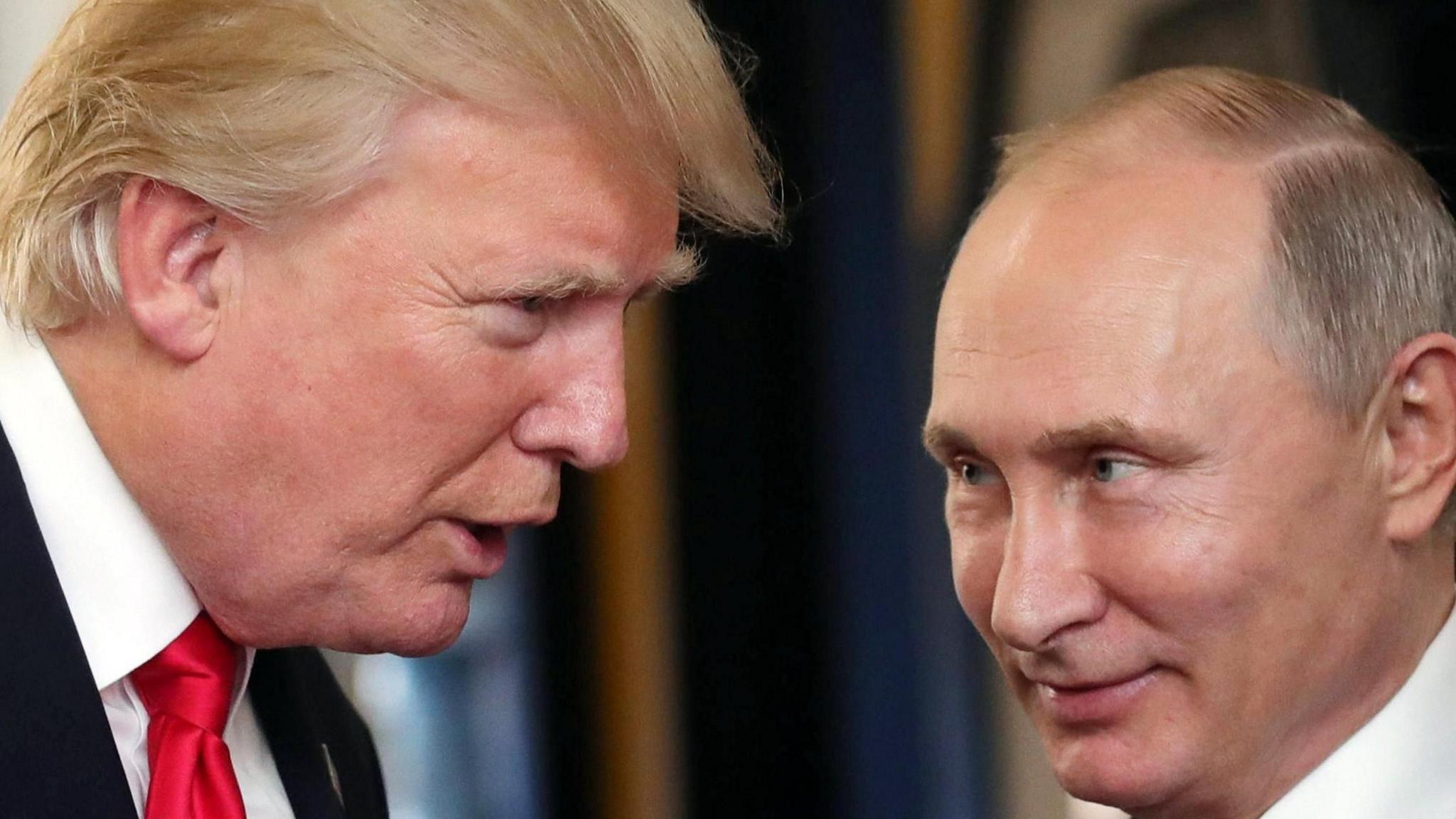
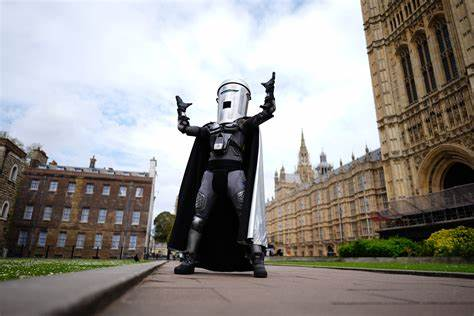
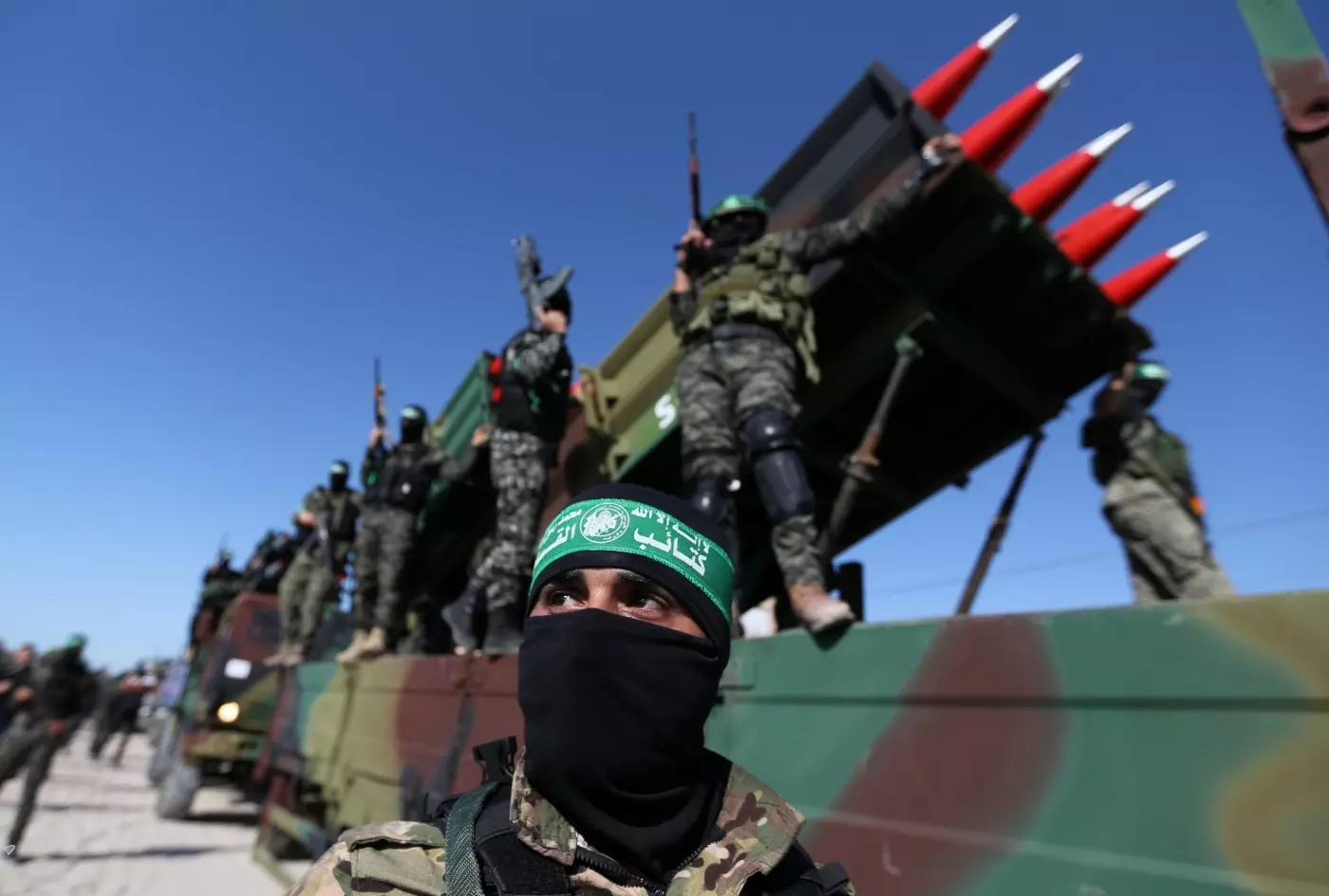

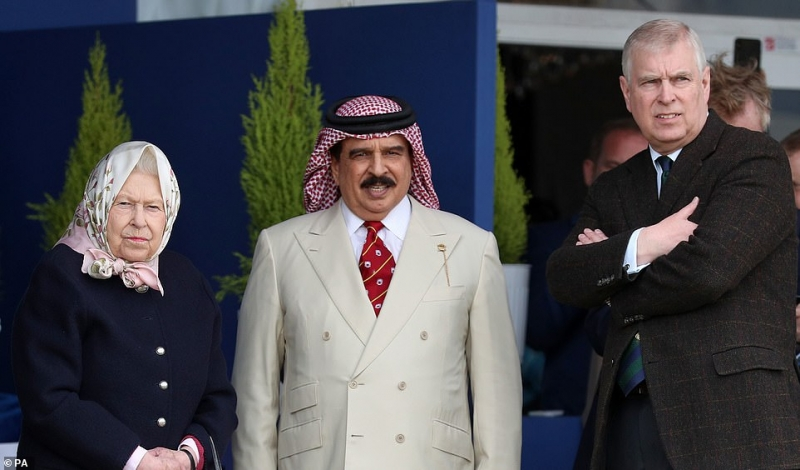


 Dan Glazebrook