by

The new era of famine: made in the West

The Wider Image: Risk of famine looms in Yemen
Salem Abdullah Musabih, 6, lies on a bed at a malnutrition intensive care unit at a hospital in the Red Sea port city of Hodaida, Yemen September 11, 2016. 

The famines threatening four countries today have one thing in common: Western aggression and destabilisation.

In February of this year, the world’s first famine in six years was officially declared in South Sudan. A month later, the UN’s humanitarian chief Stephen O’Brien warned the Security Council that three other countries – Yemen, Somalia, and Nigeria – also stood on the brink of famine, with 20 million at risk of starving to death within months. The world, he said, was now “facing the largest humanitarian crisis since the creation of the United Nations”. Unless $4.4billion in emergency funds was raised by the end of March, warned UN Secretary General Antionio Guterres, 20 million would likely starve to death. When the deadline was reached, he had received less than a tenth of that, a paltry $423million.

The amount raised has increased then, but still stands at little above one third of the target. It is almost certain not to met, with donations dropping sharply since mid-May.

For context, the New York Times helpfully pointed out, that $4.4billion is almost exactly the same amount as Britain has made selling weapons to Saudi Arabia in the past two years – most of which have been used against the famine-stricken Yemenis – and less than 10% of the $54billion in additional spending Donald Trump just pledged for the US military.

Yemen was in the news again this week, twice. First was the announcement by the Red Cross that cholera cases in Yemen have now reached 300,000. Then came the ruling by Britain’s High Court – choosing to believe private government assurances over volumes of first-hand eyewitness accounts – that the UK government’s arming of the vicious Saudi war against the Yemeni people is perfectly above board. These two declarations are not unrelated. For it is precisely Britain’s proxy war against Yemen that has led to the medieval levels of famine and disease now sweeping the country.

Back in October 2015 the head of the International Red Cross wrote that “Yemen after five months looks Syria after five years”. Today, according to Save the Children, one Yemeni child is infected with cholera every 35 seconds. This epidemic comes hot on the heels of last year’s dengue fever outbreak, which the World Health Organisation said they struggled to control due to the “near collapse of the health system” and “disruption of water supplies” resulting from the Western-supplied bombing campaign.  Hospitals have been bombed regularly. Following Philip Hammond’s justification of bombing raids on three Yemeni hospitals in as many months, the MSF warned that targeting hospitals was now becoming the “new normal”.

Bombing of hospitals and grain distribution centres, however, is just part of the story of the West’s genocide against the Yemeni people. Yemen is dependent on imports for more than 80% of its fuel, food and medicine, and 70% of these imports come through the Huydadeh port. This port was bombed in August 2015 by the Saudi-led coalition, and has been blockaded ever since, directly creating the current situation in which 21 million suffer food shortages, including 7 million facing famine. As the UN Special Rapporteur on human rights and international sanctions has noted, this blockade is “one of the main causes of the humanitarian catastrophe”, helping to lead to what he called  “this man-made famine”. Needless to say, this blockade – along with every aspect of the Saudi genocide in the Yemen – is fully supported by the US and Britain.

Yet Yemen is not the only place where Western policy is leading to famine.

This week marks the sixth anniversary of the independence of South Sudan. Yet, for the second year in a row, the planned celebrations have been cancelled because, in the midst of starvation and civil war, there is nothing to celebrate.

The country’s descent into famine was officially announced on 20th February this year, with 100,000 starving and a further 1 million on the brink of famine. The official criteria for a famine are that 20% of a population must be suffering “extreme food shortages”, 30% suffering acute malnutrition, and at least 1 per 5000 dying each day. Whilst those criteria are no longer being met, acute hunger has now reached 6 million, up from 5 million in February – over half the population. As in Yemen, this is a crisis of biblical proportions. As in Yemen, it is man-made. And, as in Yemen, it is the thoroughly predictable outcome of Western militarism.

The US and Britain were instrumental to the partition of Sudan in 2011, and it is precisely this partition which has bequeathed the country’s current tragedy. Just as in Libya, in the same year, a loose coalition of rebels with no unified programme were effectively placed in power by Western largesse. And just as in Libya, the inevitable collapse of this coalition has brought total devastation to the country.

The Southern People’s Liberation Movement (SPLM) was formed by rebel army colonel John Garang in 1983, and in the 1990s, under Clinton, the US began pouring millions of dollars into the insurgent movement. Although formally an uprising against the government in Khartoum, it has often relied on an appeal to ethnic chauvanism to galvanise support. According to former national committee memberDr. Peter Nyaba, for example, the movement’s very first mobilisation “that took more than ten thousand Bor youth to SPLA training camps in 1983 was not for the national agenda of liberation but to settle local scores with their neighbours, the Murles or the Nuers.” Similarly, Riek Machar’s faction of the SPLM, based mainly within the Nuer community, conducted a massacre of thousands of Dinka civilians in 1991. Dr Nyaba argues that political training was neglected in favour of, often very brutal, military training, leading to often horrific excesses against the populations under their control. After liberating an area, said Nyaba, the Movement should have

instituted “democratic reforms: a popular justice system, a new system of

education, health and veterinary services.” Such a move, he says, “would have given the SPLM the opportunity to prove itself to the people and to the world and, therefore,

to build a solid popular power base making the SPLM/A the authentic

representative of the people….the ‘New Sudan’ would have been born in the

physical and objective reality of the people, allowing the SPLM/A to acquire

political sovereignty and diplomatic recognition”. These, indeed, are the normal steps taken by genuinely successful revolutionary movements the world over. But this is not what happened. Rather, says Nyaba, the SPLM “denigrated into an agent of plunder, pillage and destructive conquest”. It was at precisely this point that the US began funding the movement, with the initial $20 million provided by Clinton soon expanding to $100 million per year under Bush’s satirically-named “Sudan Peace Act” of 2002.

Just as in Libya, the impact of such US largesse has been to enable insurgent groups to achieve their aims without providing the visionary leadership or mass organisational skills necessary to galvanise genuine mass support. Put simply, US support has rendered mass support unnecessary. Genuine revolutions – that is, revolutions attained primarily through the efforts of the masses themselves, rather than through pressure applied by external patrons – can only succeed with a visionary programme capable of winning the total commitment of the masses. Yet in South Sudan, the SPLM, thanks to US support, were able to come to power without this. The long term impact of this lack of popular, inspirational leadership has been an ideological vacuum into which have poured power struggles over patronage and resource networks.

Confident of external support, the SPLM – and its leader since Garang’s death in 2005, Salva Kiir – had no pressing need to win the support of all the tribes of the South. Without Western funding, Kiir would had to have reached out to the Nuer and the Murle and the other non-Dinka groups in order to secure enough support to force concessions from Sudan’s government. Had he done so, on the basis of a genuine mass programme capable of galvanising all the peoples of southern Sudan on a non-ethnic basis, this very programme would have formed the basis of a viable unity government following independence. However, confident of US backing, Kiir had no need to develop any of this. Instead, his clear patronage from the US enabled him to impose a false unity on his Nuer and Shilik rivals, in which his proximity to the US alone was enough to force them to fall in line if they did not want to be completely excluded from the power and the money coming his way. Political struggles for mass support were to be eclipsed by factional rivalries over who would control the flow of resources.

The same pattern has continued after independence. Assuming, correctly, that US support would continue to flow, President Kiir has had no particular need to endear himself to those outside his primary Dinka constituency, even going so far as to sack his Nuer deputy Riek Machar in 2013, triggering the latest round of civil war. This latest round of war has taken on particularly nasty ethnic dimensions, as the the SPLM’s rival factions, for years bound together by US dollars rather than by a genuine programme of unity, unravels.

Whilst Yemen’s near-famine was caused by the Western-directed bombing and blockade of that country, then, South Sudan’s actual famine is the result of years of proxy war funded by the West and the disastrous partition it produced. The situation in Nigeria is also a result of war, in this case the Boko Haram insurgency – an insurgency which owes its massive spread in recent years directly to the NATO destruction of Libya, which opened up the country’s weapons dumps to Boko Haram and its partners. Have no doubt, the latest wave of famine is a direct by-product of Western aggression – creating another 20 million victims for whom US and British governments must be brought to justice.
 

The country’s descent into famine was officially announced on 20th February this year, with 100,000 starving and a further 1 million on the brink of famine. The official criteria for a famine are that 20% of a population must be suffering “extreme food shortages”, 30% suffering acute malnutrition, and at least 1 per 5000 dying each day. Whilst those criteria are no longer being met, acute hunger has now reached 6 million, up from 5 million in February – over half the population. As in Yemen, this is a crisis of biblical proportions. As in Yemen, it is man-made. And, as in Yemen, it is the thoroughly predictable outcome of Western militarism.


The US and Britain were instrumental to the partition of Sudan in 2011, and it is precisely this partition which has bequeathed the country’s current tragedy. Just as in Libya, in the same year, a loose coalition of rebels with no unified programme were effectively placed in power by Western largesse. And just as in Libya, the inevitable collapse of this coalition has brought total devastation to the country.


The Southern People’s Liberation Movement (SPLM) was formed by rebel army colonel John Garang in 1983, and in the 1990s, under Clinton, the US began pouring millions of dollars into the insurgent movement. Although formally an uprising against the government in Khartoum, it has often relied on an appeal to ethnic chauvanism to galvanise support. According to former national committee memberDr. Peter Nyaba, for example, the movement’s very first mobilisation “that took more than ten thousand Bor youth to SPLA training camps in 1983 was not for the national agenda of liberation but to settle local scores with their neighbours, the Murles or the Nuers.” Similarly, Riek Machar’s faction of the SPLM, based mainly within the Nuer community, conducted a massacre of thousands of Dinka civilians in 1991. Dr Nyaba argues that political training was neglected in favour of, often very brutal, military training, leading to often horrific excesses against the populations under their control. After liberating an area, said Nyaba, the Movement should have

instituted “democratic reforms: a popular justice system, a new system of

education, health and veterinary services.” Such a move, he says, “would have given the SPLM the opportunity to prove itself to the people and to the world and, therefore,

to build a solid popular power base making the SPLM/A the authentic

representative of the people….the ‘New Sudan’ would have been born in the

physical and objective reality of the people, allowing the SPLM/A to acquire

political sovereignty and diplomatic recognition”. These, indeed, are the normal steps taken by genuinely successful revolutionary movements the world over. But this is not what happened. Rather, says Nyaba, the SPLM “denigrated into an agent of plunder, pillage and destructive conquest”. It was at precisely this point that the US began funding the movement, with the initial $20 million provided by Clinton soon expanding to $100 million per year under Bush’s satirically-named “Sudan Peace Act” of 2002.


Just as in Libya, the impact of such US largesse has been to enable insurgent groups to achieve their aims without providing the visionary leadership or mass organisational skills necessary to galvanise genuine mass support. Put simply, US support has rendered mass support unnecessary. Genuine revolutions – that is, revolutions attained primarily through the efforts of the masses themselves, rather than through pressure applied by external patrons – can only succeed with a visionary programme capable of winning the total commitment of the masses. Yet in South Sudan, the SPLM, thanks to US support, were able to come to power without this. The long term impact of this lack of popular, inspirational leadership has been an ideological vacuum into which have poured power struggles over patronage and resource networks.


Confident of external support, the SPLM – and its leader since Garang’s death in 2005, Salva Kiir – had no pressing need to win the support of all the tribes of the South. Without Western funding, Kiir would had to have reached out to the Nuer and the Murle and the other non-Dinka groups in order to secure enough support to force concessions from Sudan’s government. Had he done so, on the basis of a genuine mass programme capable of galvanising all the peoples of southern Sudan on a non-ethnic basis, this very programme would have formed the basis of a viable unity government following independence. However, confident of US backing, Kiir had no need to develop any of this. Instead, his clear patronage from the US enabled him to impose a false unity on his Nuer and Shilik rivals, in which his proximity to the US alone was enough to force them to fall in line if they did not want to be completely excluded from the power and the money coming his way. Political struggles for mass support were to be eclipsed by factional rivalries over who would control the flow of resources.


The same pattern has continued after independence. Assuming, correctly, that US support would continue to flow, President Kiir has had no particular need to endear himself to those outside his primary Dinka constituency, even going so far as to sack his Nuer deputy Riek Machar in 2013, triggering the latest round of civil war. This latest round of war has taken on particularly nasty ethnic dimensions, as the the SPLM’s rival factions, for years bound together by US dollars rather than by a genuine programme of unity, unravels.


Whilst Yemen’s near-famine was caused by the Western-directed bombing and blockade of that country, then, South Sudan’s actual famine is the result of years of proxy war funded by the West and the disastrous partition it produced. The situation in Nigeria is also a result of war, in this case the Boko Haram insurgency – an insurgency which owes its massive spread in recent years directly to the NATO destruction of Libya, which opened up the country’s weapons dumps to Boko Haram and its partners. Have no doubt, the latest wave of famine is a direct by-product of Western aggression – creating another 20 million victims for whom US and British governments must be brought to justice.

by

The Qatar blockade, the petro-yuan, and the coming war on Iran


trump salman

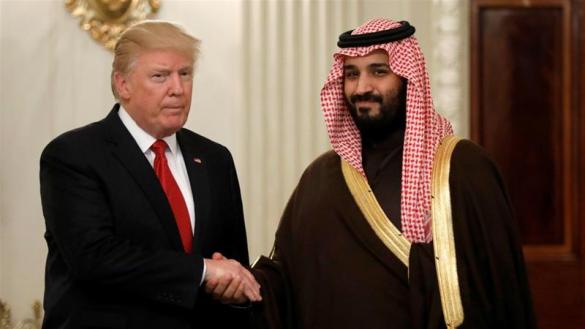
Trump with Saudi Deputy Crown Prince Mohammed Bin Sultan

Trump’s speech to the assembled Gulf leaders in Saudi Arabia on May 21st is worth reading in full. It is deeply disturbing.

Having praised himself for his $110billion arms deal with the Saudis, he goes on to talk about the threat posed by terrorism, and what a wonderful job the US and the Gulfis – that is, the leading state sponsor of the region’s supremacist death squads, and its assembled proxies – are doing in combating it. He then goes on to claim that at the root of the region’s terrorism lurks – guess who? The power leading the regional pushback against ISIS and Al Qaeda – Iran.


“Starving terrorists of their territory, their funding, and the false allure of their craven ideology, will be the basis for defeating them” he says, “But no discussion of stamping out this threat would be complete without mentioning the government that gives terrorists all three—safe harbor, financial backing, and the social standing needed for recruitment”. This is pretty much exactly how Joe Biden – in his own attempt to whitewash US involvement – described Trump’s Saudi hosts three years earlier. But Trump is not talking about IS’s Saudi backers; he is talking about Iran – the same Iran responsible, with its Syrian and Russian allies, for that fact that the IS flag is NOT today flying over Damascus.


It gets worse. Look at the following passage, just after he calls on “all nations of conscience to work together to isolate Iran”:

“Will we be indifferent in the presence of evil? Will we protect our citizens from its violent ideology? Will we let its venom spread through our societies? Will we let it destroy the most holy sites on earth? If we do not confront this deadly terror, we know what the future will bring—more suffering and despair. But if we act—if we leave this magnificent room unified and determined to do what it takes to destroy the terror that threatens the world—then there is no limit to the great future our citizens will have.

The birthplace of civilization is waiting to begin a new renaissance. Just imagine what tomorrow could bring. Glorious wonders of science, art, medicine and commerce to inspire humankind. Great cities built on the ruins of shattered towns. New jobs and industries that will lift up millions of people.”

This is the language of genocide. Heroism and genocide have always gone hand-in-hand in the settler-colonial ideology internalised by the likes of Trump, for which ‘building great cities on the ruins of shattered towns’, be they native American, Palestinian, or, it seems, Iranian, has always been the highest accolade. Some have accused Trump of making novice blunders during his first lumbering foray into the Middle Eastern maelstrom. But I think he knows exactly what he’s doing. He knows very well that the loosely-defined ‘ideology’ he speaks of as ‘spreading venom’ will be much more readily interpreted by his hosts as Shi’ism – the creed to which Iran actually subscribes – than as Wahhabi’ism, the sectarian ideology behind ISIS, Al Qaeda and the Saudi state. And just to make clear what he is demanding be done to this ill-defined – but, nudge-wink, understood – enemy, he spells it out: “The nations of the Middle East cannot wait for American power to crush this enemy for them. The nations of the Middle East will have to decide what kind of future they want for themselves, for their countries, and for their children.

It is a choice between two futures — and it is a choice America CANNOT make for you.

A better future is only possible if your nations drive out the terrorists and extremists. Drive. Them. Out.

DRIVE THEM OUT of your places of worship.

DRIVE THEM OUT of your communities.

DRIVE THEM OUT of your holy land, and

DRIVE THEM OUT OF THIS EARTH.”


Doesn’t this sound horribly like Trump giving the green light to an all-out war of eradication against the region’s Shia – that is, a war very similar to the one actually being waged, in Syria, Yemen and elsewhere, by Trump’s government, his hosts, and their proxies?


At the same time, having found it harder than expected to rip up the Iran deal, Trump is instead hoping to render it null and void by simply blackmailing individual nations into not dealing with Iran, ensuring the formal lifting of sanctions is replaced by an informal blockade.


This is where Qatar comes in. Qatar  has clearly not been playing ball with the US-approved, Saudi-led ‘isolate Iran’ programme. This is partly because, ever since the current Emir toppled his pro-Saudi father in 1995, the country has made independence from Saudi Arabia a hallmark of its foreign policy. But it is mostly because Qatar and Iran share the world’s largest natural gas field – known in Qatar as North Field and in Iran as South Pars.


In fact, the two countries have had decent relations for some time: in May 2010, for example, in stark contrast to the hardline attitude of his Gulf neighbours, the Qatari Emir Al-Thani joined forces with President Assad of Syria, no less, to support Turkey’s diplomatic proposals over Iran’s nuclear programme. Then, in 2014, in a ‘dry run’ of today’s crisis, the Saudis, UAE and Bahrain withdrew their ambassadors from Doha following a Qatari proposal to help Iran develop its side of the North Field/ South Pars gas field. But what’s taking place now is much more serious. And that is largely because of the likely earth-shattering impact of the decisions surely now being considered by the two powers over where their gas will go, how it will get there – and in what currency it will be sold.


In April of this year, a self-imposed 12-year moratorium on the development of Qatar’s share of North Field came to an end, potentially opening up a flood of Liquified Natural Gas (LNG) onto the market in the years to come. But where will it go? Qatar had originally been hoping to build an LNG pipeline to the Mediterranean via Saudi Arabia, Syria and Turkey; indeed, many have speculated that Assad’s blocking of this proposal in favour of an Iran-Iraq-Syria route was a major reason for Qatar’s support of the anti-government insurgency there. The failure of this insurgency, however, has spelled the death of this proposal, leaving Qatar bound to look East to Asia – already their biggest customers – for their LNG markets. But most of the existing Eastbound LNG pipeline infrastructure is controlled by Iran. For Qatar, then, cutting its Iran links would be cutting off its nose to spite its face. This is why the Saudis aim to demonstrate that the alternative is having their entire face cut off.


For the US, the stakes couldn’t be higher. In 2012, Iran began to accept yuan for its oil and gas payments, followed by Russia in 2015. If this takes off, this could literally spell the beginning of the end of US global power. The dollar is the world’s leading reserve currency, in the main, only because oil is currently traded in dollars. Countries seeking foreign exchange reserves as insurance against crises within their own currencies tend to look to the dollar precisely because it is effectively ‘convertible’ into oil, the world’s number one commodity. This global thirst for dollars is what allows the US to print endless amounts of them, virtually for free, which it can then exchange for real goods and services with other countries. This is what is known as ‘seignorage privileges’; that is, the ability to absorb ever-increasing amounts of goods and services from other countries without having to provide anything of equivalent value in return. In turn, it is this privilege which helps to finance the staggering costs of the US military machine, now running at over $600 billion per year.


Yet, this whole system falls apart once other countries stop using the dollar as their prime reserve currency. And they stop doing this once oil stops being traded in dollars. This is one reason why the US were do keen for Saddam Hussein to go after he began trading Iraqi oil in Euros.


And, slowly but surely, this change is already occurring. In 2012, the People’s Bank of China announced it would no longer be increasing its holdings of US dollars, and two years later, Nigeria increased its holdings of yuan from 2% to 7% of its total foreign exchange reserves. Many other countries are moving in the same direction.


At the same time, China has been on a gold-buying spree, setting up its own twice-daily  pricing of gold in yuan in 2012 as part of what the chair of the Shanghai Gold Exchange called the “internationalisation of renminbi”, ultimately aiming towards making yuan fully convertible to gold. Once this happens, the choice for oil-producing countries between trading oil for ever-more-worthless paper dollars, or trading it for convertible-to-gold renminbi will be a no-brainer. For Qatar, the pull may already be irresistible.


Hence the urgency to pre-emptively punish Qatar for its likely move towards a joint venture with Iran to supply Asia with LNG priced in yuan. The aim is to demonstrate that, however economically suicidal it may be in the long term to snub Iran and continue trading in the dollar, it will be politically suicidal in the immediate term to do anything else. Just how far Trump and his Arab friends are prepared to take this remains to be seen. But Trump has repeatedly suggested that the whole point of having a military is to use it.

This article originally appeared on RT.

by

The West clearly now has Iran in its sights (March 2017)

The British-US plan to weaken Iran via the proxy war on Syria has spectacularly backfired. Now they are more desperate than ever to bring Iran to its knees.

Western think tanks and ‘strategic institutes’ have been getting themselves in a cold sweat about Iranian influence for some time. In 2012, Frederick Kagan (former Bush advisor and Project for a New American Century neo-con) co-authored a report for the Institute for the Study of War warning “the US and its allies and partners in the region and beyond must not only understand Iran’s regional strategy and influence but also develop a coherent strategy of their own with which to confront them. Considering the religious, economic, political and diplomatic power of the two sides, it is simply unacceptable for the US and its allies to allow even such progress as it has [already] made in these realms.” Since Kagan made those comments four years ago, Iran’s “unacceptable…progress” has continued apace.

Its military cooperation with Russia, Syria, Iraq and Hezbollah has developed into an increasingly formalized alliance (the so-called “4+1”), in which it played a leading role in the liberation of the Syrian city of Aleppo earlier this year. In Iraq, the Shi’ite militias it sponsors have been the indispensable vanguard of many of the battles against Islamic State, and it wields considerable influence over the rebel forces in both Bahrain and (supposedly) Yemen. The fall of Mosul will only consolidate this power.

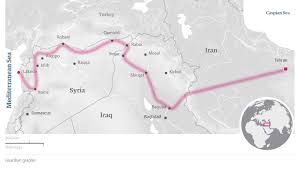
Indeed, according to the Guardian, the territory west of Mosul that is currently being secured by the Iranian-backed Popular Mobilization forces is one of the final pieces of a jigsaw completing an arc of influence stretching all the way from Tehran to the Mediterranean. Such a ‘land bridge’ to the Mediterranean would significantly strengthen Iran’s independence and ability to withstand, for example, any future blockades or sieges. This is making Western planners particularly nervous, as it significantly weakens the West’s ability to control and corral the Iranians; with a long time Centcom advisor Ali Khedery, for example, claiming that such a development “should trouble every Western leader and our regional allies because this will further embolden Iran.”

Forbes, meanwhile, wrote that “Iranian influence in Iraq has the potential to destabilize global oil policy and the global oil market” given that the two countries combined oil reserves almost equal those of Saudi Arabia.

For here, as ever, lies the empire’s real fear – that the people of the Middle East might actually gain control over their own resources, and start using them strategically for their own development. Genuine independence has always been the fear of the region’s British, US and Israeli overlords. And Iran’s potential makes this independence a greater threat than most.

The Foreign Affairs Committee of the British House of Commons spelled this out in a report in 2014: “Iran has the potential to be a major international power… it could be the “engine roomof the Middle East. It lies in a very significant strategic position, with Iraq to the west, former Soviet states to the north which have only relatively recently gained independence, Afghanistan, and Pakistan to the east and the Persian Gulf—a prime route for oil exports—to the south. It has a large and youthful population—75 million or more, of whom 55 percent are aged under 30. Iran ranks 76th out of the 187 countries classified under the UNDP Human Development Index, based upon assessments of life expectancy, access to knowledge and standard of living, placing it higher than any of its land neighbors. Youth literacy is near-universal. The country’s economy is relatively diverse, with supplies of essential commodities and an engineering, research and manufacturing base. Iran has substantial resources of natural gas (second only to the Russian Federation) and enough oil to enable it to be a leading exporter.”

Unacceptable progress” indeed!

Clearly, the US has been rattled by Iran for some time. Contrary to Trump’s assertions, for example, the Iranian ‘nuclear deal’ was less a ‘gift’ to Iran than a changing of tack to a longer game allowing the West to cultivate a fifth column in the country in preparation for a future attack.

Yet, US belligerence has apparently been stepped up under Trump, with new sanctions, an enormous ramping up of hostile rhetoric and the dispatch of another warship to Iran’s borders in January following an entirely legal Iranian missile test.

But most worryingly, the US has been sending large numbers of US troops to Iran’s neighbors in recent weeks. The initial deployment of 500 US troops in Syria was followed on March 9 by a further 400, with the Washington Post announcing on March 15 that another 1,000 are on the way.

These are just part of a massive flotilla of almost 5,000 US soldiers currently en route to the region, with troops from Saudi Arabia, Jordan and the UAE also being considered. This was revealed just one day after Trump met Saudi Deputy Crown Prince Mohammed bin Salman at the White House, following meetings earlier in the week between Secretary of State Rex Tillerson and the foreign ministers of both Saudi Arabia and the United Arab Emirates. These troops are ostensibly going to aid the fight to oust ISIS from their stronghold in Raqqa. The real reason is to cement US influence and confront the Iranians. This is the US ground invasion which the ‘Gulfis’ have been calling for for years. Its aim is to keep the civil war alive by keeping the Syrian Arab Army out of Raqqa.

In Iraq, Secretary of Defense James Mattis (an avowed anti-Iran hawk who has claimed the country is a bigger problem than ISIS) announced he plans to keep US troops in Mosul long after the city is recaptured from ISIS. Again, this is nothing to do with ‘stability’ but all about countering Iranian influence. Indeed, according to Iraqi Prime Minister Abadi, Trump promised that he would “double US support, not just continue it” following Mosul’s capture; support here meaning the deployment of occupation troops.

But deploying troops to Iraq and Syria to contain Iranian influence is just the start of it. Ultimately, Trump’s Cabinet of anti-Iran warmongers seek to destroy the Islamic Republic itself. Their difficulty is how to convince Russia to go along with this: Syria has taught them that without Russian acquiescence, regime change can be very difficult indeed.

The Wall Street Journal recently ran an article on Trump’s plans to “drive a wedge” between Iran and Russia, quoting a European official that there was “daylight” between the two countries. Indeed, differences do seem to have emerged over, for example, Assad’s future in Syria and, as political analyst Eric Draitser has pointed out, the two countries have a certain rivalry over supplying Europe’s energy markets.

Nevertheless, it would be utter suicide for Russia to go along with any US attempts to undermine its number one Middle Eastern ally.

As the deputy director of the Institute of the CIS, Lieutenant-Colonel Vladimir Yevseyev told Sputnik, “the logic of the White House is simple: any deterioration of relations, whether Russian-Iranian or Russian-Turkish is strengthening the US position in the region.” Neither side has an interest in that.

Indeed, Obama’s so-called ‘reset’ of US-Russian relations did not end well for Russia: then Prime Minister Medvedev supported tough UN sanctions on Iran and delayed the delivery of anti-missile batteries to Iran, not to mention acquiescing to NATO aggression against Libya, only to find the US going back on its commitments to roll back its missile defenses in Eastern Europe, organizing an anti-Russian coup in Ukraine, initiating a major sanctions regime, and sponsoring a proxy war against Russia’s ally Syria. So much for gratitude!

Thankfully, Iranian and Russian interests are deeply converged and a split highly unlikely. As the Institute for the Study of War has pointed out, the list of shared interests is long, ranging from support for the Syrian government, the desire to limit US influence in the Middle East and support for Armenia against Azerbaijan and Turkey, forming a relationship that “rests on a deep foundation of common strategic objectives and interests”. The key, however, is to approach matters with eyes wide open. Trump’s rushing of troops to Syria is nothing to do with any ‘common front’ against ISIS and everything to do with weakening Iran. And in the end, this means weakening Russia too.

This article originally appeared on RT. 

by

Flynn may be gone, but his Russia policy lives on (February 2017)

US Army Lt General Flynn testifies before House Intelligence Committee in Washington


Amid demonstrations against his choice, Trump named Lieutenant General Herbert McMaster – whose book claiming the US was too soft on Vietnam is now required reading for US officers – as his new national security adviser this week.

McMaster’s appointment came after Michael Flynn, Trump’s original choice, was forced to resign earlier this month after it emerged that he had misled Vice President Mike Pence about his phone calls with the Russian ambassador back in December. 

The Washington Post revealed that these conversations, which occurred before Flynn had taken up his government role, had involved discussions of discussed US sanctions on Russia. Such a discussion not only broke the ‘one president at a time’ protocol – that members of an incoming administration should not discuss policy with foreign powers – but also flatly contradicted his own earlier denials, made to both Pence and to the FBI.   

As Flynn had supposedly been one of the key ‘pro-Putin’ figures in Trump’s administration, his removal has been interpreted by some as a victory for the anti-Russia ‘hawks’ in the US foreign policy establishment. This is a misreading of the situation on two levels.

First, characterising members of Trump’s team as ‘pro-Russia’ is incorrect; rather, they have, as Tom Hardy’s character in Taboo might put it, a “use” for Russia. Secondly, this plan for Russia is likely to remain intact regardless of Flynn’s removal – or McMaster’s well-publicised anti-Russia stance.

XX subheading XX

Improving relations with Russia was only one of Flynn’s two major foreign policy obsessions: the other was and is “regime change” in Iran. In his 2016 book The Field of Fight, he wrote that “Iran has been a major threat to the US for decades due to its sponsorship of international terrorism – but the US has prioritised diplomatic relations over national security”. Instead, he argued, “the US must change course. These countries must be prepared to face military action”. 

In fact, it is highly likely that the so-called ‘pro-Russia’ position of Flynn, and indeed Trump, is part of a broader foreign policy initiative aimed ultimately at destroying Iran. The broad outlines of this position could already be discerned in the testimony Flynn gave to the Joint Foreign Affairs and House Armed Services Committee back in June 2015. Like so many now in Trump’s team, he expressed his dissatisfaction with the nuclear deal negotiated the year before.

“Iran represents a clear and present danger to the region, and eventually to the world,” he told the committee. When asked what he believed should be done about the prospect of Iranian nuclear development, he was unequivocal, replying that regime change in Tehran “is the best way to stop the Iranian nuclear weapons programme”.

Since then, of course, Syria has taught the West a painful lesson about ‘regime change’, namely that Russia can make it extremely difficult. 

Later in his testimony, Flynn argued that there was an ‘anti-US’ alliance being developed between China, Iran and Russia: “Just look at the [Iranian] cooperation with North Korea, China and Russia. Connect those dots and you get the outline of a global alliance aimed at the US, our friends and our allies”. He continued: “Russian assistance is part of a broader pattern. After all, the Iranian nuclear reactor at Bushehr is Russian-built, the two countries work very closely together in Syria, and Russia is providing Iran with an effective anti-aircraft system that could be deployed against any aircraft seeking to destroy the nuclear programme”. 

The message is clear: if you want to attack Iran, you’d better break their alliance with Russia first. Michael Ledeen, who co-authored Flynn’s book, put it simply: “The issue is whether Putin is prepared to abandon Khamenei”. This is what those phone calls, and all Trump’s flattery of Putin, are really about: attempting to draw Russia away from its alliance with Iran (and China) – and ultimately to buy Russian acquiescence for the next war.

XXsubheadingXX

The restoration of governmental authority in Syria currently underway, however, is not the first time that the US has suffered a military defeat at the hands of a foreign government supported by Russia. Nor is it the first time the US have responded to such a failure with a renewed attempt to split Russia from her allies.

In 1969, Richard Milhous Nixon became 37th President of the United States, and the 5th to lead US attempts to crush Vietnamese independence, inheriting what had by then become a full-scale, and disastrous, military commitment. The Tet offensive the previous year had decisively blown apart the lie that the US was winning the war, and Nixon was elected on a promise to bring about “peace with honour”. 

He would achieve neither, and in fact embarked on a massive escalation of the war, including a secret carpet bombing campaign in Cambodia which led to famine and ultimately the rise of the Khmer Rouge. Yet the US’s ongoing defeat could not be abated. This led Nixon and his advisors towards a radical rethink of US strategy. 

“By the time Nixon came into office,” wrote his own National Security advisor, Henry Kissinger, “East-West relations were themselves in obvious need of reassessment”. Indeed, he said, the USA’s entire Cold War strategy “needed to be reconsidered in light of the trauma of Vietnam”. 

The Vietnamese victory over the US was aided significantly by support, at different times, from both Russia and China, and Kissinger’s greatest fear was the restoration of “dreaded Sino-Soviet bloc…which had inspired so much fear in the 1950s”. He added that while it was “far from clear” that the USSR was “capable of realising so vast a project…what was obvious…was that the risk could not be run”. 

“If the balance of power is taken seriously,” he continued, “then the very prospect of

geopolitical upheaval must be resisted; by the time the change has occurred, it may well be too late to oppose it.”

The missing linkage

In today’s terms, this formula translates into two specific policy requirements for the US: 1) Russian-Chinese unity must be resisted and 2) Iran’s increasing influence in the Middle East must be reversed (ideally, one presumes, before the recapture of Mosul by largely Iranian-allied militias solidifies such influence).

Like Trump and Flynn today, Nixon and Kissinger sought nothing less than the breakup of the non-Western alliance spearheaded by Russia and China that had stymied US attempts to destroy governments challenging their hegemony. And, as today, they believed US cooperation with Russia to be both possible and desirable for both parties. 

Said Kissinger, “America needed breathing room in order to extricate itself from Vietnam and to construct a new policy for the post-Vietnam era, while the Soviet Union had perhaps even stronger reasons for seeking a respite”. In particular, “the idea was to emphasise those areas in which cooperation was possible, and to use that cooperation as leverage to modify Soviet behaviour in areas where the two countries were at loggerheads”, a policy that became known as ‘linkage’. 

The linkage being sought today – the deal Trump wishes to make with Russia – is precisely to use potential “cooperation” over Syria, Ukraine and sanctions as “leverage” to secure Russian acquiescence for renewed hostilities towards Iran and China.

With this in mind, it is particularly interesting to note Kissinger’s role in shaping Trump’s foreign policy today. Germany’s Bild newspaper reported in December 2016 that Kissinger was a key architect of Trump’s ‘rapprochement’ policy with Russia, advising him to lift sanctions and recognise Russian ownership of Crimea. These will not be free gifts – reciprocity will be expected and demanded, and Trump is making it abundantly clear that he wants a free hand in confronting Iran and China. 

Furthermore, as journalist Nafeez Ahmed has noted, “Kissinger’s ‘unofficial’ advisory role in the Trump regime is solidified through the direct influence of one of his longtime acolytes: K.T. McFarland, an aide to Henry Kissinger during the Nixon administration on the National Security Council from 1970 to 1976.” 

KT McFarland, it may be recalled, was appointed by Trump as Michael Flynn’s deputy. Robert Harward, a former Navy seal, reportedly turned down the national security adviser post because Trump insisted that she stay on rather than allowing Harward to bring his own team.

In his book Diplomacy, Kissinger wrote that “Nixon had managed, despite the tragedy of Indochina, to maneuver his country into a dominant international position”, snatching a victory of sorts from the jaws of defeat, by playing Russia and China off against one another. 

In this light, McMaster’s apparently conflicting views on Russia make sense. According to

Frants Klintsevich, deputy head of the defense and security affairs committee of Russia’s Federation Council, McMaster is a “100% hawk” on Russia. This appears to contrast with Flynn’s approach, putting him closer to other so-called ‘Russophobes’ in the Trump team, such as the ambassador to the UN Nikki Haley, who told the Security Council last month that “Russian actions” in the Ukraine “demand clear and strong condemnation”, and Vice President Mike Pense, who condemned Russia at the recent Munich Security Conference. Yet these figures, and their veiled and less veiled threats, are as much a part of the strategy as dangling the prospect of lifting sanctions. As Kissinger put it, “The statesman’s role is….to create a network of incentives and penalties to produce the most favourable outcome”. To pull off his ‘deal’ Trump needs his ‘bad cops’ just as much as he needs to flatter and offer inducements – to warn Russia of what they will be up against should they choose to ignore his overtures and maintain their existing alliances. The question today is: will Russia snatch defeat from the jaws of victory in Syria by allowing itself to be played off against Iran and China?

The stakes could not be higher.

This article originally appeared in Middle East Eye

by

Britain’s century-long war against Yemen (January 2017)

Britain has been waging war on the Yemen for almost a century, for one purpose – to keep the country weak and divided. For it is Yemen alone that has the potential to challenge the Saudi dominance of the peninsula that has served British interests so well.

YEMEN-CONFLICT

Britain is backing a Saudi invasion of Yemen that has cost thousands of innocent lives. It is providing advanced weaponry to the Saudis, training their military, and has soldiers embedded with the Saudis helping with targeting; and there is suspicion that British soldiers may even be directly involved on the battlefield.

This is true of today. But it also describes exactly what was happening in the 1960s, in a shameful episode which Britain has, like so much of its colonial past, been effectively whitewashed out of history.

In 1962, following the death of Yemeni King Ahmad, Arab nationalist army officers led by Colonel Abdullah Al-Sallal seized power and declared a Republic. The Royalists launched an insurgency to reclaim power, backed by Saudi Arabia, Jordan, Israel and Britain, whilst Nasser’s Egypt sent troops to support the fledgling republican government.

In his book ‘Unpeople’, historian Mark Curtis pieces together Britain’s ‘dirty war’ in Yemen between 1962 and 1969 using declassified files which – despite their public availability and the incendiary nature of their revelations – have only ever been examined by one other British historian. British involvement spanned both Conservative and Labour governments, and implicated leading members of the British government in war crimes.

Just as today, the side under attack from Britain clearly had popular support – as British officials were well aware. Christopher Gandy Britain’s top official in Yemen’s cultural capital, Taiz noted that the previous regime was “unpopular with large elements and those in many ways the best”, describing it as “an arbitrary autocracy”. Another British official, in the Prime Minister’s office, wrote that Nasser had been “able to capture most of the dynamic and modern forces in the area whilst we have been left, by our own choice, backing the forces which are not merely reactionary (that would not matter so much) but shifty, unreliable and treacherous” Even Prime Minister Harold Macmillan admitted it was “repugnant to political equality and prudence alike that we should so often appear to be supporting out of date and despotic regimes and to be opposing the growth of modern and more democratic forms of government”. Thus, wrote Curtis, “Britain decided to engage in a covert campaign to promote those forces recognised [by Britain itself] as ‘shifty’, ‘treacherous’ and ‘despotic’ to undermine those recognised as ‘popular’ and ‘democratic'”.

At the request of Mossad, MI6 appointed Conservative MP Neil MacLean to run a guerrilla war against the new Republican government. At first Britain’s role was primarily to support and equip Jordan’s involvement in the war; just as today, it was British fighter jets carrying out airstrikes on Yemen, with British military advisors embedded with their allies at the most senior level. This involvement stepped up a gear in March 1963, however, when Britain began covertly supplying weapons to the Royalist forces themselves via their Gulf allies. The following month, says MI6 biographer Stephen Dorrill, millions of pounds worth of light weapons were shipped from an RAF station in Wilstshire to the insurgents, including 50,000 rifles. At the same time, a decision was taken by Britain’s foreign minister (shortly to become Prime Minister) Alec Douglas-Home, MI6 chief Dick White and SAS founder David Stirling to send a British force to work directly with the insurgents. But to avoid parliamentary scrutiny and public accountability, this force would be comprised of mercenaries, rather than serving soldiers. SAS soldiers and paratroopers were given temporary leave to join this new force on a salary of £10,000 per year, paid by the Saudi Prince Sultan. An MI6 task force was also set up, to facilitate weapons and personnel supplies, and authorisation was given for British mercenaries to lay mines. The same time as these decisions were taken, Douglas-Home told parliament “our policy in Yemen is one of non-intervention in the affairs of that country. It is not therefore our policy to supply arms to the Royalists in the Yemen”. Foreign minister Rab Butler was more uneasy with such barefaced lying, especially when evidence began circulating of exactly what Britain was up to; a memo he sent to the PM in 1964 complained that his job of rebuffing UN claims that Britain was supplying the Royalists was made slightly more difficult “since we know that this is in fact true”.

British officials also knew that their insurgency had no chance of winning. But this was not the point. As Prime Minister Macmillan told President Kennedy at the time, “I quite realise that the Loyalists will probably not win in

Yemen in the end but it would not suit us too badly if the new Yemeni regime were occupied with their own internal affairs during the next few years”. What Britain wanted, he added, was “a weak government in Yemen not able to make trouble”. Nor was this only Macmillan’s personal opinion; his foreign policy advisor Philip de Zulueta wrote that “All departments appear to be agreed that the present stalemate in the Yemen, with the Republicans and Royalists fighting each other and therefore having no time or energy left over to make trouble for us in Aden, suits our own interests very well…our interest is surely to have the maximum confusion in the tribal areas on the Aden frontier” with Yemen.

Labour came to power in the autumn of 1964, but the policy stayed the same; indeed, direct (but covert) RAF bombing of Yemen began soon after. In addition, another private British military company Airwork Services, signed a $26million contract to provide personnel for training Saudi pilots and ground crew involved in the war. This agreement later evolved into British pilots actually carrying out bombing missions themselves, with a foreign office memo dated March 1967 noting that “we have raised no objection to their being employed in operations, though we made it clear to the Saudis that we could not publicly acquiesce in any such arrangements”. By the time the war ended – with its inevitable Republican victory – an estimated 200,000 people had been killed.

At the same time as Britain was running the insurgency in North Yemen, it was fighting a vicious counter-insurgency campaign in South Yemen – then a colonial protectorate known as the Federation of Southern Arabia. This federation comprised the port city of Aden, under the direct colonial rule of the UK, and a series of sheikhdoms in the pay of the UK in the neighbouring hinterland. Its inhabitants were desperately poor, with one British commander noting that “there is barely enough subsistence to support the population”. These were the conditions behind a major revolt against British rule that broke out in the district of Radfan in April 1964 and would not be quelled for 7 months. The methods used to do so were typically brutal, with the British High Commissioner of Aden, Sir Kennedy Trevaskis suggesting that soldiers be sent to “put the fear of death into the villages”. If this didn’t work, he said “it would be necessary to deliver some gun attacks on livestock or men outside the villages”, adding that “we might be able to claim that our aircraft were shooting back of [sic] men who had fired at us from the ground”. The British use of airstrikes against the risen peasants was massive: historian John Newsinger writes that in just 3 months in 1964, British jets fired 2508 rockets and 200,000 cannon rounds, whilst British bombers dropped 3504 20-pound bombs and 14 1000-pound bombs and fired 20,000 cannon rounds. The government took Trevaskis’ advice and targeted crops in what Newsinger correctly described as a “deliberate, calculated attempt to terrorise and starve them into surrender.” Although the Radfan rebellion was eventually crushed, the British lost control of the hinterland to the National Liberation forces less than three years later, swiftly followed by Aden itself.

The 1960s was not the first time Britain had aided and abetted a Saudi war against the Yemenis, however. In 1934, Ibn Saud invaded and annexed Asir – “a Yemeni province by all historical accounts” in the words of the academic and Yemen specialist Elham Manea – and forced Yemen to sign a treaty deferring their claims to the territory for 20 years. It has never been returned to Yemen and remains occupied by the Saudis to this day. Britain’s role in facilitating this carve up was significant. As Manea explains, “During this period, the real power was Great Britain. Its role was crucial in either exacerbating or containing regional conflicts….[and] in the Yemeni-Saudi war they intensified the conflict to the detriment of Yemen”. When Ibn Saud claimed sovereignty over Asir in 1930, the British, who had been neutral towards disputes between the Peninsula’s various rulers hitherto, “shifted their position, perceiving Asir as ‘part of Saudi Arabia’... This was a terrible setback for [Yemeni leader] Yihia and drove him into an agreement with the British in 1934 which ultimately sealed his total defeat.” The agreement forced Yihia to recognise British sovereignty of Aden – Yemen’s major port – for 40 years. Britain then provided military vehicles for the Saudi suppression of the Asiri revolt and subsequent occupation that followed.

So the current British-Saudi war against Yemen is in fact the third in a century. But why is Britain so seemingly determined to see the country dismembered and its development sabotaged? Strange as it may seem, the answer is that Britain is scared of Yemen. For Yemen is the sole country on the Arab peninsula with the potential power to challenge the colonial stitch-up reached between Britain and the Gulf monarchies it placed in power in the nineteenth century, and who continue to rule to this day. As Palestinian author Said Aburish has noted, the very “nature of the Yemen was a challenge to the Saudis: it was a populous country with more than half the population of

the whole Arabian peninsula, had a solid urban history and was more advanced than its new neighbour. It also represented a thorn in the side of British colonialism, a possible springboard for action against their control of Saudi Arabia and all the makeshift tributary sheikhdoms and emirates of the Gulf. In particular, the Yemen represented a threat to the British colonisation of Aden, a territory which considered itself part of a greater Yemen which had been dismembered by colonialism”. The potential power of a united, peaceful, Yemen was also highlighted by Aden’s High Commissioner Kennedy Trevaskis, who noted that, if the Yemenis took Aden, “it would for the first time provide the Yemen with a large modern town and a port of international consequence” and “economically, it would offer the greatest advantages to so poor and ill developed a country”. A peaceful, united Yemen – with over half the peninsula’s population – would threaten Saudi-British-US hegemony of the entire region. That is why Britain has, for over 80 years, sought to keep it divided and warring.  

An edited version of this article originally appeared at Middle East Eye.

by

Yemen: A Very British War (January 2016)

The Wider Image: Risk of famine looms in Yemen

Britain is at the heart of a humanitarian disaster of epic proportions unfolding in the Yemen.

At least 10,000 people have been killed since the Saudi bombing campaign against Yemen began in March 2015, including over 630 children. There has been a massive escalation in human rights violations to a level of around 43 per day and up to ten children per day are being killed, according to Unicef. 73% of child casualties are the direct result of airstrikes, say the UN.

Civilian targets have been hit again and again. Within days of the commencement of airstrikes, a refugee camp was bombed, killing 40 and maiming over 200, and in in October a Medicins San Frontier hospital was hit. Schools, markets, grain warehouses, ports and a ceramics factory have all been hit. Needless to say, all of these are war crimes under international law – as is the entire bombing campaign, lacking, as it does, any UN mandate.

Beyond their immediate victims, the airstrikes and accompanying blockade – a horrendous crime against a population which imports 90% of its basic needs – are creating a tragedy of epic proportions. Back in August 2015, Oxfam had already warned that around 13 million people were struggling to find enough to eat, the highest number of people living in hunger it had ever recorded. “Yemen after five months looks like Syria after five years,” the head of the International Red Cross commented in October. The following month, the UN reported that 14 million now lacked access to healthcare and 80% of the country’s 21-million population are dependent on humanitarian aid. “We estimate that over 19 million people lack access to safe water and sanitation; over 14 million people are food insecure, including 7.6 million who are severely food insecure; and nearly 320,000 children are acutely malnourished,” the UN’s Humanitarian Co-ordinator told reporters in November. He estimated that around 2.5 million have been made refugees by the war. In December, the UN warned that the country was on the brink of famine, with millions at risk of starvation.

Statements from British government ministers are crafted to give the impression of sympathy for the victims of this war, and opprobrium for those responsible. “We should be clear” said Foreign Secretary Philip Hammond in September 2014, “the use of violence to make political gains, and the pointless loss of life it entails, are completely unacceptable. Not only does the recent violence damage Yemen’s political transition process, it could fuel new tensions and strengthen the hand of Al Qaeda in the Arabian Peninsula – threatening the security of all of us…Those who threaten the peace, security or stability of Yemen, or violate human rights, need to pay the price for their actions.” Indeed. So presumably, one might have thought, when the Saudis began their massive escalation of the war six months after Hammond made this statement, the British government must have been outraged?

Not quite. The day after the Saudis began ‘Operation Decisive Storm’, David Cameron phoned the Saudi king personally to emphasise “the UK’s firm political support for the Saudi action in Yemen”.  Over the months that followed, Britain, a long-term arms dealer to the Saudi monarchy, stepped up its delivery of war materiel to achieve the dubious honour of beating US to become its number one weapons supplier. Over hundred new arms export licences have been granted by the British government since the bombing began, and over the first six months of 2015 alone, Britain sold more than £1.75billion worth of weapons to the Saudis – more than triple Cameron’s usual, already obscene, bi-annual average. The vast majority of this equipment seems to be for combat aircraft and air-delivered missiles, including more than 1000 bombs, and British-made jets now make up over half the Saudi air force. As the Independent has noted, “British supplied planes and British made missiles have been part of near-daily raids in Yemen carried out by [the] nine-country, Saudi Arabian led coalition”.
Charities and campaign groups are unanimous in their view that, without a shadow of a doubt, British patronage has greatly facilitated the carnage in the Yemen. “The [British] government is fuelling the conflict that is causing unbearable human suffering. It is time the government stopped supporting this war ” said chief executive of Oxfam GB, Mark Goldring. The director of Amnesty International UK, Kate Allen, said: “The UK has fuelled this appalling conflict through reckless arms sales which break its own laws and the global arms trade treaty it once championed….legal opinion confirms our long-held view that the continued sale of arms from the UK to Saudi Arabia is illegal, immoral and indefensible”. For Edward Santiago, Save the Children’s country director in Yemen, the UK’s “reluctance to publicly condemn the human cost of conflict in Yemen gives the impression that diplomatic relations and arms sales trump the lives of Yemen’s children,” whilst Andrew Smith from Campaign Against the Arms Trade, has written that “UK fighter jets and UK bombs have been central to the humanitarian catastrophe that is being unleashed on the people of Yemen”. Leading lawyers including Philippe Sands have argued that Britain is in clear breach of international law for selling weapons which it knows are being used to commit war crimes.
Now it has emerged that it is not only British weapons being used in this war, but British personnel as well. According to Sky News, six British military advisors are embedded with the Saudi airforce to help with targetting. In addition, there are 94 members of the UK armed forces serving abroad “carrying out duties for unknown forces, believed to be the Saudi led coalition”, according to The Week – although the government refuses to state exactly where they are.
Indeed, even British airstrikes in Syria may have been motivated in part by a desire to prop up the flagging war effort in Yemen. Questioning of Philip Hammond in parliament recently led him to admit that there had been a “decrease in air sorties by Arab allies” in Syria since Britain’s entry into the air campaign there due to the “challenges” of the Yemen conflict. For Scottish Nationalist MP Stephen Gethins this suggests that, by stepping up bombing in Syria, Western countries were effectively “cutting them [Arab states] a bit of slack to allow them to focus on the Yemen conflict”, especially needed given that support for the Yemen campaign has been flagging from states such as Jordan, Morocco and Egypt. It is particularly ironic that British MPs’ supposed commitment to destroying ISIS in Syria is actually facilitating a war in Yemen in which ISIS are the direct beneficiaries.
Finally, it is worth considering British support for the Saudi bid for membership of the UN Human Rights Council. The Council’s reports can be highly influential; indeed, it was this Council’s damning (and, we now know, fraudulent) condemnation of Gaddafi that provided the ‘humanitarian’ pretext for the 2011 NATO war against the Libyan Jamahiriya. And the Yemeni government’s recent expulsion of the UN Human Rights envoy shows just how sensitive the prosecutors of the Yemeni war are to criticism. It would, therefore, be particularly useful for those unleashing hell on Yemen to have the UN Council stacked with supporters in order to dampen any criticism from this quarter.
Britain, then, is the major external force facilitating the Saudi-fronted war against the people of Yemen. Britain, like the Saudis, is keen to isolate Iran and sees destroying the Houthis as a key means of achieving this. At the same time, Britain seems perfectly happy to see Al Qaeda and ISIS take over from the Houthi rebels they are bombing – presumably regarding a new base for terrorist destabilization operations across the region as an outcome serving British interests.
 

by

MI6 and ‘overseas terrorism’: a special relationship (from January 2016)

siddhartadhar

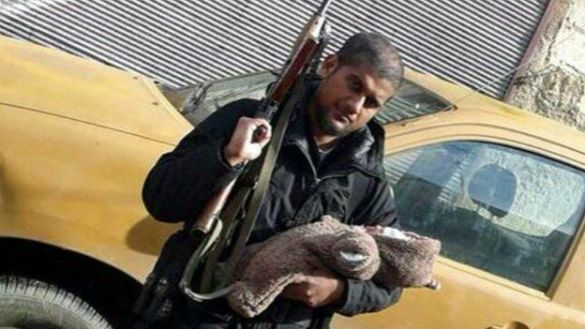
Last week, Siddharta Dhar, a Hindu-born Muslim convert, made front page news as the latest British citizen to turn up in Syria draped in ISIS imagery and toting an AK. He may or may not be the masked Brit who starred in a recent ISIS snuff movie, but, like pretty much all those who preceded him, he was well known to the British security services. A member of Al-Muhajiroun, a ‘proscribed organisation’ under the 2000 Terrorism Act, he was on bail for terrorism offences at the time he left the country, and had been asked to hand over his passport to the police (he didn’t bother, as it turned out). Indeed, according to Andy Burnham, shadow British Home Secretary, “He was well-known to the authorities having been arrested six times on terrorism related offences”. Perhaps stating the obvious, Burnham added that “People will be shocked that a man detained on a series of counts of terrorism-related activity could be allowed to walk out of the country, unimpeded.” Nor was his flight exactly unpredictable. Earlier in the year, he had declared – on the BBC’s ‘This Morning’ programme, no less – that “Now that we have this caliphate I think you’ll see many Muslims globally seeing it as an opportunity for the Koran to be realised”. Just to clarify his intentions, he went on to tell Channel Four News: “I would love to live under the Islamic State”. I’m no expert on decoding terrorist lingo, but to my untrained eye this statement appears fairly unambiguous. But perhaps no one in British intelligence has a telly.

Or perhaps there is another explanation. Once in Syria, Dhar tweeted that “My Lord (Allah) made a mockery of British intelligence and surveillance…What a shoddy security system Britain must have to allow me to breeze through Europe to the Islamic State.” Shoddy? Maybe. But as Nick Lowles, from the group Hope not Hate, put it, “With at least six prominent members of al-Muhajiroun (the banned extremist group) having been able to slip out of Britain whilst on bail or having been banned from leaving, questions need answering. One absconding is a worry, two appears careless but six – well, that needs answering.” Indeed it does.

In fact, it seems that pretty much every time a British ISIS or Al Qaeda recruit is unearthed, they turn out to have deep ties to the intelligence services. The case of Michael Adebalajo is a case in point.

On 22 May 2013, Adebelajo and Michael Adebowale stabbed Fusilier Lee Rigby to death in London. It soon emerged that MI5 had been trying to recruit him at the time. But for what?


The parliamentary committee on intelligence and security conducted hearings on the murder later that year, and its report makes fascinating reading. It revealed that, prior to the murder, Adebolajo had been identified as a Subject of Interest (SoI) in no less five separate MI5 investigations, including one which was focused specifically on him.  This surveillance had revealed that he was in contact with“a high profile and senior AQAP [Al Qaeda in the Arabian Peninsula] extremist” as well as two “Tier 1 SoIs being investigated…due to their possible links with AQAP in Yemen”. At one point in 2011, this particular investigation was “MI5’s highest priority operation” and it led MI5 to conclude that “Adebolajo was a primary contact of BRAVO and CHARLIE”, codenames for the two suspected AQAP members under investigation.  

Of course, ‘guilt by association’ alone would not have been enough to arrest him. But his drug dealing would have been. In theory, MI5 are supposed to ‘disrupt’ the activity of extremists by, for example, facilitating their arrest if they are involved in criminality. In Adebolajo’s case, the ‘intrusive surveillance’ which he was under for a time revealed not only that he “was involved in drug dealing” but indeed that he was “spending most of his time” drug dealing. This was the perfect opportunity for MI5 to ‘disrupt’ the activities of a man suspected of being a recruiter for Al Shabaab and known to be in contact with senior members of Al Qaeda. But MI5 seemed curiously uninterested in pursuing it. They did eventually pass some information onto the local police – but without passing on any actual evidence, and “accidentally omitting” his house number, with the result that “the police officer tasked to investigate concluded…that no further action could be taken”, an entirely predictable outcome.

Further opportunities for ‘disruption’ were also ignored. The report notes that “In November 2012, Adebolajo was part of ‘a larger group of individuals who were [involved in] a violent confrontation’…Following the disruption, it was noted that “Adebolajo’s details will be passed to [another police unit]”. For some reason, however, this didn’t happen. Nor was Adebolajo prosecuted for his membership of a proscribed organization (Al Ghurabaa, aka Al Muhajiroon). But most suspicious was the British response to his arrest in Kenya in 2010:


“On 22 November 2010, the Kenyan police reported to the MPS officer based in Nairobi that they had arrested Adebolajo the previous day. He had been arrested with a group of five Kenyan youths and was assessed to have been attempting to travel into Somalia to join Al Shabaab (a Somalia-based terrorist group).” Information apparently relating to Adebolajo’s involvement with terrorism – but redacted from the report – was known by MI6 at the time of his arrest according to the British counter-terrorist police officer stationed in Kenya at the time. According to the Daily Mail, “The Kenyans believed Adebolajo, 28, had played a crucial role in recruiting his co-accused, including two secondary school-aged boys, after they were radicalised during weekly visits to a mosque in Mombasa.” Kenyan government spokesman Muthui Kariuki said: ‘We handed him to British security agents in Kenya and he seems to have found his way to London and mutated to Michael Adebolajo. The Kenyan government cannot be held responsible for what happened to him after we handed him to British authorities.’ The security agents in question belonged to a highly secretive counter-terrorism unit in Kenya (referred to in the report as ARCTIC) with “a close working relationship” with the British government. Adebolajo alleged on several occasions that he had been tortured during his time in custody, leading the Committee to point out that “if Adebolajo’s allegations of mistreatment did refer to his interview by ARCTIC then HMG could be said to have had some involvement”.


MI6 consistently lied to the Committee about their involvement with Adebolajo in Kenya – a point noted (albeit somewhat apologetically) in their report. Of his detention, MI6 claimed “we did not know it was going on”; prompting the Committee report to “note that SIS [MI6] had been told that a British citizen was being held in detention: therefore, they did know that “it was going on”. The Chief of MI6 then lied about their responsibility to investigate the allegations of abuse, claiming that this “is not an SIS responsibility”, directly contradicting emails written by an MI6 officer at the time which had stated that “We obviously need to investigate these allegations”. This, said the Committee,clearly indicates that SIS officers believed that they had a responsibility to investigate the allegations”, adding that this is “not consistent with the evidence provided to the Committee by the Chief of SIS”, and going on to note their “concern that this email was not provided as part of the primary material initially offered in support of this Inquiry as it should have been [as] it was clearly relevant to the issues under consideration.” Finally, a redacted piece of information referring to what the Committee called “relevant background knowledge” concerning Adebolajo was disowned by MI6, who claimed only to have heard it when told by the police. The police, however, had already explained that it was MI6 who passed it to them in the first place.


Exactly what MI6 were up to in Kenya with Adebolajo remains shrouded in mystery. However, the Committee were clearly unimpressed by what they were told: “SIS has told the Committee that they often take the operational lead when a British national is detained in a country such as Kenya on a terrorism-related matter.


They have also told the Committee that they have responsibility for disrupting the link between UK extremists and terrorist organisations overseas, and that in Kenya this is at the centre of their operational preoccupations. The Committee therefore finds SIS’s apparent lack of interest in Adebolajo’s arrest deeply unsatisfactory: on this occasion, SIS’s role in countering ‘jihadi tourism’ does not appear to have

extended to any practical action being taken.” What if, however, MI6’s work on the “link between UK extremists and terrorist organisations overseas” is not aimed at disruption after all? What if they have been charged with facilitating, rather than countering, “jihadi tourism”?


The SO15 (counter-terrorism) police officer who conducted an extensive interview with Adebolajo on his return to the UK from Kenya concluded that “It is… believed Adebolajo will attempt to travel again in the future…” At the time, MI5 was running an investigation into “individuals who were radicalising UK-based extremists and facilitating their travel overseas for extremist purposes”, referred to in the Committee’s report as Operation Holly. They wrote to an MI6 representative in East Africa to ask whether “one of Adebolajo’s contacts could have been a Kenya-based SoI known to MI5 and SIS” then under investigation, but MI6 never responded. The following year, “surveillance deployments indicated that Adebolajo had met an SoI investigated for radicalising UK-based individuals and facilitating their travel overseas.” This entry in the report’s timeline was preceded by four redacted items and followed by another.  


The report also contains reference to a number of occasions in which investigating officers’ requests and recommendations for action against Adebolajo and Adebowale were not implemented, for reasons that were not recorded. This raises the issue of whether these requests had been over-ruled, and if so by whom. Unfortunately, the committee seemed to accept at face value MI5’s explanations of such failures (new priorities taking away resources etc) – but their report did note, in somewhat exasperated tone, that “where actions were recommended, they should have been carried out. If the investigative team had good reason not to carry out a recommended action, then this should have been formally recorded, together with the basis for that decision”.


Adebolajo, then, had come up on the security services radar again and again as someone not just potentially involved in recruiting for overseas terrorism, but with prior form in actually doing so. And yet we are supposed to believe that MI6 – whose prime concern was supposedly to deal with such people – had no interest in him in Kenya, and that MI5 – who are supposed to disrupt the work of such figures – willfully passed up chance after chance to do so.


Fast forward to today, and we have an official figure of 800 – but with estimates of 1500 and more – British citizens who have gone to fight in Syria. We have evidence from Moazzam Begg’s collapsed trial that MI5 gave the ‘green light’ to his trips to train fighters in Syria; we have the collapse of Bherlin Gildo’s trial for terrorist activities in Syria due to the embarrassment it was feared it would cause British security; we have Abu Muntasir’s testimony that “I inspired and recruited, I raised funds and bought weapons, not just a one-off but for 15 to 20 years. Why I have never been arrested I don’t know”; we have the US Senate hearings into the murder of US ambassador Christopher Stevens revealing that MI6 was involved in running a ‘ratline’ of weapons from Libya to Syria; we have case after case of families angry at the British authorities for allowing their children to go and fight despite repeated warnings, and on it goes. Can we really still call it a conspiracy theory to believe that British intelligence has allowed this to happen? These fighters are, after all, going to fight against a government whose destruction has been openly egged on by the British Prime Minister for the past five years. A shoddy security system? Or a ruthlessly efficient one.


This article was originally published by RT.


by

The Conservative manifesto and the grimmest of dead cats

by

British collusion with sectarian violence part one (with Sukant Chandan)

gildo

The trial of Bherlin Gildo collapsed when it emerged that MI6 had been supporting the same group he was being prosecuted for joining.

In the first of a four-part series, Dan Glazebrook and Sukant Chandan look at the recent spate of revelations about the involvement of British security services in facilitating the flow of fighters into Syria.

Thirteen years ago this month, in March 2003, Britain and the US led an illegal and unprovoked war of aggression against Iraq, a fellow UN member state. Such a war is deemed to be, in the judgement of the Nuremberg trials that followed World War Two, “not only an international crime” but “the supreme international crime differing only from other war crimes in that it contains within itself the accumulated evil of the whole.”

The mainstream narrative surrounding this war, and the endless catastrophes it bequeathed to Iraq, is that it was the result of a series of unfortunate ‘intelligence failures’: the British government had been led to believe that Iraq posed what Tony Blair called a “clear and present danger” to international security by intelligence that subsequently turned out to be false. Blair told us that the Iraqi government had an active nuclear weapons programme, had acquired uranium from Niger, had mobile chemical weapons factories that could evade UN weapons inspectors, and had stocks of chemical weapons able to hit British troops in Cyprus within 45 minutes. All of these claims were false, and all were blamed on ‘intelligence failings’, creating an image of an intelligence service totally incapable of distinguishing between credible information and the deluding ravings of crackpots and fantasists such as the notorious Curveball, the source of many of the various made-up claims later repeated in such grave and reverent tones by the likes of Tony Blair and Colin Powell.

In fact, we now know that sources such as Curveball had already been written off as delusional, compulsive liars by multiple intelligence agencies long before Blair and co got their hands on their outpourings – and the British government was fully aware of this.

The truth is, there were no intelligence failings over the Iraq war. In fact, the intelligence services had been carrying out their job perfectly: on the one hand, making correct assessments of unreliable information, and on the other, providing the government with everything necessary to facilitate its war of aggression. The Iraq war, then, represented a supreme example not of intelligence failure, but intelligence success.

Fast forward to today, and we are again hearing talk of ‘intelligence failings’ and the supposed incompetence of the security services to explain a debilitating Western-sponsored war in the Middle East: this time in Syria.

Earlier this year, British foreign minister Philip Hammond admitted that 800 British citizens had gone to join the anti-government terrorist movement in Syria, with at least 50 known to have been killed fighting for Al Qaeda or ISIS. The British security and intelligence community, we are to believe, were simply unable to stop them. Opportunist political opponents blame such shocking statistics on incompetence, whilst the government and its supporters increasingly weave them into an argument for greater powers and resources for the security services. Both are wrong; and a closer look at some of these so-called ‘intelligence failings’ makes this very clear.

In December 2013, it emerged that MI5 had tried to recruit Michael Adebolajo, one of the killers of fusilier Lee Rigby, just a few weeks before his murder. Adebalajo had been on the radar of both MI5 and MI6 for over ten years. He had been under surveillance in no less than five separate MI5 investigations, including one set up specifically to watch him. He was known to have been in contact with the senior leadership of Al Qaeda in the Arab Peninsula, based in Yemen, and he had been arrested in Kenya on a speedboat on the way to Somalia with five other youths, where he was suspected of hoping to join Al Shabaab. The Kenyans were furious when they handed him over to the Brits only for him to be turned loose, presumably to continue with his recruitment activities.

The following month, 17 year old Aseel Muthana left his family home in Cardiff to join rebel fighters in Syria. His brother Nasser had left 3 months earlier, and his family were worried that Aseel would try to join him. So they confiscated his passport, and informed the police of their concerns. The police kept the family under close scrutiny. They even arrived at his house at 5pm the day he left for Syria, to be told he hadn’t been seen since the night before. He boarded a flight at 8.35pm that night, using alternative travel documents issued by the Foreign Office. His family were horrified that he had been allowed to travel, without a passport, despite all their warnings.

A similar case occurred in In June 2015, when 3 sisters from Bradford travelled to Syria – it is thought to join ISIS – taking their nine young children with them. Again, the family had been under intense scrutiny from the police ever since their brother went to join ISIS in Syria earlier that year. And far from being unaware of the risk of their being recruited, counter-terrorist police were apparently, it emerged, deeply complicit in their recruitment. A letter from the family’s lawyers said they were “alarmed” by the police allegedly having been actively promoting and encouraging contact with the brother believed to be fighting in Syria: “It would appear that there has been a reckless disregard as to the consequences of any such contact on the families of those whom we represent,” the lawyers said, and continued: “Plainly, by the NECTU [North East Counter Terrorism Unit] allowing this contact they have been complicit in the grooming and radicalising of the women.”

October 2014 saw the trial of Moazzam Begg, for various terrorism-related offences. Begg had admitted to training British recruits in Syria – but in his defence, he made the incendiary claim that MI5 had explicitly given him the green light for his frequent visits in a meeting they had arranged with him. MI5 admitted it was true, and the trial collapsed.

Six months later, BBC Radio 4 broadcast an interview with Aimen Dean, a founding member of Al Qaeda who was subsequently recruited by MI6 as a spy. Part of his work for MI6, he said, involved encouraging young impressionable Muslims to go and join the ranks of Al Qaeda.

Then in June 2015, Abu Muntasir, known as the godfather of British jihadis, thought to have recruited “thousands” of British Muslims to fight in Afghanistan, Kashmir, Burma, Bosnia and Chechnya, gave an interview to the Guardian, repenting for his actions. He explained that he came back from fighting in Afghanistan to “create the link and clear the paths. I came back [from war] and opened the door and the trickle turned to a flood. I inspired and recruited, I raised funds and bought weapons, not just a one-off but for 15 to 20 years. Why I have never been arrested I don’t know.”
That same month, a second trial collapsed, for much the same reasons as Begg’s. Bherlin Gildo had been arrested in October 2014 on his way from Copenhagen to Manila. He was accused of attending a terrorist training camp and receiving weapons training as well as possessing information likely to be useful to a terrorist. The Guardian reported that the prosecution “collapsed at the Old Bailey after it became clear Britain’s security and intelligence agencies would have been deeply embarrassed had a trial gone ahead”.

In January 2016, it was revealed that Siddharta Dhar travelled to Syria in September 2014 whilst on police bail for terrorism offences – the sixth time he had been arrested for terror-related offences, and not long after MI5 had tried to recruit him. Police had demanded he hand in his passport, but did not follow it up; this was despite the fact that he had revealed – live on BBC morning television no less – that he would “love to live in the Islamic State”. He later posted pictures of himself posing with guns in Raqqa, and is suspected of being the so-called ‘new Jihadi John’, appearing in an ISIS video executing suspected spies. The original ‘Jihadi John’ – British-Kuwaiti Mohammed Emwazi – had also been well known to the British security services, having – just like Adebalajo and Dhar – apparently been offered a job by MI5.

Is this all just a ‘catalogue of blunders’, more ‘intelligence failings’ on a massive scale?

These cases demonstrate a couple of irrefutable points. Firstly, the claim that the security services would have needed more power and resources to have prevented these abscondances is clearly not true. Since 1995, the Home Office has operated what it calls a ‘Warnings Index’: a list of people ‘of interest’ to any branch of government, who will then be ‘flagged up’ should they attempt to leave the country. Given that every single one of these cases was well known to the authorities, the Home Office had, for whatever reason, decided either not to put them on the Warnings Index, or to ignore their attempts to leave the country when they were duly flagged up. That is, the government decided not to use the powers already at its disposal to prevent those at the most extreme risk of joining the Syrian insurgency from doing so.

Secondly, these cases show that British intelligence and security clearly prioritise recruitment of violent so-called Islamists over disruption of their activities. The question is – what exactly are they recruiting them for?

At his trial, Bherlin Gildo’s lawyers provided detailed evidence that the British government itself had been arming and training the very groups that Gildo was being prosecuted for supporting. Indeed, Britain has been one of the most active and vocal supporters of the anti-government insurgency in Syria since its inception, support which continued undiminished even after the sectarian leadership and direction of the insurgency was privately admitted by Western intelligence agencies in 2012. Even today, with ISIS clearly the main beneficiaries of the country’s destabilization, and Al Qaeda increasingly hegemonic over the other anti-government forces, David Cameron continues to openly ally himself with the insurgency.

Is it really such a far-fetched idea that the British state, openly supporting a sectarian war against the Ba’athist government in Syria, might also be willfully facilitating the flow of British fighters to join this war? Britain’s history of collusionwith sectarian paramilitaries as a tool of foreign policy certainly suggests this may be so. This history, in Ireland, Afghanistan and the Arab peninsula, and its role in shaping British policy today, will be the subject of the articles to follow.


by

British collusion with sectarian violence part two: Qatar and Bahrain (with Sukant Chandan)


cameronkhalifaThe gulf monarchies are the main facilitators of Britain’s support for sectarian death squads in the Middle East. This should be no surprise because Britain brought them to power precisely because of their sectarianism. Part two of Sukant Chandan and Dan Glazebrook’s series on British collusion with sectarian violence.


“What we want is not a united Arabia: but a weak and disunited Arabia split up into little principalities so far as possible under our suzerainty, but incapable of coordinated action against us” – so claimed a memorandum written by the Foreign Department of the British Government of India in 1915. A more succinct summary of British policy towards the Arab world – both then and now – would be hard to find.

As we outlined in the first piece in this series, Britain’s weapon of choice in its attempt to destroy the independent regional powers of West Asia and North Africa in recent years has been its sponsorship of violent sectarianism. Its support for racist death squads in Libya not only achieved the destruction of the Libyan state, but also brought terrorism to every country in the region from Egypt, Tunisia and Algeria to Chad, Nigeria and Cameroon; whilst its training and equipping of death squads in Syria has been directly responsible for the rise of ISIS. These forces, by setting Sunni against Shia, Muslim against Christian, and Arab against Black, are helping to bring about precisely that “weak and disunited Arabia” that the British officials in India dreamed of one hundred years ago.

Alongside the direct support and recruitment provided by British intelligence and the British government, one of the main conduits for arms and fighters has been the gulf monarchies: Qatar and Saudi Arabia in particular. That the Gulf States should play this role should, of course, be no surprise – as they were very largely the creations of the same British Government of India that wrote that memo in the first place.

In 1857, British colonial rule of India was challenged as never before, as what started as a mutiny rapidly spread across the country to become a mass insurgency, the first war of Indian independence. One of the reasons it was so potent is that Hindus and Muslims had joined forces – leading to what became the biggest anti-colonial uprising of the nineteenth century. Britain learned the lessons – and began to cultivate sectarian divisions more assiduously than ever before. As Mark Curtis notes in Secret Affairs: “After 1857 the British promoted communalism, creating separate electorates and job and educational reservations for Muslims. “’Divide et imperia [divide and rule]’ was the old Roman motto,’ declared William Elphinstone, the early nineteenth-century governor of Bombay, ‘and it should be ours’. This view pervaded and became a cornerstone of British rule in India”. Curtis quotes one document after another to demonstrate just how pervasive this view became: one Secretary of State advising the governor general that “we have maintained our power in India by playing off one part against the other and we must continue to do so. Do all you can, therefore, to prevent all having a common feeling”; another informing the Viceroy that “this division of religious feeling is greatly to our advantage”; a senior civil servant writing that “the truth plainly is that the existence side by side of these hostile creeds is one of the strong points in our political position in India. The better clashes of Mohammedans are already a source to us of strength and not of weakness”, and so on, ad nauseam. Yet, Curtis notes, it was not in India but  in the Middle East that this divide and rule strategy “reached its apogee”.

The British Government of India began cultivating alliances with family clans in the Arabian peninsula from around the late eighteenth century, formalizing these relationships through official treaties over the course of the next hundred and fifty years. Even before the discovery of oil, the region was deemed strategically important as part of the land route from India, as well for its surrounding sea routes, and the Indian government took steps to ensure that it be placed firmly under British control. By the nineteenth century, Britain was already the pre-eminent naval power in the region, and had become powerful enough to make or break the fortunes of those to whom it lent (or withdrew) its ‘protection’. So it is interesting to note that those families which Britain did choose to turn into ruling classes of the new states that were being carved out – the Al Saud, the Al Thani, the Al Khalifa and others – all seemed to have two things in common: a history of regular warring with their neighbours; and an, at best, shaky control of the territories they claimed to rule. These factors were not coincidental – for what they produced was a dependence on British protection that effectively turned them into little more than vassals of Empire.

The al-Khalifa clan, for example, today’s rulers of Bahrain, originally hailed from Umm Qasr in Iraq, from where they were expelled by the Ottomans due to their regular attacks on trade caravans. They first seized control of Bahrain in 1783 after Persian rule began to crumble, but lost control two decades later falling out with the Wahhabis with whom they were briefly allied. It was only after signing a treaty with the British in 1820 that their rule was consolidated.  This treaty, and the others that followed, effectively placed foreign policy in the hands of the British in exchange for Britain propping up the al Khalifa’s rule of the country – an arrangement that has continued, to all intents and purposes, right up to the present day.

Being effectively an alien force in the country, the al Khalifa were permanently at risk from the population they sought to rule, especially given their persecution of the Shia majority. This made British protection that much more important, and increased British leverage accordingly; whenever any particular Khalifa emir began to act too independently, the British would simply replace them. Lieutenant Colonel Trevor, the Deputy Political Agent in Bahrain after the First World War, put it bluntly when, after receiving a series of demands from the new crown prince he noted that ‘The Shaikh forgets that he and his father were made Shaikhs by the British government.” Shortly afterwards, the British sent warships to the gulf to force the Shaikh to sign an agreement ceding all powers to his other son – a British protégé.

Formal independence was granted in 1971, but given that power was being handed over to the same family that had ruled Bahrain on Britain’s behalf for the past century and a half, this changed little. The most notable difference was perhaps the flags on the foreign warships at the country’s naval base, which changed from British to US.

Fast forward to the present day, and it is clear that the essence of the 1820 treaty – Al Khalifa rule propped up by Western armaments, with foreign policy in the hands of the West – is still very much in place. Whilst David Cameron was proclaiming democracy (a euphemism for state collapse) for Libya and Syria, he was in Bahrain selling weapons to the Khalifas to suppress their own ‘Arab Spring’; whilst three years later the US fifth fleet would be firing hellfire missiles into Syria from its Bahraini base.

But British support for the al Khalifas has never been absolute; rather they built up the al-Thani clan as a ‘counterweight’ to the Khalifa in order to guarantee their continued dependence on the British. Up until 1867, Qatar had been essentially a semi-autonomous province of Bahrain, its government effectively ‘sub-contracted’ to the Al Thanis. In that year, however, a war between the Al Thanis and the Al Khalifas broke out; Britain intervened on the side of the Al Thanis, carving out Qatar out as a separate political entity and recognising the Al Thanis as its rulers. The border between the two countries was left devilishly ambiguous, and remained a running sore in Qatari-Bahraini relations right up until 2001; a “weak and disunited Arabia” indeed.

Further agreements were signed with the Al Thanis in 1935, offering them protection against internal and external threats in exchange for oil concessions. Qatar too gained formal independence in 1971, but the deep links forged during the period of the protectorate remain; indeed both the Emirs that have ruled since then were educated at Sandhurst Military Academy, with the current Sheikh educated at elite English private school Sherborne before that.

The relationship between Britain and the ruling families of Bahrain and Qatar continues to follow that same basic principle forged centuries ago, and now also extended to the US: whilst the ruling families act as regional agents of Western imperial policy, their rule is maintained by Western weaponry. Nothing illustrates this more clearly than the events of the so-called ‘Arab Spring’. The protests breaking out across the Arab world in early 2011 soon spread to Bahrain, where angry crowds demanded an end to the monarchy’s policies of discrimination and exclusion against the Shia majority. Cameron’s immediate response was to head to the region to sell the embattled regime the weapons it needed to crush the movement. The following year, the country’s interior minister, Rashid bin Abdulla al-Khalifa, visited the Foreign Office to gather “lessons learnt from our experience in Northern Ireland”, according to a British government statement. This experience was particularly relevant; the problem faced by the British in the North of Ireland was, after all, broadly analogous to that faced by the Bahraini monarchy: how to maintain an oppressive sectarian rule and crush movements calling for equality. The sight of British APCs in the street shooting down demonstrators, now common in the Bahraini capital, will be familiar to Belfast’s nationalist communities; and so too will the latest human rights reports coming out of Bahrain describing “detainees being beaten, deprived of sleep, burned with cigarettes, sexually assaulted, subjected to electric shocks and burnt with an iron”, all common practices in British army barracks in 1970s Ireland. Britain’s Bahraini students are quick learners. The US fifth fleet, based in Bahrain and used to fire missiles into Syria and Libya, is in safe hands.
Qatar, meanwhile, was a lynchpin in not only the militarisation of the ‘Arab Spring’ and its capture by violent sectarian forces, but also its ideological whitewashing. The Al Jazeera TV channel was established by the Qatari government in 1996, effecting to what amounted to a ‘brown-facing’ of the BBC Arabic channel, which was closed down the same year before transferring a large chunk of its staff to the ‘new’ station. Al Jazeera built its credibility across the region – and, indeed, the world – with its critical coverage of Western and Israeli attacks on Iraq and Gaza. But in 2011 it would use this credibility to serve as NATO’s propagandist-in-chief, amplifying and disseminating every lie it could get its hands on – from African mercenaries, to mass rape, to ‘bombing his own people’, to ‘impending massacre’ – in order to demonise Gaddafi and sell the case for war. It would be a war in which Qatar would play a major role.
In the early days of the West’s attack on Libya, anti-Gaddafi rebel forces (led by the Libyan Islamic Fighting Group, Al Qaeda’s Libyan franchise), even with NATO air support, proved spectacularly ineffective at capturing and holding territory from the Libyan government. For the first few months, most of the towns they ‘captured’ thanks to NATO incineration of government soldiers would simply be retaken by the Libyan army days later. But NATO countries were wary of risking a domestic political backlash by openly committing too many of their own troops or resources to tip the balance. The solution found was to let Qatar and the Gulf states carry out its dirty work. They played a leading role in training and equipping rebel fighters, allowing NATO to be pretending to observe the arms embargo to which UN resolutions committed them. As the Royal United Services Institute noted, “the UAE established a Special Forces presences in the Zawiyah district and started to supply rebel forces in that area with equipment and provisions by air. Qatar also assumed a very large role; it established training facilities in both Benghazi, and, particularly the Nafusa Mountains on May 9 and acted as a supply route and conduit for French weapons and ammunition supplies to the rebels (notably in June), including by establishing an airstrip at Zintan.” They added that, “Western special forces could have confidence in the training roles undertaken by Qatar and the UAE, because the special forces in those countries have in turn been trained by the UK and France over many years”. In addition to this major training and arming role, Qatari jets also joined NATO in pounding Libya, and the country issued $100million of loans to the rebel groups.  But most important was the Qatari ground invasion of Tripoli.
As Horace Campbell has documented in his book “Global NATO and the Catastrophic Failure in Libya”, by the summer of 2011, NATO were nearing a crisis-point: the 60-day period in which the US president could engage in hostilities without Congressional support was over, and the UN mandate for military intervention was to expire in September. Calls were growing within the AU and the UN for a negotiated settlement, and rivalry between militias continued to dog the rebels’ progress. NATO needed to take Tripoli quickly if their regime change operation was not to be stalled in its tracks. So in mid-August, NATO massively stepped up its bombing of Tripoli. Checkpoints, manned by citizens pledged to defend the capital were repeatedly targeted, and Obama sent the last two training drones left in the US to the Libyan frontline. That paved the way for what Campbell called “NATO’s triple assault – by air, land and sea”; not a ‘people’s uprising’ but rather a ground invasion to crush the people who had risen to defend their city. Troops were shipped in and disguised as ‘rebel fighters’, with, according to Le Figaro, five thousand Qatari troops chief amongst them. It was they who, finally, captured Tripoli for NATO, installing Abdul Hakim Bel Haj, now suspected leader of ISIS in Libya, as the new military chief of the conquered city.
Bahrain and Qatar are just two examples of the enduring alliances that the British government has cultivated over centuries as it groomed handpicked ruling families for their anointed role as agents of imperial policy. In exchange for a British guarantee of their absolute power domestically, they have provided military bases and have acted as willing agents for those tasks their patron was either unwilling or unable to carry out itself. Today, that means acting as an ‘arms-length’ distributor of both BBC propaganda and British violence, in far more ways than have been possible to articulate here (Qatar’s role in managing the various Muslim Brotherhood offshoots that have been destabilising Syria, Egypt and elsewhere, for example, would need a full article in its own right). But even more significant than the British alliance with the al Khalifas and al Thanis is that that was established with the al-Saud family, the subject of our next piece. For it is this relationship, forged during the slow decline of the Ottoman Empire, that ultimately created a new multinational fighting force of fighters in the 1980s – the ‘database’ – that has been doing Britain’s bidding in Bosnia, Kosovo, Afghanistan, Libya and Syria ever since.

This piece was originally published by RT