by

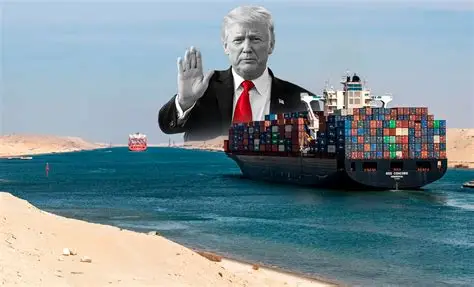
Trump’s war on Iran IS a ‘Suez moment’ – but not in the way that you think 

An edited version of this article was oiginally published in Middle East Eye, 29/5/26

With its failure to achieve either regime change, persuade Iran to give up its uranium, or even re-open the Strait of Hormuz, the US-Israeli war on Iran has been labelled a “strategic defeat”, a “failure”, a “strategy of desperation”, and a “historic blunder.” Trump has proved spectacularly unable either to destroy the Iranian state, or to force it to bend to his will. Nor has he been able to defend either his regional allies or his own military bases against Iranian counterattack. A recent Washington Post report, based on detailed analysis of satellite imagery, concluded that the damage to US military assets in the region has been “far larger than … publicly acknowledged by the US government or previously reported.” The war has revealed the limits of US firepower for all the world to see, with PNAC founder Robert Kagan even describing it as an Iranian “checkmate” of the US.

This has led to talk of the Iran war fast becoming, in the words of a recent Financial Times editorial, “America’s Suez Moment,” a phrase also used recently by LSE Professor Fawaz Gerges and New York Times’ columnist Steven Erlanger, amongst others. 

Such talk, however, misreads what is happening, and Trump’s aims in the conflict, as well as the significance of the original Suez crisis in the first place. 

In 1956, a British-French-Israeli conspiracy to occupy Egypt and overthrow the popular pan-Arab leader Gamal Abd Al-Nasser was thwarted by a combination of Egyptian arms, US financial pressure and Soviet nuclear brinksmanship. In a rare show of unity, both superpowers opposed the imperial adventure, with Eisenhower threatening to sink the pound if the Europeans did not pull out, and Khrushchev adding that he would nuke them for good measure. The belligerents were forced out, British prime minister Anthony Eden lost his job and Nasser’s Egypt became a beacon of anti-imperialist resistance the world over. The “Suez moment” was the writing on the wall for the British Empire, and Britain began the process of formal political decolonisation the following year with its withdrawal from Ghana, followed by most of the rest of its colonies over the decade or so that followed. 

Whilst it is true, however, that Suez marked the end of Britain as an independent global military force, it did not lead to the end of British imperialism. Rather, it heralded a transformation of a system of power rooted in its own military capabilities, to one based instead on financial domination. In fact, British imperialism not only survived, but managed to reconfigure itself into something much more streamlined and efficient. 

In his masterly history of offshore finance, Treasure Islands, Nicholas Shaxson notes that “By 1965, an empire that had ruled over 700 million foreigners at the end of the Second World War had shrunk to a population of just five million. This is well known; but there is a financial side to this story which almost nobody knows about, for out of the dust and fire of Suez something new emerged in London, which would eventually grow to replace the old empire, and raise the City of London to even greater financial glories” 

As anti-colonial movements grew in strength and audacity, the costs of old-school direct colonial rule were, by the mid-50s, starting to outweigh the revenues it was bringing in. By 1963, even the most financially and strategically important imperial zones – in the Middle East and Southeast Asia – were, in the words of imperial historian John Darwin, “becoming much more costly and burdensome”. Britain’s military spending, due to its colonial commitments, was now 7% of GDP, and “has broken our backs”, as prime minister Macmillan put it – and conscription was also a huge drain on resources. The big danger of simply pulling out, however, was that anti-colonial movements would take over – movements who might have the temerity to seize (‘British-owned’) land and resources for the people. What the British state sought was to hand over – or at least share – the burden and expense of the repression and counter-insurgency warfare necessary to avoid this outcome. And ultimately, of course, they were successful in palming off much of this expense onto the US and the Gulf monarchies. But, far from the popular image of Britain being forced out of the Middle East by the USA,  “when originally mooted, a proposed reduction of the British presence east of Suez was met with strong American opposition and appeals from Saudi king Faisal to reconsider”, says David Wearing in Anglo-Arabia. 

It was only after yet another ‘sterling crisis’ (for the third year in a row) in 1967, that the US finally accepted that Britain simply could not afford to keep up the global policeman role anymore. Yet, as Wearing put it, British “withdrawal” would be “better described as a drawdown – and was certainly not a complete relinquishment of British influence, which would become less visible but would still remain.” Many of the Gulf monarchies were so dependent on British arms to stay in power, that their ‘independence’ was largely a sham: Kuwait maintained strong economic and military links with Britain and promised to continue to invest its oil revenues in London; British officers outnumbered Omani officers in the Omani military until the early 1980s, and did not occupy positions of military command until 1985; and Bahrain’s security forces were run by a British officer, Ian Henderson, until 1998. Yet this influence was now achieved at a much reduced cost, with the Gulf states themselves actually paying Britain for their occupation, and with the US (and Israel) now stepping in when things got really out of hand. 

At the same time as this new streamlined, ‘burden-sharing,’ form of imperialism allowed Britain to cut its expenses, it also added new revenue streams with a reboot of the City of London. 

The Bank of England’s creation of the so-called ‘euromarket’ is the under-studied flipside of the ‘Suez moment.’ 

With sterling on the wane as an international reserve currency, a regulatory sleight of hand allowed London to cash in instead on growing demands for US dollars. With the UK government introducing tighter limitations on the international trade in sterling, London’s merchant banks simply shifted to lending in dollars. The Bank of England could, of course, have regulated that too – but George Bolton (head of the Bank’s Foreign Exchange Division at the time), described by the historian David Kynaston as “one of the intellectual godfathers of the new right”, made a conscious decision not to do so. Instead, dollar transactions were deemed, for regulatory purposes, not to be taking place in the UK. But as they were obviously not taking place in any other jurisdiction, no other state was able to regulate these transactions either. 

It was a free-for-all – and provided a bankster’s paradise of trade, speculation, loans and investments free from regulatory oversight from any state. According to Nicholas Shaxson, “It was at this point” – literally within months of the Suez crisis – “that the modern offshore system really began” as “Britain’s formal empire gave way to something more subtle… At the moment of its apparent destruction, the British empire began to rise from the dead.” It was, according to Gary Burn, one of the only historians to have studied the euromarket,  “the most monumental financial innovation since the banknote.” London banks could now issue dollars, free from any regulatory oversight – and US bankers fled to London in their droves to take advantage. 

Over the decade that followed, the euromarkets spread out from London to a string of island territories that the UK had clung onto, creating a global network of tax havens, from the Channel islands, to the Caribbean, to the Pacific atolls, that are still draining the global South today, to the tune of trillions of dollars, much of which is then channelled back to the City. . 

London had found a way to not only maintain its financial dominance – it is still today the world’s largest international financial centre, with the biggest volume of international loans, foreign exchange and derivatives trading – but actually to render the colonial world system much more profitable than it had been at the height of empire, with hugely increased income via its string of tax havens, whilst the burden of repression and counter-insurgency war had been largely subcontracted to others. This is the real significance of the ‘Suez moment’. And Trump is indeed attempting something very similar today. 

 Like Britain in 1956, the US may be facing a ‘military humiliation,’ but it is also successfully offloading the security costs of upholding global capitalism onto its ‘partners’ (in this case in Asia and Europe), and creating a new type of financial domination in the process.

The war in Iran, as journalist Richard Medhurst has pointed out, needs to be seen as part of a broader US war to monopolise global energy supplies, and a transformation of the US into what he calls a ‘pirate state’. Effectively we are seeing an armed takeover of much of the world’s oil and gas supplies, most blatantly with the US takeover of Venezuelan oil following the kidnapping of its President Maduro in January of this year, but also involving the US-Israeli grab for the Leviathan gasfield off the coast of Palestine, Syria and Lebanon; indeed, it was just weeks before the Venezuela attack that Israel signed its biggest gas deal in history, worth $35billion, with US energy giant Chevron. Following the raid on Venezuela, the US and its allies have been waging a global war against the Russian oil industry, blowing up or commandeering oil tankers in the Caribbean, the North Atlantic, the Mediterranean, the Black Sea and the Baltic Sea, whilst the US’s Ukrainian proxy has stepped up attacks on Russian refineries and export hubs; the combined effect has been to disable 40% of Russia’s export capacity, the biggest disruption in modern Russian history. 

Meanwhile, Trump’s naval blockade of Iran has crippled Iran’s exports, whilst Iran’s own blockade of the Strait of Hormuz, and attacks on the energy infrastructure of the US’s Gulf allies (such as Qatar’s Ras Laffan plant) has cut off Gulf energy supplies to much of the world. 

The result of all of this is that countries around the world are increasingly being forced to turn to the US for their oil and gas supplies. Incredibly, for such a destabilising war – especially one widely billed as disastrous for the US – gold prices are down, whilst the value of the dollar is soaring, the exact opposite of what one would expect in uncertain times, when investors typically flee to the safety of gold. The reason is that countries that used to buy their energy in yuan or rubles from Russia, Venezuela or the Middle East are now being forced to sell off those currencies in order to buy the dollars needed to buy their energy from the US. 

In Medhurst’s analysis, this is all a concerted effort by the US to reverse its imperial decline – and in particular to prop up the US dollar – by creating a new basis of value underpinning the dollar – US-produced oil and gas. From the time of its creation, the value of the dollar was backed by gold. Then, following the crisis in military spending brought on by the Vietnam war, the US ditched the gold standard and made a deal with the Gulf countries that they would sell oil in the dollar, and invest their surpluses in US stocks and bonds. This was the era of the so-called ‘petrodollar’, replacing gold with Gulf oil as the store of real value underlying the dollar’s price. That system has been under threat for some time, with not only Iran but even some Gulf states starting to trade oil in other currencies in recent years, with Saudi Arabia making a multi-billion oil sale in digital yuan for the first time last September . Today’s war against Venezuela, Russia and Iran (and, by extension, the Arab Gulf states) is in fact an audacious strategy to reverse ‘de-dollarisation’ by ensuring that it is now US energy, not Gulf energy, that underwrites the dollar. Even China – having lost, within months, the bulk of its supplies from all three of its strategic energy partners (Venezuela, Iran and Russia), is now being forced to buy energy from the US, at the new sky-high prices. 

This strategy has many other benefits to the US in Medhurst’s analysis, which was perhaps the only interpretation able to predict Trump’s switch from war to blockade on April 13th, noting in his podcast two days earlier that the US “say they want to take Kharg Island, but they could also just set up near Diego Garcia in the Indian Ocean, and then sink any of the oil tankers or commercial vehicles transiting past the Strait of Hormuz. And all the US has to do, from their perspective, is deprive Iran and the global South from being able to trade with each other and get oil from point A to point B.” Mission accomplished. 

Just as the British did following Suez, the US is in the process of reconsolidating its imperial domination through a systemic transformation of the global financial order. And, like the British, it is attempting to transfer the costs to its frenemies; as Medhurst points out, the US navy is now running a protection racket, with Trump offering the US navy as escorts for transport through the warzones he has created “at a very reasonable price”, whilst the US Maritime Action Plan, passed in March of this year, is essentially a protection racket, forcing everyone doing business with the US to do so using US-made ships and tankers. 

Yet, like the deregulated monetary system created in London seventy years ago, the new dollar domination being crafted by Trump today is much shakier and more unstable than the one it is attempting to replace. The wars required to sustain it escalate tensions with everyone, including its own allies, and effectively amount to an energy blockade of China. It was Marx himself who noted that the methods used by the ruling class to overcome their crises simply pave the way “for more extensive and more destructive crises” and diminish “the means whereby crises are prevented.” This is exactly what Trump is doing today, with the ultimate crisis –  world war – an increasingly real risk of this desperate gamble. 
by

Rubio is lying – Israel is not driving this war; US imperial decline is 

Originally published in Counterpunch+, 22nd March 2026

Two days into the US attack on Iran, Secretary of State Marco Rubio made the extraordinary claim that the war was, in fact, a legal, pre-emptive defensive measure necessitated by Israel’s own pending strikes on the country. Scrambling for a legal figleaf for the US role in the aggression, he claimed that the Israeli strikes alone would have led to Iranian retaliation against US forces in the region, and therefore Iran, although it did not know it, posed an imminent threat to the US, which the US had the legal right to pre-emptively defend itself against. “We knew that there was going to be an Israeli action, we knew that that would precipitate an attack against American forces, and we knew that if we didn’t preemptively go after them before they launched those attacks, we would suffer higher casualties,” he told reporters on March 2nd. 

This tortuous abuse of logic is, of course, a legal nonsense. I cannot legally punch you in the face on the grounds that I knew my buddy was about to punch you in the face and you might have retaliated. But legal niceties are, of course, not something in which Trump and his team have any interest. 

Yet despite being an obvious pile of crap, Rubio’s statement has been leapt on by many, on the left as well as on the far right, to somehow ‘prove’ that the US ruling class were bounced into a war against their own interests by the Israelis. 

There is a section of MAGA that have always attempted to sell Trump as an isolationist, who will end US involvement in foreign wars. Trump himself has never promised that – rather, he has consistently, and massively, ramped up military spending, and not only to build ‘deterrence’, but in order to attack other countries; famously asking, what was the point of having a military if you are not going to use it? His criticism of the ‘Democrats’ wars’ was that they were supposedly launching them altruistically, to help the nations they were annihilating (for someone supposedly skeptical of the Democrats, he certainly swallowed a lot of their bullshit) – whereas he would never bomb people for their own good, but only to serve the US. Whether the parents of the resulting severed children would be able to discern the difference is, of course, moot. 

Even Trump’s supposed hostility to NATO, widely portrayed, even by many on the left, as evidence of Trump’s ‘isolationism’, is, in fact, a war plan. His threats to leave the alliance have been aimed, openly, at pressuring his allies to ramp up their own military spending. Why? To join the US in future wars of aggression, in particular the looming big one, with China. As Jack Watling of the Royal United Services Institute has noted, Trump’s regular humiliation of his European allies over their lack of military capability aims to coerce them into building up their militaries into a position where they are able “to hold down the Russian flank if the US ends up in a conflict with China.” 

Trump’s first term should have put to rest any ideas that Trump was somehow an ‘anti-war’ President. His very first foreign visit was to the monarchical dictatorship of Saudi Arabia, to sign a $110billion arms deal, a massive show of support and material commitment to the horrific and genocidal war on Yemen that the Saudis were then carrying out on behalf of western capitalism. 

During that first term alone he ramped up economic warfare on both Iran and China with punitive sanctions; approved the sale of lethal weaponry to Ukraine that Obama had banned; doubled the rate of US global gun-running; launched airstrikes against the Syrian government in the midst of its struggle against ISIS and Al Qaeda; killed tens of thousands in the terror bombing of Raqqa and Mosul; and dropped the biggest non-nuclear bomb in history – in its first ever use – on impoverished Afghanistan. 

By the end of the first year of his second term, he had already ordered 658 airstrikes, more than Biden managed in four years, on seven different countries. 

Nevertheless, claimed his apologists, he has never directly launched an open war of regime change in the Middle East. Despite all the illegality, aggression, killing and bloodshed, this was the one thing that made him – and, by extension, the broader MAGA movement – somehow different from the Democrats. Now they no longer even have that. 

Floundering to explain Trump’s war, many of the movement’s major spokespeople have seized on Israel as a convenient means of whitewashing US imperial interests. 

Candace Owens, leading face of the far right’s slick 21st century makeover and, until recently, a key Trump apologist, tweeted a message to US soldiers that “Trump has betrayed America and expects you to die for Israel…This was not Trump’s decision; it was Bibi Netanyahu’s decision… Israel is dictating our foreign policy and we would now like that to stop.” Tucker Carlson also claimed that Operation Epic Fury was being waged strictly on behalf of Israel, after he had visited Trump in the White House three times in the previous month, supposedly to lobby against the attack. Nick Fuentes, Alex Jones, Marjorie Taylor Greene and Megyn Kelly have all characterised the attack on Iran as a “betrayal” of the US, being fought purely on behalf of Israel, at the expense of American interests. Most significantly, Joe Kent, Trump’s most senior counter-intelligence officer, quit on 17th March with a bombastic resignation letter claiming that “we started this war due to pressure from Israel,” who were also responsible for “draw[ing] us into the disastrous Iraq war.” 

Whilst it is no doubt pleasing to see the MAGA movement tear itself apart, this is a pernicious and foolish narrative. Playing into the key Trump theme of white victimhood, it portrays poor innocent USA as a well-meaning dupe of the Big Foreign (Jewish) Other – and airbrushes US imperialism out of the picture altogether. And there are many on the left pushing the same line: Navarra media’s Aaron Bastani, for example, claimed that Rubio’s comment demonstrates that US and Britain have been ‘bounced into a conflict’ by Israel and ‘there’s no ‘national interest’ about this.’ 

The reality is that Iran has been in the crosshairs of the US empire for decades. The Dubya-era policy of Full Spectrum Dominance had already spelt out a quarter of a century ago that the US military required control of all aspects of the battlefield – air, sea and land – across the globe. The implication of this was that no regional independent power should be allowed to exist, as these could potentially deny US military control over certain battlefields. Iraq – not just its government, but its potential to exist as a functioning, independent nation state – was taken out in pursuance of this strategy in 2003; and then in 2007 we learnt from former commander of US forces in Europe, Wesley Clark, that the US Defence Department had also planned to take out Somalia, Libya, Syria, Lebanon, Sudan and Iran in the years that followed. With the exception of Iran, all have now been wrecked by US or US-sponsored war. 

Iran poses a particular threat to the US-dominated colonial world order, for a number of reasons. Like Iraq, it has a large population and rich resources, an exception to the standard arrangements in the Middle East, created by the British and French on the ashes of the Ottoman Empire following the First World War, which largely divided the region into countries with large populations and minimal oil (like Egypt) or significant oil resources and tiny populations (like the Gulf states). The presence of both in Iran gives its state a strength and independence almost unique amongst the countries of the region. And it has been consistently using this independent strength to resist imperialist designs – from the attempted annihilation of resistant populations in Yemen and Gaza, to the collapsing of the Syrian state, to the dollar’s monopoly as an oil-trading currency – for many years. Iran’s decision to start trading oil in the yuan in 2012 seriously rattled US strategists, as the global tribute on which the entire US military and economy depends rests on maintaining the dollar’s position as a reserve currency. This position is what enables the US to exchange intangible dollars for the hundreds of billions of dollars worth of real goods and services which it imports, effectively for free, each year – but only as long as other countries want dollars in the bank. And they only want dollars in the bank if they know they are tradable for the world’s uber-commodity – oil. The minute the link is broken, the whole system is under serious threat. 

Furthermore, Iranian military solidarity with Syria blocked, for many years, the west’s attempts at state collapse there; whilst their support for Hezbollah in Lebanon has helped that force to act as a brake on Israeli impunity. That is not only an Israeli problem. Israel is one of the key pillars of imperial control of the Middle East (the other being the House of Saud), and acts as, in the words of Reagan’s Defence Minister, an “American aircraft carrier…that cannot be sunk.”

Even if Israel did not exist, therefore, Iran’s very existence as an independent regional power, would still have to be destroyed in order to maintain US imperial hegemony in its era of growing crisis. 

And beyond US hegemony, global capitalism as a whole requires war, as William I Robinson has repeatedly explained, in order to stave off its growing accumulation crisis. This crisis consists of ever declining avenues for profitable investment as markets become glutted, with workers too impoverished to consume what they produce.  This brings capitalism up against one of its fundamental, and insoluble, contradictions: that as each individual capitalist is incentivized to maximise production and minimise wages, this very process cuts the ground from beneath the feet of the entire system, with the mass of workers simply unable to afford to buy what they produce (with ever increasing efficiency). War can provide a temporary respite, however, by eliminating a mass of productive capacity, and providing opportunities to invest in rebuilding from the ashes. It is no coincidence that the mechanism which transformed the ‘Great Depression’ of the 1930s into the ‘Golden Era’ of capitalism (from the 1950s to the 1970s) was precisely World War Two, the most destructive bloodletting humanity has ever inflicted on itself. 

Ultimately, US imperial hegemony requires the dismantling of China, openly cast since 2018, along with Russia, as the “principal priority” for the US Defence Department. Jack Watling again, notes that the war on Iran is part of a broad US global strategy to isolate China in preparation for a war on China which they are envisioning fighting as early as next year. Watling refers to “a global strategic view within the [US] military and security community that they run the risk of being in what they would call global protracted simultaneous conflict with China but also others from next year. And in that context they want to desynchronise those threats so that if a conflict breaks out over Taiwan it is just between the US and China and certain regional countries… And there is a logic therefore for writing down Venezuela, Cuba … and Iran as one of the greatest threats potentially to US bases and supply lines. Now that’s a strategic logic for destroying the navy and the strike capabilities, the ballistic missiles that Iran has, which is broadly speaking the entire objective that has been articulated by the US military.” Indeed, recent western wars, from Iraq to Libya to Syria to Iran, can also be read as attempts to cut China off from its potential allies, its supply lines and its sources of raw materials in preparation for the big war with China. 

These are the forces driving the war on Iran, and they would exist even if Netanyahu had never been born. 

Moreover, just because the war is going badly for the US, does not mean that it is not driven by imperial interests. As Mao liked to say, the imperialist picks up a rock only to drop it on his own two feet. This is not because some sneaky Jew talked him into it; it is because imperialism is fundamentally unsustainable, and even though the measures it takes to extend its dominance may end up hastening its decline, it takes them anyway because the consequences of not doing so may well be judged as yet more calamitous. The war on Iraq went badly, and was widely seen as a disaster – yet, it achieved its fundamental goal of knocking out Iraq’s potential as an independent regional power, and thus postponing the inevitable end of US oil-dollar hegemony for a few years longer. 

The war on Iran is also going badly. Twenty years ago, Eric Hobsbawm noted that the US “can destroy us all, but it cannot make the world go its way anymore.” This appears to be true for Iran too: Trump can crow all he likes about killing several layers of Iran’s political leadership, sinking its navy, and destroying its infrastructure: but none of this will actually prevent Iranian attacks on Israel, the Gulf states, or even US bases (including those thousands of miles away, such as Diego Garcia), nor will it open the Strait of Hormuz to the tankers of the US and its allies. To do that will require an agreement. This war may prove to be a seminal moment in the collapse of US and western hegemony, for it has demonstrated to the whole world that the US cannot protect you. Given that US foreign policy essentially amounts to nothing more than a protection racket, this is not a good look, as protection (from itself, from its allies, and from the fallout of its own aggression) is all it has to offer. And now, it is clear, it cannot even offer that. Taiwan will certainly be taking note. 

Mirroring the war on the ground, the information war, too, is falling apart. US and Israeli officials are contradicting each other all over the place – over who started the war, over US prior knowledge of the Israeli attack on South Pars; over whether the war’s aims are regime change, or destruction of nuclear capacity, or missile production infrastructure, or leverage to force a new leadership to submit to a more humiliating deal; over whether even a single other country is willing to help Trump pull his chestnuts out of the fire in the Strait of Hormuz . Trump’s threats to respond to any further attacks on Gulf energy infrastructure with the total obliteration of Iran’s gasfields was proven to be an empty threat after Iran completely ignored it and went on to repeatedly hit Kuwait’s Al-Mahdi oil refinery 

Despite all this, however, US imperial logic still demanded this war. The only way to extend crumbling US hegemony is to destroy regional powers with the capacity to resist its military domination. This means the permanent fracture and crippling of nations like Iran. As Trump himself has admitted, the war aim is to destroy Iran’s capacity to make missiles. Given that any country with even a moderately advanced economy has such a capacity, this amounts to a plan to prevent Iran from ever having a functioning industrial economy. Iraq is the model, or better still, Gaza. 

Trump has been open about his intention to destroy Iran since at least 2016, and stuffed his first Cabinet with Iran war hawks. Yet the US did not feel it could launch a direct attack whilst Iran’s allies Hezbollah, Syria and Russia were all strong. It took time to get the pieces in place, and to get all three degraded, overthrown or bogged down in their own war. Even with Iran isolated, however, this did not mean that a win was guaranteed; and obviously the US ruling class were split about the operation’s wisdom and chances of success from the start. But this does not mean that the logic driving its timing – that this may be the only time to strike with a chance of winning, given that the world balance of forces is only going to change in Iran’s favour over time – was not essentially sound. 

If we are to have a chance of ever coming out of this period of fascism and world war into which we are rapidly plunging, we need to enter into it with eyes wide open. The far right are on the ascendancy, and, as fascism always is, they are very ideologically flexible. Today there is a fascism masquerading for everyone – a pro-Zionist fascism, and an anti-Zionist fascism; a libertarian fascism and a welfare statist fascism; an isolationist fascism and an imperialist one. In the end, however, what unites them is that they are fundamentally anti-working class, and fully on board with the militarist build-up which is leading to world war. The US ruling class is increasingly bent on channelling all anti-establishment, anti-authoritarian, and anti-war popular sentiment towards fascism; and needs, therefore, to have plenty of its spokespeople in place to absorb the popular anger against this war – and to do so in a way that utterly elides the reality of US imperialism, blaming all its symptoms on the nefarious influence of its foreign junior partner. That the left would be party to this is indicative of the depth of work that needs to be done.