
An edited version of this article was oiginally published in Middle East Eye, 29/5/26
With its failure to achieve either regime change, persuade Iran to give up its uranium, or even re-open the Strait of Hormuz, the US-Israeli war on Iran has been labelled a “strategic defeat”, a “failure”, a “strategy of desperation”, and a “historic blunder.” Trump has proved spectacularly unable either to destroy the Iranian state, or to force it to bend to his will. Nor has he been able to defend either his regional allies or his own military bases against Iranian counterattack. A recent Washington Post report, based on detailed analysis of satellite imagery, concluded that the damage to US military assets in the region has been “far larger than … publicly acknowledged by the US government or previously reported.” The war has revealed the limits of US firepower for all the world to see, with PNAC founder Robert Kagan even describing it as an Iranian “checkmate” of the US.
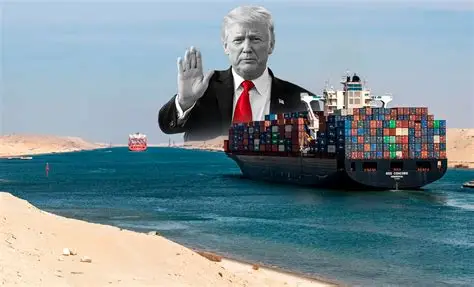
This has led to talk of the Iran war fast becoming, in the words of a recent Financial Times editorial, “America’s Suez Moment,” a phrase also used recently by LSE Professor Fawaz Gerges and New York Times’ columnist Steven Erlanger, amongst others.
Such talk, however, misreads what is happening, and Trump’s aims in the conflict, as well as the significance of the original Suez crisis in the first place.
In 1956, a British-French-Israeli conspiracy to occupy Egypt and overthrow the popular pan-Arab leader Gamal Abd Al-Nasser was thwarted by a combination of Egyptian arms, US financial pressure and Soviet nuclear brinksmanship. In a rare show of unity, both superpowers opposed the imperial adventure, with Eisenhower threatening to sink the pound if the Europeans did not pull out, and Khrushchev adding that he would nuke them for good measure. The belligerents were forced out, British prime minister Anthony Eden lost his job and Nasser’s Egypt became a beacon of anti-imperialist resistance the world over. The “Suez moment” was the writing on the wall for the British Empire, and Britain began the process of formal political decolonisation the following year with its withdrawal from Ghana, followed by most of the rest of its colonies over the decade or so that followed.
Whilst it is true, however, that Suez marked the end of Britain as an independent global military force, it did not lead to the end of British imperialism. Rather, it heralded a transformation of a system of power rooted in its own military capabilities, to one based instead on financial domination. In fact, British imperialism not only survived, but managed to reconfigure itself into something much more streamlined and efficient.
In his masterly history of offshore finance, Treasure Islands, Nicholas Shaxson notes that “By 1965, an empire that had ruled over 700 million foreigners at the end of the Second World War had shrunk to a population of just five million. This is well known; but there is a financial side to this story which almost nobody knows about, for out of the dust and fire of Suez something new emerged in London, which would eventually grow to replace the old empire, and raise the City of London to even greater financial glories”
As anti-colonial movements grew in strength and audacity, the costs of old-school direct colonial rule were, by the mid-50s, starting to outweigh the revenues it was bringing in. By 1963, even the most financially and strategically important imperial zones – in the Middle East and Southeast Asia – were, in the words of imperial historian John Darwin, “becoming much more costly and burdensome”. Britain’s military spending, due to its colonial commitments, was now 7% of GDP, and “has broken our backs”, as prime minister Macmillan put it – and conscription was also a huge drain on resources. The big danger of simply pulling out, however, was that anti-colonial movements would take over – movements who might have the temerity to seize (‘British-owned’) land and resources for the people. What the British state sought was to hand over – or at least share – the burden and expense of the repression and counter-insurgency warfare necessary to avoid this outcome. And ultimately, of course, they were successful in palming off much of this expense onto the US and the Gulf monarchies. But, far from the popular image of Britain being forced out of the Middle East by the USA, “when originally mooted, a proposed reduction of the British presence east of Suez was met with strong American opposition and appeals from Saudi king Faisal to reconsider”, says David Wearing in Anglo-Arabia.
It was only after yet another ‘sterling crisis’ (for the third year in a row) in 1967, that the US finally accepted that Britain simply could not afford to keep up the global policeman role anymore. Yet, as Wearing put it, British “withdrawal” would be “better described as a drawdown – and was certainly not a complete relinquishment of British influence, which would become less visible but would still remain.” Many of the Gulf monarchies were so dependent on British arms to stay in power, that their ‘independence’ was largely a sham: Kuwait maintained strong economic and military links with Britain and promised to continue to invest its oil revenues in London; British officers outnumbered Omani officers in the Omani military until the early 1980s, and did not occupy positions of military command until 1985; and Bahrain’s security forces were run by a British officer, Ian Henderson, until 1998. Yet this influence was now achieved at a much reduced cost, with the Gulf states themselves actually paying Britain for their occupation, and with the US (and Israel) now stepping in when things got really out of hand.
At the same time as this new streamlined, ‘burden-sharing,’ form of imperialism allowed Britain to cut its expenses, it also added new revenue streams with a reboot of the City of London.
The Bank of England’s creation of the so-called ‘euromarket’ is the under-studied flipside of the ‘Suez moment.’
With sterling on the wane as an international reserve currency, a regulatory sleight of hand allowed London to cash in instead on growing demands for US dollars. With the UK government introducing tighter limitations on the international trade in sterling, London’s merchant banks simply shifted to lending in dollars. The Bank of England could, of course, have regulated that too – but George Bolton (head of the Bank’s Foreign Exchange Division at the time), described by the historian David Kynaston as “one of the intellectual godfathers of the new right”, made a conscious decision not to do so. Instead, dollar transactions were deemed, for regulatory purposes, not to be taking place in the UK. But as they were obviously not taking place in any other jurisdiction, no other state was able to regulate these transactions either.
It was a free-for-all – and provided a bankster’s paradise of trade, speculation, loans and investments free from regulatory oversight from any state. According to Nicholas Shaxson, “It was at this point” – literally within months of the Suez crisis – “that the modern offshore system really began” as “Britain’s formal empire gave way to something more subtle… At the moment of its apparent destruction, the British empire began to rise from the dead.” It was, according to Gary Burn, one of the only historians to have studied the euromarket, “the most monumental financial innovation since the banknote.” London banks could now issue dollars, free from any regulatory oversight – and US bankers fled to London in their droves to take advantage.
Over the decade that followed, the euromarkets spread out from London to a string of island territories that the UK had clung onto, creating a global network of tax havens, from the Channel islands, to the Caribbean, to the Pacific atolls, that are still draining the global South today, to the tune of trillions of dollars, much of which is then channelled back to the City. .
London had found a way to not only maintain its financial dominance – it is still today the world’s largest international financial centre, with the biggest volume of international loans, foreign exchange and derivatives trading – but actually to render the colonial world system much more profitable than it had been at the height of empire, with hugely increased income via its string of tax havens, whilst the burden of repression and counter-insurgency war had been largely subcontracted to others. This is the real significance of the ‘Suez moment’. And Trump is indeed attempting something very similar today.
Like Britain in 1956, the US may be facing a ‘military humiliation,’ but it is also successfully offloading the security costs of upholding global capitalism onto its ‘partners’ (in this case in Asia and Europe), and creating a new type of financial domination in the process.
The war in Iran, as journalist Richard Medhurst has pointed out, needs to be seen as part of a broader US war to monopolise global energy supplies, and a transformation of the US into what he calls a ‘pirate state’. Effectively we are seeing an armed takeover of much of the world’s oil and gas supplies, most blatantly with the US takeover of Venezuelan oil following the kidnapping of its President Maduro in January of this year, but also involving the US-Israeli grab for the Leviathan gasfield off the coast of Palestine, Syria and Lebanon; indeed, it was just weeks before the Venezuela attack that Israel signed its biggest gas deal in history, worth $35billion, with US energy giant Chevron. Following the raid on Venezuela, the US and its allies have been waging a global war against the Russian oil industry, blowing up or commandeering oil tankers in the Caribbean, the North Atlantic, the Mediterranean, the Black Sea and the Baltic Sea, whilst the US’s Ukrainian proxy has stepped up attacks on Russian refineries and export hubs; the combined effect has been to disable 40% of Russia’s export capacity, the biggest disruption in modern Russian history.
Meanwhile, Trump’s naval blockade of Iran has crippled Iran’s exports, whilst Iran’s own blockade of the Strait of Hormuz, and attacks on the energy infrastructure of the US’s Gulf allies (such as Qatar’s Ras Laffan plant) has cut off Gulf energy supplies to much of the world.
The result of all of this is that countries around the world are increasingly being forced to turn to the US for their oil and gas supplies. Incredibly, for such a destabilising war – especially one widely billed as disastrous for the US – gold prices are down, whilst the value of the dollar is soaring, the exact opposite of what one would expect in uncertain times, when investors typically flee to the safety of gold. The reason is that countries that used to buy their energy in yuan or rubles from Russia, Venezuela or the Middle East are now being forced to sell off those currencies in order to buy the dollars needed to buy their energy from the US.
In Medhurst’s analysis, this is all a concerted effort by the US to reverse its imperial decline – and in particular to prop up the US dollar – by creating a new basis of value underpinning the dollar – US-produced oil and gas. From the time of its creation, the value of the dollar was backed by gold. Then, following the crisis in military spending brought on by the Vietnam war, the US ditched the gold standard and made a deal with the Gulf countries that they would sell oil in the dollar, and invest their surpluses in US stocks and bonds. This was the era of the so-called ‘petrodollar’, replacing gold with Gulf oil as the store of real value underlying the dollar’s price. That system has been under threat for some time, with not only Iran but even some Gulf states starting to trade oil in other currencies in recent years, with Saudi Arabia making a multi-billion oil sale in digital yuan for the first time last September . Today’s war against Venezuela, Russia and Iran (and, by extension, the Arab Gulf states) is in fact an audacious strategy to reverse ‘de-dollarisation’ by ensuring that it is now US energy, not Gulf energy, that underwrites the dollar. Even China – having lost, within months, the bulk of its supplies from all three of its strategic energy partners (Venezuela, Iran and Russia), is now being forced to buy energy from the US, at the new sky-high prices.
This strategy has many other benefits to the US in Medhurst’s analysis, which was perhaps the only interpretation able to predict Trump’s switch from war to blockade on April 13th, noting in his podcast two days earlier that the US “say they want to take Kharg Island, but they could also just set up near Diego Garcia in the Indian Ocean, and then sink any of the oil tankers or commercial vehicles transiting past the Strait of Hormuz. And all the US has to do, from their perspective, is deprive Iran and the global South from being able to trade with each other and get oil from point A to point B.” Mission accomplished.
Just as the British did following Suez, the US is in the process of reconsolidating its imperial domination through a systemic transformation of the global financial order. And, like the British, it is attempting to transfer the costs to its frenemies; as Medhurst points out, the US navy is now running a protection racket, with Trump offering the US navy as escorts for transport through the warzones he has created “at a very reasonable price”, whilst the US Maritime Action Plan, passed in March of this year, is essentially a protection racket, forcing everyone doing business with the US to do so using US-made ships and tankers.
Yet, like the deregulated monetary system created in London seventy years ago, the new dollar domination being crafted by Trump today is much shakier and more unstable than the one it is attempting to replace. The wars required to sustain it escalate tensions with everyone, including its own allies, and effectively amount to an energy blockade of China. It was Marx himself who noted that the methods used by the ruling class to overcome their crises simply pave the way “for more extensive and more destructive crises” and diminish “the means whereby crises are prevented.” This is exactly what Trump is doing today, with the ultimate crisis – world war – an increasingly real risk of this desperate gamble.
 Dan Glazebrook